Spotify
 Apple Podcasts
 RSS Feed
  Goodpods
  Amazon Music
  Pandora
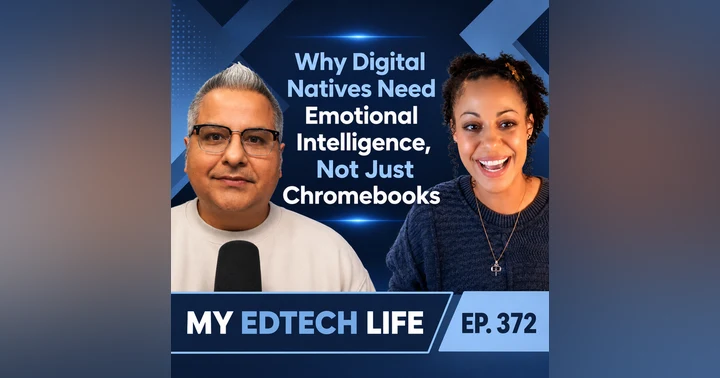
 Digital Natives Aren't Ready for This | My EdTech Life 372
Krystina O'Bryant, Chief Academic Officer at Parent ProTech, shares how schools and families can move beyond checkbox digital citizenship and start having meaningful conversations about screen time, social media, AI companions, digital wellness, online behavior, and the rapidly changing world of generative AI.


Parent ProTech and Krystina O'Bryant join Dr. Alfonso Mendoza on My EdTech Life to challenge one of education’s biggest assumptions: being a digital native does not mean being digitally ready.
In Digital Natives Aren't Ready for This, we explore what students are actually facing online and why knowing how to use technology is very different from having the emotional maturity, critical thinking, and judgment needed to navigate it safely.
Krystina O'Bryant, Chief Academic Officer at Parent ProTech, shares how schools and families can move beyond checkbox digital citizenship and start having meaningful conversations about screen time, social media, AI companions, digital wellness, online behavior, and the rapidly changing world of generative AI.
We also talk about why adults need to get back into the digital citizenship conversation, the difference between active and passive screen time, the surprising rise of AI relationships among young people, and why character traits like responsibility, kindness, self-control, and good judgment matter just as much online as they do offline.
Technology will continue to change. The bigger question is whether we are preparing students with skills that will still matter when the next platform, app, or AI tool arrives.
If you are an educator, school leader, parent, instructional coach, or anyone helping young people navigate technology, this conversation is for you.
TIMESTAMPS
00:00 Welcome and Thanks
00:45 Sponsor Shoutouts
01:19 Meet Krystina and Parent ProTech
03:01 Krystina’s Educator Journey
06:05 Digital Natives vs Literacy
10:02 What Parent ProTech Offers
15:11 Beyond Checkbox Digital Citizenship
20:41 Screen Time and Digital Wellness
23:33 AI Risks and Rapid Change
28:06 Character Education Meets Digital
31:08 Spanish Support and Accessibility
33:43 Timeless Safety Skills
37:53 How to Connect and Get Access
40:43 Lightning Round Fun
43:49 Final Thanks and Wrap Up
🎙️ ABOUT MY EDTECH LIFE
My EdTech Life is about more than the latest tool or trend. Dr. Alfonso Mendoza brings educators, researchers, founders, and thought leaders together for conversations about what technology means for teaching, learning, and the people at the center of education.
We keep the conversation practical, thoughtful, and human.
☕ THANK YOU TO OUR SPONSORS
A huge thank you to Comeback Coffee, Book Creator, Eduaide, and Peel Back Education for supporting the mission of My EdTech Life and helping us continue bringing meaningful conversations to the education community.
💛 SUPPORT MY EDTECH LIFE
If My EdTech Life has given you a knowledge nugget you can sprinkle into what you're already doing, consider becoming a Producer or Super Producer through our Buy Me a Coffee membership.
Your support helps us continue amplifying educator voices, bringing you meaningful conversations, and keeping this community growing.
☕ Join and support the show:
https://buymeacoffee.com/myedtechlife/membership
👍 If this conversation challenged your thinking, like the episode, subscribe to My EdTech Life, and share it with an educator, school leader, or parent who needs to hear it.
💬 And let us know in the comments:
Are we giving digital natives too much credit simply because they know how to use the technology?
Stay Techie ✌️
#MyEdTechLife #DigitalCitizenship #ParentProTech #DigitalLiteracy #AIinEducation #OnlineSafety #EdTech #ScreenTime #DigitalWellness #ArtificialIntelligence #Parenting #EducationTechnology
Thank you for watching or listening to our show!
Until Next Time, Stay Techie!
-Fonz
🎙️ Love our content? Sponsor MyEdTechLife Podcast and connect with our passionate edtech audience! Reach out to me at myedtechlife@gmail.com. ✨
00:00 - Welcome And Sponsor Shout Outs
01:19 - Meet Parent Pro Tech’s Christina O’Brien
03:06 - From Preschool To District Leadership
06:06 - Digital Native Versus Digital Literate
10:02 - What Parent Pro Tech Provides
15:11 - Beyond Checkbox Digital Citizenship Lessons
20:41 - Screen Time And Active Versus Passive Use
23:50 - AI Companions And Fast Moving Risks
28:08 - Character Education For Online Life
31:08 - Spanish Language Support For Families
33:43 - Timeless Skills To Navigate Future Tech
37:47 - How To Connect With Parent Pro Tech
40:42 - Lightning Round And Closing Advice
43:50 - Final Thanks And Where To Subscribe
Welcome And Sponsor Shout Outs
Dr. Alfonso Mendoza
Hello, everybody, and welcome to another great episode of My EdTech Life. Thank you so much for joining us on this wonderful day. And wherever it is that you're joining us from around the world, thank you as always for all of your support. As always, we appreciate all the likes, the shares, the follows. Thank you so much for engaging with our content. Thank you so much for the feedback and for the new subscribers. We really appreciate you getting our numbers up so all our content can make it out there through all the wonderful algorithms to your ears. So I'm really excited for tonight's show. But before we uh get into it, I definitely want to give a big shout out to some important people that would be our sponsors. So thank you so much, as always, to Comeback Coffee for keeping us always creative and caffeinated as well. Big shout out to Book Creator. Make sure you use code MYEDTechLife for some premium access to Book Creator. And a big shout out to EduAid and Peelback Education. We appreciate all of you believing in our mission of bringing some amazing conversations into our education space.
Meet Parent Pro Tech’s Christina O’Brien
Dr. Alfonso Mendoza
And today I'm really excited to welcome a wonderful guest. She works for an amazing platform, and the founder has been on the show before. But I'm going to go ahead and let her introduce herself. Christina O'Brien, how are you doing today?
Krystina O'Bryant
I'm doing great. Yeah. So I'm Christina O'Brien. I'm the chief academic officer at Parent Pro Tech. Um, and we'll we'll dive into lots of things about the platform, but really our entire focus is just creating safe spaces for kids online, educating the adults in the circle around kids, um, around the online safety issues and digital citizenship and all the crazy things going on online. So excited to talk about all of that great stuff today.
Dr. Alfonso Mendoza
Yes, I am equally excited, uh Christina, because like we mentioned, Brock has been on the show before. Uh, probably it's probably been maybe about two years now, I think, since the last time he was on. But I know that Parent Pro Tech has continued to grow, and I'm just really excited about the work that you are doing. So let's talk a little bit about Parent Pro Tech. Uh, but before we do, actually, I I would love for my audience to get to know you a little bit better. So, can you give us a little brief introduction and maybe just tell us as far as how well, scratch all of that. I'm so sorry, Christina. It's been like three weeks since I've podcasted because I was out on the road. So don't worry, let me, I'll fix that. So uh you already did your introduction. So here we go. Christina, thank you so much for joining us. And I'm really excited about talking about Christina, thank you so much for joining us. And I'm really excited to talk about Parent Pro Tech. But before we dive in, I know that you yourself served as an educator.
From Preschool To District Leadership
Dr. Alfonso Mendoza
So can you tell us a little bit of your education background as far as what grade levels you taught? You know, uh that way our audience could connect with you a little bit more.
Krystina O'Bryant
Yeah, of course. So I started out teaching at a preschool while I was in in college still. Um, my major was psychology, and I started teaching at a preschool that did emergent literacy skills and just fell in love. And I knew I wanted to stay in education, but then I did not want to be with preschoolers forever. Um, so I changed my major to middle school education and um graduated and you know went into teaching seventh grade English and loved every minute of it. I know seventh grade is the the armpit of middle school, but some of us like to hang out there. Um so I hung out in middle school for a while, immediately was put onto a curriculum writing team. I was at a district that wrote curriculum in-house. And so I was able to fall in love with curriculum writing as well. Then I moved up through to high school, um, hung out there for a little bit, still in English, and then transitioned over to a district-level curriculum team where I was overseeing all of the curriculum things that were going on at the middle school level. Um, eventually I moved over into um doing intervention and at risk, um, both instructional intervention, reading and math, and then behavior intervention. And you start to see all the tech things that happen in those spaces too. Like in the classroom, we're familiar, but you're even more familiar with where it goes wrong on that side. And so that that kind of took me moving forward into instructional technology from there at the district level, and then just made my way out into the world, maintaining all of that stuff. So now I'm happy to be at Paraprotect.
Dr. Alfonso Mendoza
Amazing. And that's a wonderful journey. And talking about so much of a background that you have there, you know, kinder working your way up all the way through high school, and of course, at the central office level. And like you mentioned, you know, there's one thing about seeing the tech in the classrooms, but then also once you get to that central office level with curriculum writing, then all of a sudden you see tech in a different scope, you know, and that is something that is interesting. I myself having that experience as well for the last 10 years to be able to see that tech from that upper level and, you know, the way that the students are using it, how they are engaging, but also, you know, maybe the not so good stuff and you know, how the students might be engaging with tech in a very dangerous way, in a not so good way, and especially now with so much generative AI, so many generative AI platforms, I should say. And then, of course, you've got platforms like Roblox, you've got platforms, you know, like Discord, TikTok, and Instagram and all the social medias where there are, you know, obviously the upside of it, but then there's also that side that maybe doesn't get talked about enough in school districts.
Digital Native Versus Digital Literate
Dr. Alfonso Mendoza
So I want to ask you first and foremost, because I think that you and I can have a very great conversation about this term, which came to mind today when we're talking about students that are, you know, in this era, in this generation, that are introduced to technology at such an early age, it's like, oh, you know, they're they're digital natives, they're gonna get it, they understand it, they understand the tech, but it's just because you grow up with the technology doesn't automatically make you digitally literally digitally literate, I should say. And so what are some of the things, you know, as far as now in your new role with parent pro tech, what would be some of those misconceptions or misunderstandings you know, that oftentimes we confuse that. We say, digital native, just give them the Chromebook, they're gonna be fine, they're gonna be okay. What have you seen? What are your thoughts and what is your messaging with parent pro tech?
Krystina O'Bryant
Yeah, definitely. So the biggest thing is that, you know, whenever it comes to the kids, you've you've definitely seen it. I've seen it, that at the end of the day, they're gonna be so smart. They're smarter than us a lot of the time when it comes to technology and they're gonna figure out how to do the things that they want to do. Um, but they may not be emotionally ready to take on a lot of those things. So it comes down to that, you know, IQ versus EQ. They have the intelligence to pick it up and start, you know, clicking around. They'll, if you're having a hard time getting something up on the smart board, then they'll dive in and do it for you. But then in their leisure time, whenever they're diving into different entertainment spaces online, they're scrolling, they're messaging, they're on Discord, they're on TikTok. Um, they're encountering things that they may not have that emotional intelligence for yet. You know, there's still you can scroll through and see, you know, a puppy and a kitten that are best friends, and then see something that's like a horrific crime happening in the next image. And that's a lot on anybody's brain, but especially young people's brain. And they do not have the skill set to process that. And so a lot of our information and messaging at Pair Protech is centered around not just training kids on platforms themselves and how do you led platforms successfully or the internet as it exists right now successfully, but to build in those critical thinking skills, that, you know, moment of pause before you hit share or send that message or whatever to make sure that they, that they're learning a skill that translates to whatever the next platform is.
Dr. Alfonso Mendoza
Yes, absolutely. And that is so important. And I really love the way that you said that last phrase there, you know, taking that pause before you hit share. You know, back in 2018, when I first started my new role as digital learning coordinator, uh, we started working with uh the parent liaisons and we would bring parents in. And, you know, those are some of the conversations that we would have. I mean, it was Technology Tuesdays, but for me, it was all about digital citizenship, digital literacy, making sure that students are at their best behavior online because, you know, you never know who's watching, you never know who takes a screenshot, and you never know how that might affect you as far as either opening doors or closing doors for you, you know, in the future, based on what it is that you're sharing. So one of the things that I want to ask you about, because I know that we did um talk about Parent Protect, you know, in my previous district, but one of the things that I love is that it was more based, like you mentioned, it's not necessarily how to use the platforms, but it's more based on that communication, on treating it with wisdom instead of worry. So with Parent Protect sharing the videos and the content to parents in such a way that it doesn't necessarily teach them with fear, but it just really just educates the parents. That's something that I really
What Parent Pro Tech Provides
Dr. Alfonso Mendoza
love. So tell us a little bit more for our audience members that may not be familiar with Parent Pro Tech. What exactly is Parent ProTech and what is this mission? Uh, or what is the mission of Parent ProTech, you know, as far as educating not only students, but parents?
Krystina O'Bryant
Yeah, great. So our mission is to equip community communities, sorry, to equip communities to navigate safely online. And so by community, I guess that's a good starting point. We really mean anyone in the bubble around young people who are engaging with the internet. So that could be, you know, the educators on one end. So we do have tons of instructional resources. We've a full kindergarten through 12th grade digital citizenship curriculum. And this past year, we've also launched a character education curriculum that focuses on, you know, those traditional character skills like kindness and responsibility that we work so hard on offline, but disappear when we get behind the screen sometimes. Um, and translating those skills over to those digital spaces as well. And then on the parent side, we want to round out that experience and provide all those resources for parents. So we really are working to empower them. We have content diving into platforms like TikTok, Snapchat, Instagram, explaining from the parent lens, you know, why do kids want to be here? What is it that's drawing them to this space and what do I need to watch out for? And then really diving into the settings that are most important for a parent. So you can watch a video and it's not just going to introduce you to the settings. It's going to say, you know, as a parent, you need to be aware that you can limit screen time or you can turn chat off, or that there are like three or four different chats in Roblox, then you have to turn them all off independently. Um, so really diving into that stuff, what you need to know as a parent, so you know you're not missing any of those important steps, how to connect parent accounts or set up family monitoring or any of that stuff. Um, and then we also really work to just educate parents around what's going on with the development of your young child's brain as they're spending so much time on screen. We talk to neuroscientists, we've done interviews with people at Boston Children's Hospital's digital wellness lab about just the impacts that they see in up screen time on young people over time. And so just a wealth of information, whether you're a high-tech, low-tech, or no tech household, you can still get something that doesn't require overhaul in your whole life, but really, you know, allows you to make a little change here and there and really zoom in and make your make your household more safe.
Dr. Alfonso Mendoza
Oh, and I love that. Like everything that you just mentioned is, you know, what I really wish that I could share more when we used to have those technology Tuesday meetings. I mean, what I truly see that Parent Protech is doing is you mentioned you have so many wonderful resources. You have videos in multiple languages also to help support, you know, the Spanish-speaking community. And, you know, you've got English speakers. And I think that's something that is so important that I know that personally I dealt with. And I was, you know, I would find resources, uh, I would share resources with parents. And really, it was just, you know, the parents wanting just to have those additional little talking points. Because I think that uh as we get into the next question, you know, we'll talk a little bit about again that digital um citizenship. And but it was so important for me to let parents know what is out there, but in a same way, just giving them that piece. Like here are some resources. A lot of parents, they just want to know how they can communicate with their parents with their students. And, you know, one of the things that always came up though was, you know, like you mentioned, you know, just kind of looking around, looking around, you know, at home as far as the tech use, it's is there some isolation by, you know, your child, you know, do you see, you know, that all of a sudden there's a a change in attitude and so on. And and telling parents that that doesn't necessarily mean that it's, you know, a physiological change, you know, that, oh, they're at that age. No, I mean, today, now with the technology, we don't know if they are being bullied because oftentimes, you know, that'll lead to isolation, that'll lead to that anxiety and so on. And I think that what you just shared that Parent Pro Tech is doing is something that is very valuable. That I hope that our listeners and those district leaders that are either watching the episode or listening to the episode, that they really take the time to go and visit your website so they can see what resources you have available that can actually uh be that supplement and support to students and parents because they may not have somebody like me at their district that is doing these meetings. But at the same time, you know, somebody like me, it's just one for the whole district. They would they would definitely benefit from this. So I want to ask, you know, now that you've been at Parent Pro how long you've been at Parent Protect for a couple of years now, right? Like maybe like two or three around there. Two years. Two years.
Beyond Checkbox Digital Citizenship Lessons
Dr. Alfonso Mendoza
So I know, and from your experience too, maybe you saw it probably from kinder and making your way up through high school, but many schools they say that they teach digital citizenship, but in reality, it's like, hey, I just purchased this platform and the kids just click through this, you know, lesson for about 15 minutes and they click right through it and then they check the box and say, Yep, I I'm complete, I've they've completed it, they've done it, and it's just for compliance. So we know that that happens. I've seen it happen. So, from a curriculum perspective, you know, which is your background, and I know that you do curriculum there with parent pro tech, but I want to ask you from that perspective, what separates that meaningful digital citizenship education from just a simple let's check the box off?
Krystina O'Bryant
Yeah, of course. So our platform and the way that everything's set up is really focused on having the adults in the conversation. Um, we already have kids out there navigating these spaces and getting information from each other and, you know, relying on each other to tell them what they should do or what they shouldn't do, or even relying on AI nowadays to, you know, tell them what's the best choice. So I think introducing the adult back to the equation to help mitigate, you know, the conversations that are coming up around that stuff, or to reinforce, you know, safe spaces, ways to report things that are going on to let them know I am a safe adult that you can communicate things with if something's going on online. So that that real world action can take place to take it on is a big part of our curriculum. So we um all of our lessons are intended to go through the educator voice. So on the platform from a curriculum standpoint, we have um videos for every single lesson that's gonna front load vocabulary. It's gonna get those big ideas out there, and it's really gonna frame whatever the topic is that they're gonna be talking about, whether that's impact that Instagram has on like your body image, or whether it's, you know, maybe you shouldn't have an AI girlfriend or boyfriend. That might not be a good idea. But whatever the lens is, there'll be a video to help kind of introduce that topic and get it set up. And then just tons of resources, fully scripted lesson guides, um, discussion questions, scenario cards with every single lesson. Even down at the littles, we have thumbs up, thumbs down, and like put a finger up response, um, opportunities, picture books, comic books, style slide decks to help the adults guide these conversations. Because at the end of the day, we're not all experts in all of this stuff. You know, it may be a history teacher who is such an expert in everything about World War II. And they're like, okay, now how do I talk about, you know, the impact of Instagram on the students in my class? And we try to put together resources for those people where they can dive in and not feel like they're alone as they're sharing that message, because it is so important for an adult to be in the conversation when that message is shared.
Dr. Alfonso Mendoza
And I think like you you hit that nail on the head too, you know, in in involving the adults in the room too. That includes those teachers. But like you mentioned, that's one of the things that I love about your platform too, that you that ease that that of you making it, the teachers feel at ease, I should say, with the resources that are there to actually really have real conversations. And I think that's something that maybe in maybe not all districts or maybe some districts that do say, hey, we we went through our digital citizenship module at the beginning of the year. We checked the box, that's it, we're done. But it's so much more than that, and especially now with how fast the technology is moving, you know, we're talking about screen time. We're not just talking about the screen time in the classrooms, but we're also talking about that screen time at home. And then, of course, you've got like we just talked a little bit about that, like how uh parents are out there trying to protect their children, making sure that they're monitoring them closely, or you've got the parental supports and things of that sort. And, you know, there's definitely a lot of stuff that that is going on through all through all of these platforms, like you mentioned. And some of those things are often discussed because they just feel like, oh, you know, that's a little too, you know, I I don't know, I maybe I just don't feel comfortable with that or just having those tough conversations. But like I said, having resources like the ones that you've described that Parent Pro Tech has, I think can definitely help start those conversations, not only at home, like if the parent is using the platform, but at school. And I think, you know, once that that messaging is out there and it's it's across the district from all of your teachers too as well. And then, you know, just kind of subtly, so very subtly repeat, you know, talking to your students about it or just reminding them about those things, you know, if you can save one student by just simply having them pause before they send, I think that's a win, you know, and and I know that's a very weird metric, but I always said, you know, told parents if we could just have them pause for that one second before they click send and just kind of maybe have that that flash in their head of what can happen, you know, as far as consequences are concerned. I think that would be definitely very helpful.
Screen Time And Active Versus Passive Use
Dr. Alfonso Mendoza
Now, let's talk a little bit about the screen time because, like you mentioned, you have um interviewed a lot of uh experts, you know, neuroscientists, as far as that topic of screen time. And I know that for the last couple of months, that's definitely been a very hot topic that, you know, during the summer. And then, of course, now coming back to, you know, to school and schools are starting, a lot of the schools that I've been visiting, they all talk about, you know, minimizing screen time, either by grade level bands and you know, things of that sort. But, you know, in your experience, you know, what is it that you are seeing, you know, as you are visiting schools? And then how are you also leveraging your platform with that messaging to help support obviously our teachers and our parents in talking about screen time as well?
Krystina O'Bryant
Yeah, definitely. So kids, um, I mean, screen time is is a massive issue whenever it comes to the conversations that parents and educators want to have. We know that 8.5 hours a day is like the average teenager online for entertainment alone. So, like, we're not talking, talking to grandma or like doing their homework. That's that's the scrolling, that's the chatting, that's the playing game. So There's not a way that you could be doing something for that amount of time and it not have an impact on you as a person, right? They're in their foundational years. It's really shaping who they're gonna be. And I I bet you had a ton of screen time whenever you were, you know, in those years. I definitely did. I was playing at The Sims for hours and hours. Um, and so I think that pausing and kind of thinking about the types of screen time that kids are having, both in an instructional setting and at home, that active versus passive screen time and really making sure that that we know what what our kids are doing whenever they are using the screen. You know, you hand them the tablet, they go off. And they could be, you know, if it's a younger kid, they could be watching something that's a more active screen time, you know, they're answering questions, they're engaging with something, they're developing their brain as they're interacting with it. Um, or they could be just kind of watching a lot of nonsense, right? It could be just the things that pop up on my TikTok in the middle of the night, you know, where it's like yodeling and spinning fish and a lot of like crazy. Um, all of the AI cartoons and the things that are just brain rot. And so really engaging sitting down beside your child, or if it's an older kid having a conversation about the things that they're doing online and keeping that line of communication open does so much because they'll tell you, you know, they'll mention the things that they're engaging with, the things that they like. And that gives you the power to kind of develop that conversation with them.
Dr. Alfonso Mendoza
Excellent. Now you mentioned some, you know, some great points there. And it's a great segue into our next question, uh, you know, but because it really ties into, you know, the social media aspect, but you hit on a lot of things there as far as a lot of the AI generated content.
AI Companions And Fast Moving Risks
Dr. Alfonso Mendoza
And so I feel like right now, you know, uh like parents might just be just barely grasping on to what is happening on social media, but now you are adding a whole other layer with the AI companions, the chat bots, the generative AI tools that can produce, you know, just these realistic images that can also get a lot of students in trouble because there's a lot of apps out there that are very inappropriate or will create an inappropriate picture, you know, that students can either have access to, share, and then there's a lot of bullying, a lot of, you know, things that happen. So I want to ask you now, in this space that you're in, you you get a first hand view of what is happening out there. The the average parent may not even know that this exists yet. It it slowly trickles out into the news. But how do you at Parent Pro Tech adapt to these situations?
Krystina O'Bryant
Yeah. Um, well, at Parent Pro Tech, we're fortunate to have, you know, the time to dive in and do the exploration that parents don't have the time to do. So it's, you know, our our nine to five is diving in, checking things out, getting that data, meeting with other people who are doing the research and having the conversations around those topics, and then taking all of that and putting it into more digestible bite-sized chunks for parents so that they can sit down and get it all in kind of our one-stop shop. Um, but we we are seeing a ton of different things. We're fortunate that our our information comes from a variety of different places. Like, you know, we've mentioned the the digital wellness lab earlier, but we also are have a through line directly to schools. We have so many school partners. We're statewide in Georgia, we're in 93% of schools in Missouri and in across the United States outside of that. And we, because we have that connection and that relationship, and we do office hours and opportunities for schools to reach out and tell us the issues that they're experiencing so we can develop targeted content on it. You know, last year we had a school reach out and say, last Monday, all of our sixth graders came in and all the girls had AI boyfriends and we don't know how to handle that. And it was an issue that there wasn't a lot of content or knowledge about at the time. And so using our connections and just our the fact that we we have the time to dive in and do that research and the through line for the schools to tell us, hey, this is going on. What do we do? Gives us the opportunity to really hone in and build targeted content on those kind of more bizarre things whenever it comes to AI or the scarier or the more unfortunate things um that people are encountering. And so we do dive in in addition to the instructional content, you know, and produce things for parents so that they now that we know this is this issue exists, you know, with AI companions, for instance, dating AI, that we we can look it up, we can talk to our partners and say, you know, 72% of kids have tried this, have at least attempted, you know, an AI companion. And 54% are regularly having conversations with AI companions. And they're saying that those conversations are more fulfilling than the conversations they're having with their peers because they're constantly being reinforced. And we have the opportunity to kind of see the issue in its fullest form, what point A leads to point B, C, D, E. And then to take that, create content for the classroom, but also to put that messaging into content for parents so that they're now aware of this thing that maybe only teachers were picking up on before and really build that bridge between those two communities within our platform and our resources.
Dr. Alfonso Mendoza
Excellent. Like, yeah, that's something that is so important. And like I said, you know, with with platforms now, you know, like Parent Pro Tech, which really in reality, you know, you are one of the only ones that I really do see that are taking it to that next level as far as not only reviewing the platforms, but you know, the messaging, and then of course the the knowledge base for parents, for teachers, for students. I I find that that, you know, that's something that is is pretty much like a full package in that sense. But I'm a little bit more intrigued.
Character Education For Online Life
Dr. Alfonso Mendoza
I know you talked a little bit about it at the very beginning, but can you tell us a little bit more about Parent Protex Character Ed and the work that is happening there, you know, as far as using, you know, characters or character as in self-control, digital, uh, self-control, digital skills, and all of that to really help support digital citizenship. So tell us a little bit more about that.
Krystina O'Bryant
Yeah, of course. Character ed really goes hand in hand with digital citizenship. I mean, when you think about citizenship, where it's, you know, hanging out in in the classroom or around your peers at work or walking through your neighborhood and making the right choices. You know, I have this napkin. Am I gonna throw it down on the ground? Um, you know, that that's character education. You're making the right choice, you're thinking critically, you're applying the knowledge of what could this action lead to? And that goes hand in hand with digital citizenship, where those are the skills that we're trying to teach kids when it's online. That impulse control is so much different. It's so much easier to do something and then kind of be like, oh no, after the fact. But now it's out there in a very public way. You know, if you dropped that napkin on the on the sidewalk, then somebody may have seen you, or someone may be driving by and spot it. But once you post it online, it's out there and you don't know how far it's spread and how quickly. Um, so we do have an addition to our base platform content for just digital citizenship that's really focused on bringing up those character education skills, that kindness, that respect, that building in those moments of pause and thinking about cleanliness and organization and all of those skills that we know are so important for young people. And then saying, okay, well, what does this look like digitally? You know, if I'm so focused on keeping my bedroom clean and I know that's an important skill, but then all my files on my computer are a crazy mess, um, then that could impact my schoolwork just as much as not having a clean space to sit down and do my homework will. Um, and so transitioning those skills over and really learning that those same things apply in both spaces, but one of them you have to try a little harder to build in that pause or to make yourself slow down because tech is designed to fit with that impulse, to make it faster, to highlight that efficiency. And sometimes that efficiency can bite you when you're a young person.
Dr. Alfonso Mendoza
Absolutely. No, and I think that is so important. And that's one of my favorite things that I know that, you know, parent protect and the whole team, you know, that that growth from the first time that Brock was here on the show to seeing it now and being able to implement those additional components that really tie in to digital citizenship. And like you said, either even though it may seem two separate spaces, but in reality, you know, those same principles apply to both spaces. And so that's something that I really love that you all are doing. And I think that's something that very helpful
Spanish Language Support For Families
Dr. Alfonso Mendoza
there. And so I want to ask too, now, me being from the South Pole of Texas, literally, like there's a sign that says officially the South Pole of Texas, southernmost tip, you know, I am in an area that is predominantly Spanish speaking. A lot of, you know, the parents at home, uh, you know, a lot of students might be living with uh abuelita, with Tia or Theo, and they all speak Spanish. So I want to ask you, you know, see, you know, as far as parent pro tech is concerned, what supports do you all offer for, you know, Spanish language, uh, you know, for our Spanish-speaking population, I should say?
Krystina O'Bryant
Yeah, on the parent side of the platform, all of that content is also available in Spanish. Um, so we have a toggle on the platform. You can toggle over to Spanish. And not only are those videos and resources available, like all the downloads, the scorecards, the conversation starters are also available there in Spanish. And the videos are fully recreated by a Spanish-speaking localization team. Because as a Spanish speaker, I'm sure you know better than I do that when you get into devices or platforms, sometimes things options are a little bit different. Some of the specialized programs or products that we've encountered don't even have Spanish options, you know, in their settings and things like that. So all of that's going to be notated and making sure that whatever, whatever's being said in those videos is accurate, not just dubbed over. Um, we'll also take those expert conversations, like I talked about with neuroscientists and pediatricians and everyone in between. And those will be on the platform available for Spanish speakers as well. Um, and then on the instructional side of the platform, all of the content over there is developed with a shelter instruction um lesson plan style. So it's not going to be in the Spanish language, but it will have the front-loaded vocabulary. It'll have sentence stems built in, it'll have all of that scaffolding in place, the pictorial representation, all those things that we know are so important for people that are, well, young people in general. It's good education across the board. But for young people who have two languages as well, you know, it really reinforces and allows them to step back and see the picture representation and go, oh, okay, that's what that means. Um, so they're all they're all built with those great instructional strategies in mind, both for SEL and for, you know, our SPED population or whoever else is engaging with it.
Dr. Alfonso Mendoza
That is awesome. That is great. So you heard it here, guys. Parent Pro Tech really stepping up their game and really just bringing you some amazing content for you, for your students, for parents, for teachers, for everybody to learn more about digital citizenship. And that is amazing.
Timeless Skills To Navigate Future Tech
Dr. Alfonso Mendoza
But before we wrap up, you know, I want to ask you this final question. As we know, you know, we we are at this point today, which is August 24th. Now we know that technology day by day is moving faster. There's gonna be more generative AI apps, there's gonna be more talks about policies, things will be changing so fast, so quick. And even the parenting advice is gonna be so hard to keep up with because once you, like I said, once parents are slowly grasping on to what is happening, all of a sudden there's been a leap forward and now they're just continuing to play catch up. But I want to ask you, Christina, in your experience and what you've seen, not only from the classroom but all the way to high school, but also, you know, curriculum writer now working for ProTech, what would you say are some of those the timeless skills and principles that we need to share with our students so they can safely continue to navigate these technologies and even the ones that haven't even been invented yet?
Krystina O'Bryant
I'll give you kind of a twofold answer. First, I'll approach the adults and say, yes, there are important things for the kids to know, and we'll get there. But for the adults in the conversation, make sure that you're starting and maintaining those conversations. Parents and educators are really hesitant to ask questions or to broach certain topics with young people. And that's true of a lot of things. But when it comes to technology, you know, ask who your child's talking to. If they're on Discord, you know, ask them what the name of the group that they're in, um, on there chatting with, because they could be getting information that maybe doesn't fit with what you or what your family really wants them to be digesting. And they could be on there prolonged period of time just getting that information from other people. So definitely for the adults in the room, have those conversations. If you're handing tech over to young people, or you know, if your kids like, hey, I want to make an account, can you can I can I make one and set one up or can you give me your card so that I can put it in and buy all the robots, all the Robux and all of that stuff. Um, also you sit down for like five or 10 minutes and check it out first is always a good, a good approach. Um, because then you'll see, oh, well, somebody's chatting with me and I've been on here five minutes. That's a little questionable, you know, like all of those things you'll see as an adult and you know how to spot that safety stuff a lot faster than a young person will. So that's the advice for the for the adult in the room. And then when it comes to the young people, I think it's really about realizing the impact of your actions, which is a tough space for young people in any capacity, right? We're sitting in class and we will see that kid reach over and smack the kid next to him, and then they're like, I didn't do anything, and now they're in the office. Um, and so that impulse control that they're working to build, those things that we're already trying to build in, you know, I want to tell young people to that the impact is a lot larger when you're online than it is when you're sitting there and you smack that kid next to you in class. You know, yeah, you may end up in an ISS for the rest of the day if you do that. But it's so public when you do something online. And so if you're pausing and you're you're posting like a celebrity, right? We we don't see celebrities post all of their super private information. We don't see them post what's going on in their personal families. We don't see them post, you know, when something is upsetting them or all of these things. They kind of keep that stuff close to the chest. And when they do post it, it's very public. So think of your content and the things that you're posting and sharing in that same way. You may not be a celebrity, but you could be overnight if you post the wrong thing. So slow down. And imagine, you know, if Ariana Grande tweeted this, what would the impact be? And then maybe you shouldn't tweet it. That's you know, a good roll-up thumb for young people is just to post like a celebrity and hold back some of your information. Don't tell everything.
How To Connect With Parent Pro Tech
Dr. Alfonso Mendoza
Excellent. Great advice for both parents, great advice for students as well. So thank you, Christina. Now, before we wrap up, also, uh, can you please let our audience members know how it is that they may connect with you and how can they connect with Parent Pro Tech as well?
Krystina O'Bryant
Yeah, of course. So I am not super, super active on all the socials. I have all my secret accounts for Parent Protect, and then I'm on LinkedIn. Um, you can always contact me on LinkedIn, or you can just shoot me an email if you have a tech question. You know, it's Christina at Parent Protect. Christina spelled horribly wrong. So look, make sure that you check it out before you send it. But um, you can email me and I can answer any questions um or get you set up with an account, or if you, you know, have it. We had a parent a while ago that reached out and said, my kid has spent like $10,000 on Roblox and we just found out, then I can help get you some resources and get you set up with someone who can talk to you and help you figure out what to turn off and what to turn on and all those setting things, and maybe even connect you with members of the Roblox team and that kind of thing. So definitely reach out if you have those things going on at home. Um, but yeah, that's the best way to connect with me and then getting parentprotect, literally just go to parentprotect.com or reach out to me and I'll help you get there. Um, we do have parent accounts where a parent can just get their own account if they want. And then, of course, we partner with school districts and provide that um curriculum. Generally, when a school gets a curriculum, we give the parent resources to them for free for their entire parent population. Those two are packaged together. So always excited to talk to anyone in a school, in an organization that works with kids, um, even community organizations, churches, lots of different lenses. So just reach out.
Dr. Alfonso Mendoza
Excellent. And what a wonderful resource. So, again, guys, we will definitely make sure we link that in the show notes so you can connect with Christina if you have any questions, or you can go directly to the website at parentprotect.com where you can check out the platform, learn a little bit more of what is there, and I guarantee you you will not be let down. Those resources are amazing. The team has done a fantastic job, not only walking through, you know, parent privacy, you know, on devices, but talking about just social media, digital citizenship, and all that great stuff. So you definitely don't want to miss out. My school district friends, too, as well. If you're looking for something that is going to be a little bit more robust and a lot better than the 15-minute just compliance check digital uh digital citizenship lesson, please check out Parent Protec. I promise you, like uh Christina said, they bundle, you know, what the student sees. Parents have access to that too at home. And what better way to, you know, just share that messaging straight across your district and you know, and see some phenomenal change and helping our students navigate this space.
Lightning Round And Closing Advice
Dr. Alfonso Mendoza
So thank you, Christina. But before we wrap up, we uh have our little lightning round, Christina. So hopefully you are ready to go. All right, three simple questions that I always end the show with. All right. So question number one is we know every superhero has a pain point or weakness. So for Superman, that kryptonite was what weakened him. So I want to ask you, Christina, in the current state of education, or maybe we can narrow it down to digital citizenship, we should say, what would you say would be your current digital citizenship kryptonite?
Krystina O'Bryant
Right now I'd say that it's probably AI. Um, I mean, there's so many resources for it, but um, a lot of educators come in with so much fear that they're not learning how to support kids because I think it's not going to go away anytime soon. And so that having that AI literacy, we're about to launch some stuff on the platform centered around AI literacy for educators, kids, and parents. Um, but really that's the space, knowing where to teach kids to use it, how to teach them to build those boundaries and not to let them think that everything has to be perfect, the way that AI-generated content can appear to be to young people.
Dr. Alfonso Mendoza
Excellent. Great answer. All right, Christina. Question number two is if you could have a billboard with anything on it, what would it be and why?
Krystina O'Bryant
Um, it would probably just say talk to your kid. Um, honestly, a great big billboard that just said, you know, have a have a conversation with your kids. Talk to them today. They've got great, amazing things going on in their brains and then their social lives and all of that stuff. And you'll you'll learn something new every time you talk to them. And that's true for parents and educators. If you don't have kids at home, have those conversations with your kids in the classroom and and really see what their world is like. It's truly eye-opening.
Dr. Alfonso Mendoza
Yes, excellent. I love that billboard. Great, great, great, great choice. All right. Last question is if you could trade places with anyone for a single day, who would that be and why? Ooh, that's a hard one.
Krystina O'Bryant
That's the one that's gonna be difficult for me. Um, I would say. Um, I don't know. I may actually want to trade places with someone that's like actually close to me and that I work with every day. I'd like to change places with Brock and see all of this stuff, his perspective as the person who started Parrot Protec and you know, his backstory with you know, his family and his younger sister being cyberbullied and all of that stuff that brought him to the place where this is his work and his passion. It'd be really cool to just have that in my brain, um, as opposed to just my parent, my educator land, which is a little bit different. So I think that'd be a cool day.
Dr. Alfonso Mendoza
Yeah, absolutely. Hey, you know what? I I right now that you said that, I was like, yeah, I would definitely want to treat polices with Brock too for a single day. So he's fantastic, he is great. So big shout out, Brock.
Final Thanks And Where To Subscribe
Dr. Alfonso Mendoza
Thank you so much for also being on the show. And thank you so much for the work that you're doing through Parent Pro Tech. Christina, thank you for being an amazing guest. Thank you for this amazing conversation and sharing just the wonderful things that you are working on, the rest of the team is working on, and just helping our students be able to navigate this space right along with the parents and sharing these wonderful resources. So, again, to all my educator friends, decision makers, all of you that are listening, please make sure you visit Parent Pro Tech. I promise you, you will not be disappointed. You will definitely find some great resources there. And hopefully you can bring those resources to your district to help with digital citizenship and just with those robust lessons. I think it's gonna go a long way in your district. So thank you so much. And please make sure that you visit our website, guys, at my edtech.life where you can check out this amazing episode and the other 372 amazing episodes where I promise you you will find some knowledge nuggets that you can sprinkle on to what you are already doing. Great. And again, a big shout out to our sponsors, Comeback Coffee, uh, Book Creator, Eduate, and Peelback Education. As always, thank you for your support. Please make sure that you uh subscribe to our YouTube channel. Make sure you subscribe and follow us on all the socials, guys. We're always sharing some great content with you and some amazing guests, just like we did today with Christina. So thank you as always for all of your support. And until next time, my friends, don't forget, stay tacky.
Cheif Academic Officer
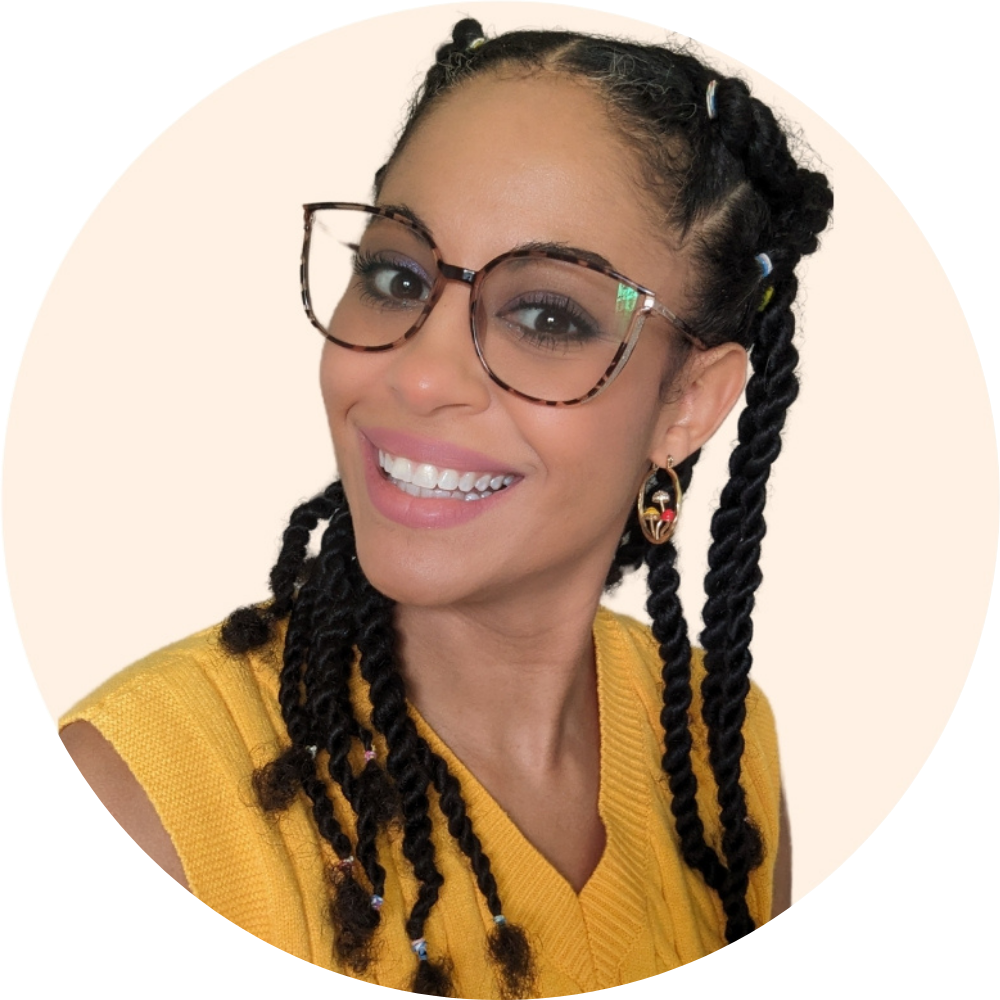
Krystina O'Bryant is the Chief Academic Officer at Parent ProTech. She is a lifelong learner and passionate educator with over a decade of experience in both student-facing and administrative roles in curriculum, instructional technology, and student support. In her role at Parent ProTech, Krystina oversees the development of all student-facing content and instructional resources, and she provides direct support and training to educators on important topics tied to online safety. She deeply believes in supporting students to develop strong critical thinking skills around online safety. In a world where information moves instantly, she encourages young people to build in a deliberate “moment of pause” before they click, share, or post online!