Spotify
 Apple Podcasts
 RSS Feed
  Goodpods
  Amazon Music
  Pandora
 "I Don't Even Like Calling It Claude" ft. Dr. Carol Fletcher | My EdTech Life 369
"I Don't Even Like Calling It Claude" ft. Dr. Carol Fletcher | My EdTech Life 368 A college student let an AI chatbot complete his entire research project. When his professor asked him to explain it, he couldn't. That's the story that opens this episode with Dr. Carol Fletcher, Director of EPIC (Expanding Pathways in Computing) at UT Austin's Texas Advanced Computing Center (TACC), where she leads research and professional development in STEM+CS education across the state.


"I Don't Even Like Calling It Claude" ft. Dr. Carol Fletcher | My EdTech Life 368
A college student let an AI chatbot complete his entire research project. When his professor asked him to explain it, he couldn't. That's the story that opens this episode with Dr. Carol Fletcher, Director of EPIC (Expanding Pathways in Computing) at UT Austin's Texas Advanced Computing Center (TACC), where she leads research and professional development in STEM+CS education across the state.
Carol doesn't hold back. She calls the "AI will do it all, kids don't need to learn to code" messaging coming out of corporate America "fascinatingly irresponsible." She breaks down research showing AI chatbots agree with users roughly 15 times more than a human would, and explains why she refuses to call any chatbot by a human name in front of students. We also get into why "just ban it" isn't working. 100% of kids in her conference's student panel said they're using AI, even in schools where it's prohibited. That's created a real adversarial relationship between students and teachers over AI accusations.
Carol brings a rare mix of perspectives to this conversation. She's a former middle school teacher, an elected School Board Trustee for 18 years, and the founder of WeTeach_CS, one of the largest computer science teacher professional development programs in the country. That program is where a lot of this episode's optimism lives: real, statewide, teacher-facing work that's been building AI and CS literacy in Texas classrooms long before this became a headline issue.
Then we go deep on policy. Carol chaired the Texas AI in Education Task Force behind a new white paper, and the numbers are sobering. Texas is one of only five states with no formal AI guidance for K-12, even though 86% of districts report teachers are already using it. She walks through the task force's recommendations and a red-light/yellow-light/green-light framework any district can start using now.
Chapters:
00:00 Introduction to Learning Stalls and AI's Role
09:56 The Importance of Computer Science Education
19:57 The WeTeachCS Summit: Building Community and Empowering Educators
29:58 AI in Education: The Risks of Over-Reliance
35:48 The Need for AI Guidance in K-12 Education
39:53 Navigating AI Messaging in Education
42:46 Recommendations for AI Integration in Texas Education
46:06 Practical Steps for Districts to Implement AI Policies
52:02 WeTeachCS: Supporting Educators in AI Literacy
Connect with Dr. Carol Fletcher & WeTeach_CS:
🔗 weteachcs.org
📰The Anatomy of a Learning Stall
📰Leading the Way in K-12 Education
Sponsors: Comeback Coffee | Book Creator (code MYEDTECHLIFE for a 3-month premium trial) | Eduaide.AI | Peel Back Education
👉 Support the show: https://buymeacoffee.com/myedtechlife/membership
👉 More episodes: myedtech.life
Blessings. Stay Techie ✌🏼
Peel Back Education exists to uncover, share, and amplify powerful, authentic stories from inside classrooms and beyond, helping educators, learners, and the wider community connect meaningfully with the people and ideas shaping education today.
Authentic engagement, inclusion, and learning across the curriculum for ALL your students. Teachers love Book Creator.
Thank you for watching or listening to our show!
Until Next Time, Stay Techie!
-Fonz
🎙️ Love our content? Sponsor MyEdTechLife Podcast and connect with our passionate edtech audience! Reach out to me at myedtechlife@gmail.com. ✨
00:00 - Welcome, Sponsors, And Gratitude
02:05 - Dr. Fletcher’s Path To WeTeachCS
06:05 - Building District Identity With CS
09:15 - How The WeTeachCS Summit Started
14:05 - The Learning Stall And Claude
27:12 - Vendor Hype Versus Real Pedagogy
36:49 - Texas AI Task Force White Paper
47:09 - Red Light Yellow Light Green Light
52:29 - Free Training And Leadership Network
57:19 - Speed Round And Big Concerns
01:03:09 - Where To Connect And Closing
Welcome, Sponsors, And Gratitude
Dr. Alfonso Mendoza
Hello everybody and welcome to another great episode of My EdTech Life. Thank you so much for joining us on this wonderful day. And wherever it is that you're joining us from around the world, thank you as always for all of your support. We appreciate all the likes, the shares, the follows. Thank you so much for engaging with our content and also for connecting with our guests. Thank you so much. I've received a lot of great and positive feedback from guests that have new followers and have made new connections. And that's what the show is all about growing our professional learning family. So thank you so much to you all. And a big shout out also as well to our sponsors. Thank you so much again to Comeback Coffee for keeping us caffeinated and creative throughout all our episodes. Thank you so much to Book Creator as well. And if you're interested in a premium trial, use code MYEDTechLife, and you can get your three months of premium trial there too, as well. And thank you so much to Edu8 and Peelback Education. Uh today I am really excited because I have a wonderful guest. And I know I say that all the time because all my guests are wonderful, but this is somebody whose work I've been following for years. I've had the opportunity to attend the conference that they hold each year, and it's one of the best conferences that I have ever been to. They do so much for educators, they do so much for students, and also just being at the forefront of technology and obviously during this time from 2022 till now, uh, you know, being at the forefront of generative AI and you know, putting out some great content, uh, training teachers and just overall wonderful organization. So I would love to welcome to the show Dr. Carol Fletcher. Dr. Carol Fletcher, how are you doing today? I am doing good. I'm doing good. Excellent. Thank you so much for being
Dr. Fletcher’s Path To WeTeachCS
Dr. Alfonso Mendoza
here. And especially, like I mentioned earlier, thank you so much for being here after having an eventful week. Obviously, the conference was this week, so I can imagine that you had so many things going on at once. And so I do appreciate you taking a little bit of time to be here with me today and talking about such an important topic and not only amplifying your work, your voice, your perspective, but also, like I mentioned, the work that we teach CS is doing. So I'm excited to be here with you. Now, Dr. Fletcher, for all my audience members that uh may not have connected with you yet or are not a little bit familiar with you yet, can you give us a little introduction and what your context is within the uh education space?
Dr. Carol Fletcher
Sure. Yeah. So I'm actually a former middle school science teacher. Uh I went on to get my PhD in because I wanted to do teacher training, work with teachers. And so for about 15 years, I did uh professional development um around math and science uh education in the state of Texas. Uh we ran the TRC or Texas Regional Collaboratives that we trained thousands of teachers every year. Uh and then my kids were going into high school. I wanted them to take computer science. And um uh there was only one class at their high school at the time, uh, Fleur Well High School, CSA. And I was like, I also happened to be on the school board at the time. And you know, school board members are always like, how do we compare to other schools? So I looked around to see how we were comparing to ethical, and I found out we were actually doing pretty well because most school districts didn't offer a single course in computer science. 25% of schools offer in Texas, high schools in Texas offered a computer science course at the time. That was like 2013, 14. And so I asked two questions. And the administrators I spoke with said we don't have a course because we don't have a teacher. And so I asked two questions. Who's training new teachers and who's preparing existing teachers? And I found out the answers were no one and nobody. Uh, and that's actually when we launched WeTeach C S to kind of fill that gap because we we discovered that there really wasn't anyone helping teachers build these uh new skills uh so that they could bring these opportunities to kids. And so WeTeach CS, we launched in 2015 with a huge focus on helping teachers, number one, get certified to teach high school computer science, but also looking at increasing the number of high schools and offer it, diversifying the kind of kids enrolled in it, and then building up our K-8 experiences so we create a strong foundation for any kid, whether they go into high school courses or not. Um, and so that's what we've been doing for now the last, I guess, um 11 years. Uh, and uh very proud of that work. And now we've really expanded beyond what I would describe as simply computer science. We have a much larger umbrella of services uh that we offer from um quantum. We teach quantum, we teach AI, we teach cyber. Um, we we we're doing some data science work, uh, you know, tons of computational thinking uh experiences. So we really are looking at the whole kind of less of a technology from an ed tech perspective, but more from the what do teachers need to know to bring these um frontier technologies to students.
Dr. Alfonso Mendoza
I love that. You know, and I think one of the things that you mentioned is is that distinction, even right there. You know, sometimes it's you know, here's the initiative, go and do it, but you're really going in deeper to the practice and the pedagogy and actually understanding the way the student is learning too as well, and also teaching teachers how to deliver the content in such a way that the students will also be able to understand and really uh and I always use this word, but like really internalize it. Like ever since I was in the classroom, that's kind of the word that kind of stuck with me with
Building District Identity With CS
Dr. Alfonso Mendoza
where it the students not only just learn it for that specific uh task or test, but that's something that they actually carry with them from year to year and continue to build up on that knowledge. And so I really absolutely love that that you mentioned. And you know, one of the things, even in my experience working at the district level and and seeing, you know, from that overhead view, uh the lack of computer science focus because it's almost like, oh, that's just another thing, or oh, just put them in that class because we don't have any other classes to put the students in. And then I feel like that's such a great resource that when you have a computer science teacher, somebody that can actually do it. I I think they they overlook the value that that teacher has. And it's almost just like, oh, they'll they'll just give them those kids that don't fit into a schedule, just pop them in there and that's it. And you know, I mean the students will learn, but it's it's just a a secondhand thing, kind of like eh, just hand it off and you know, and strategic. Yes, not strategic. And I've had uh, you know, the opportunity to see a friend of mine kind of go through that, and now he has actually moved to a school where he's doing computer science, and he now he's like the the most valuable teacher there because that's kind of their focus. And so I was like, I was sad to see him go, but I was happy to see him where there is somebody that actually sees the potential and is using him and his knowledge in the right way to also help students continue to grow and learn more from that. So that is fantastic.
Dr. Carol Fletcher
You know, we had a we had a session at our at our summit about um about school districts that are actually using computer science to build their brand identity. You know, public schools are really struggling now. They're under competition from from charter schools, they're under competition now with with um homeschooling and um also with the voucher program in private schools. And as a school board member, that was my thing. Guys, we need to cap this should be part of our brand identity in Flickerville. ISD. And by the time I left, it really was. We had at that, by the time I left, we had computer science in all of our uh high schools and all of our middle schools, uh, because we felt like this is how we distinguish our school district from others when we're actually trying to market. Why would you come to Flickerville?
Dr. Alfonso Mendoza
Absolutely. No, and that's great. I and I love that idea. So anybody listening, all our audience members, you know, these are some ideas of how you can leverage those wonderful educators that are already there that this is something that you can build on. And you heard it from Dr. Carroll. So, hey, you know, it worked for her. So, kind of maybe like it's one of those things, like I always say, you know, it's those little gems that you can sprinkle onto what you're already doing great. Now, Dr. Fletcher, tell me a little bit, because like I I know I mentioned right now in the very beginning, I know you've had a very eventful week. You just wrapped up your conference for this year. So I wanted to ask
How The WeTeachCS Summit Started
Dr. Alfonso Mendoza
you first and foremost, how did you start this conference? And what did you believe was possible with this conference? And what's what has been one of the biggest surprises for you in these years that you've done this conference?
Dr. Carol Fletcher
Oh, that's a good question. Well, I think we started the very first thing we did around computer science was really right when the new APCS principles um course was beginning to roll out. And I don't even think we called it the We Teach C S Summit the very first year because it was focused on what is this new APCS Principles course? Um, I also run a national network of people in other states who kind of do what I do in other states. And so I had a lot of friends and colleagues uh across the country that were connected to the development of the course with College Board, with NSF, with UC Berkeley, with other institutions and organizations. So we brought together all of the folks that were uh providers of curriculum, the people that had developed the course framework, and we we kind of exposed people to what it is, what the new vision for computer science was, which was truly to reach students that had traditionally been excluded from the way we were teaching computer science in the past, uh, and then to share with them um resources of their choosing. We're always curriculum agnostic. We never promote one curriculum in in particular. So we brought all of them. We wrote all of them and we said, pick the one you want to go to. Uh and um, you know, our goal has always been it's kind of a tagline on our website to to to educate teachers, to empower them, and to inspire them. You know, and so as we've grown bigger and kind of what our objectives are have grown bigger, that really grounds the work that we do. And I think what makes the We Teach CS Summit different, if you if you go online right now, you'll hear it from people all over that um really rolling out the red carpet for teachers, making them feel honored and celebrated and respected, making them feel like they belong in this space, and giving them a community to learn with, because this is hard work to learn this content. Um that is the number one goal we have. The learning the content is secondary to really feeling like this is the place for me. Uh, and now I have a big group of colleagues, friends that I can reach out to and learn from and grow with. Um, we are all learning. That's a great thing about the CS Education Community. There are no kind of like people that have just learned it all. And we are all learning how to do this work, and AI is that times 10. Um, so that's really kind of where we come from. We had our biggest conference at yet, over 700 educators. Uh, and next year we'll be in Houston and we're looking at a thousand.
Dr. Alfonso Mendoza
So I love it. I love it. And that's something that is fantastic. And like I mentioned, I I did get the opportunity to go to a conference. Uh, I think I can remember still if it was 2021 or around there 2022. I had just started my uh, I think my I don't know if it was during my master's program. If I just no, I think it was I had just started my doctoral program too. And um, so one of my professors actually was one of the ones that nominated me uh for to receive an award. And so I had the opportunity to go. And I had never that was my first time that I had ever gone to that conference, and it's such a different feel. It's so great. And not that all conferences aren't great, but just the the community, like you mentioned here, it it's just uh it really feels like a second home, and you're just with great like-minded individuals, and and maybe not so much with all that extra like hoorah kind of stuff that you see at other conferences, but it's just really educator focused, and everybody's you know having some great conversations and having a great time. So I congratulate you on you know doing this. I think it's what been 10 years now that you've been doing this conference.
Dr. Carol Fletcher
Yeah, we actually skipped 2021. We did it virtually in 2022 using Gather Town. That was a lot of fun, but a lot of work. And so we skipped 2021. So WeTCS is 11 years, but our conference was 10 years this year.
Dr. Alfonso Mendoza
Excellent. Yeah, fantastic. And so, guys, for anybody that is interested in that, I will make sure and link that in the show notes too as well. So you can check out the website and just be on the lookout for next year's conference and the information and for proposals and all that great stuff, because I promise you this is one of the best conferences that you will go to. Now, Dr. Fletcher, I I'm gonna kind of switch the conversation a little
The Learning Stall And Claude
Dr. Alfonso Mendoza
bit because one of the reasons that I immediately, immediately reached out to you was because of a LinkedIn post. And for my audience members that uh maybe they know, or maybe some of you that may not know for the first time, like I hang around LinkedIn, and sometimes when I just see kind of like a spicy take, or I just see something that just really hits, I'm like, hey, I want to know more. Like it's like I want to know what your thought process is, why you're thinking this, what is happening, what's going on. And from coming from somebody like you that is well known and I respect, I said, you know what, let me reach out because this is a great conversation uh piece because it's something that obviously teachers right now are maybe seeing that maybe some of them not yet, but they will. And these are the conversations that are being had on social media, and so I said, you know what, let's bring it to the forefront here. So I you we there was an article that was posted. It was called the Anatomy of Learning Stall. Okay, so this was written by a professor who essentially assigned, you know, gave an assignment to a student, and really the student just kind of took that first conversation that they had and just popped everything into Claude and just said, Okay, here's my project. So they just let Claude do its thing. They wrote down all the answers word for word, came back, had a conversation with the uh professor, and then the professor started noticing that the student really didn't know what was going on in the project or how to explain the project. So maybe there wasn't really any learning there other than, hey, this is what you want, this is what I'm gonna give you, and now I get my grade, which is kind of a mentality that we've talked about a lot in the classrooms where even in my experience, uh Dr. Fletcher, and my even in my doctoral experience, coming in with my peers, and then all of a sudden my professor says, This year we're gonna, I'm gonna give do a choice board. So you have these five choices of how you're gonna go ahead and submit your learning. It's 22 contact hours. I was just like a fish in water coming in, teaching it from elementary because I use choice boards. I was like, what a breeze. But like I was mentioning, it it's the the peers, my peers, they're the look on their faces, and these are executive directors, these are principals, these are you know, high-level, you know, in the education, had that deer in the headlights look. Like, what do you mean? I don't understand. Like, what do you mean I have a choice? What do you mean? And I think it's just that we're so used to just getting that exemplar, and we just mimic what the professor wants and we submit. So I want to ask you here, you know, you called this this post just uh it has dangerous messaging. You know, it's an example of the dangerous messaging that is out there. We'll link that article, but can you walk me through your reaction when you first read this and what was the first thing that hit you about this article?
Dr. Carol Fletcher
Well, you know, it was sad. It was sad because this is a a young person in college, I think majoring in computer science, who um so the difference between how an expert will use AI as a tool and an expert programmer will use AI as a tool versus a novice programmer or a novice writer versus an expert writer, I think it's profound, and we do not know enough about this. And so what it's the experts that are creating the tools, but it's the novice people that are suffering the consequences of dependency on the tool and not really understanding where am I what am I learning as opposed to what am I producing? Um, and I I'm very concerned. This is very much in the the software development side of the house. I'm I'm very concerned about the messaging that I'm seeing from corporate America about you're not gonna need to, we don't need to teach anyone how to program, how to code, because the AI is gonna do it all. And um, you know, I don't know how you get a senior developer if you don't hire any junior developers. That seems to be really short-sighted, just from a not good for business perspective. But um, I think it's really misunderstanding people who are running these large companies are not educators. I I think it's really misunderstanding the role of of education to build up those skills. Uh, and I think it's also misunderstanding how detrimental that is to a system in which we need to build these fundamental skills for kids. Um you know, I hear often now from principals or teachers or um parents that, well, I'm worried it I shouldn't have my child like maybe go into computer science because AI is gonna take all the jobs. And that is just super counterproductive too. Um I think what I think the advent of AI has made it even more salient to have a foundational understanding of how algorithms work, how they might not work, be biased, etc. Um, and what those impacts are on society, uh, and who's designing. It's even more important that we actually are teaching kids kind of these foundational skills. Uh, and then in a actually in a different post, I made a comment about um, you know, vibe coding may work if you've got some little, you know, low-stakes um product you're you're you're tinkering with, or vibe coding may work if you're in high school and you're gonna you're gonna submit uh an assignment. It's not gonna work if you're gonna ship a million-dollar product. Uh because if you don't know what the code's supposed to look like, you can't debug it when it doesn't work well, you know? And so I think we're just like really being superficial about how AI will be used, and we're like cutting ourselves off at the knees by acting like we don't need to keep teach kids these skills anymore because AI is gonna do it all. I think we're gonna find out that was a real mistake, not just bad for kids, but bad for corporate America, quite frankly. Um, I find it fascinating and irresponsible.
Dr. Alfonso Mendoza
Yes.
Dr. Carol Fletcher
Fascinatingly irresponsible to be making those kinds of claims.
Dr. Alfonso Mendoza
Yes, no, and you know, it's very interesting because, you know, as the the article states, and this is uh coming in from uh Krista V. Lopez, and we'll definitely link that there. But, you know, it's everything that the student brought in looked great, it looked correct, but it was just completely fabricated. And like I mentioned, the student was stuck not being able to explain and having that foundational knowledge, which is something that is so important, you know. And I think like you were saying, it's with this with generative AI, it's almost like everybody should be able to move faster. Now everybody can be an expert, but like you mentioned, it's like those experts will know how to use the generative AI correctly because they know that background. And for us that might be novice or let's say just even, you know. Uh, novice users are really just maybe in the middle of the pack where we kind of understand what we see. We still need to know that knowledge to say, like, hey, yes, this is correct, or no, this is not correct, because what's happening is like we're seeing and we're hearing this that AI slop of everybody just putting things out there, thinking that they are correct, but they are definitely not incorrect. And obviously, the messaging of just put your faith in this technology because this technology is gonna revolutionize everything and it's gonna be correct, but it's not always correct, it's not a hundred percent correct. And I remember seeing a uh a little clip of um interview with Ed Zitron, and Ed was just like, Hey, like, how are they asking us to really go in on generative AI if it's not ever a hundred percent correct? It'll still hallucinate. And the person interviewing him was saying, Well, humans make mistakes too, humans aren't a hundred percent correct either, so why should we expect generative AI to be correct a hundred percent of the time? And I'm thinking to myself, well, because that's what a machine does, it you know, at least my calculator, my calculator is always a hundred percent right, and when it's not, it's a picnic error, and I call it a picnic error because it's problem in chair, not in calculator, or you can use problem and chair not in computer, but uh you you will always get the correct answer. So I think, like you said, it always goes back to that messaging. There's always you know that push because this is the next greatest thing. But like you said, and we talked a little bit, and we'll get into uh you know the paper that y'all just released, but there are some things that we still need to look at and really need to see and analyze because this has been the biggest worry of educators, English teachers, you know, social studies teachers, math teachers, all teachers, how easy you can just go into an LLM and get the answer. So now what in my circle, and I'm pretty sure that maybe at the conference too, you saw proposals, it's like the anti-AI assignments or anti-cheating assignments, where now it's let's make the learning more visual, let's make the the learner now explain for this very reason. Like, do they really understand the content and concept, or are they just you know relying on the LLM to seemingly look like they understand and then they just go and move move along, you know, and get their grade and so on. So that's something that's very interesting.
Dr. Carol Fletcher
In this particular instance, in the you know, most higher ed institutions are encouraging the use of of AI in instruction. I mean, AI is absolutely clawed code is revolutionizing uh how software gets developed, without a doubt. So I'm not saying we should, and this student, he he wasn't approaching this like I cheated. I mean, he was telling his teacher, yeah, I'll use Claude for this, I use Claude for this, and then he then the teacher would or professor would ask, but why did it do this? Or why did you just well Claude just did it? So he didn't even realize he had lacked the metacognitive understanding that he was not learning the fundamental architecture of what he was doing and why he was doing it, or why Claude was doing it. And I think that's what we have to, as educators, like figure out how to get to that kernel with students and how to help them understand that. Um, it's a whole new level of PCK in pedagogical content knowledge in every classroom, in English, in social studies, in computer science. It's a even if you never use AI yourself as an instructional tool, we have to help kids understand how AI works and how they leverage it to improve their learning and cognition, not offload their their cognition.
Dr. Alfonso Mendoza
Excellent. Yes. All right. Now, my next question to you is kind of something that we kind of started talking about a little bit pre-chat, because it kind of goes along with this that we're seeing. Obviously, there's a lot of platforms that are out there. Uh, you know, you see um, you know, on TikTok, social media, the way that they present these uh platforms in kind of a way where it's like uh just very natural and it's not really like an ad,
Vendor Hype Versus Real Pedagogy
Dr. Alfonso Mendoza
but that you know, very conversational. But they're talking to you about how, you know, AI humanizers for higher ed, they're sticking in all these AI platforms for high school rewriters, those that often, oh well, they got caught because you can see in a Google Doc how they just copy and paste, and now they have an app that'll slowly start typing the content for you so it looks more human and that you're doing these things. So I would imagine that as a person who puts on conferences, that there are vendors that reach out to you from all corners of the world, you know, and even corners that you didn't even know existed, especially now with generative AI. And maybe their messaging is always like, hey, you know, AI, our tool, the great equalizer, this is the tool that's gonna do it all, and that anyone can learn anything or do anything with just the right prompt. So I want to ask you when you hear that messaging, maybe from you know, those vendors, but also if you do hear that messaging, maybe even from a well-known leader, thought leader, presenter, and things of that sort, you know, what what goes through your mind? What are your thoughts on that?
Dr. Carol Fletcher
So I often say if there's one thing we learned from COVID, it's that you can't simply put kids in front of a computer and expect learning to happen. Uh yeah, you know, uh, it is for 95% of our students, um, it is a very social uh function and requires the engagement of a teacher who whom kids believe um likes them, loves them, is there for their best interest, and is there to help coach them along the way. Uh and thinking that AI will be different from that, I think is very naive, once again. Um so I would I look for in conversations with vendors people who put the pedagogy first and the tool as a way to maximize strong pedagogical practices, not as a way to um replace the teacher, um, potentially as a way to make um um feedback for students more immediate. Uh that's one of the advantages of using AI tools, uh, but not to replace feedback from the teacher, um, potentially to help um um organize and maximize the teacher's capacity to look at all of their students, you know, and kind of get some themes of where students are learning or not, uh ways to um um differentiate instruction in a way that um was very difficult. You know, you ask a doctor, I want you to, you know, take these 30 patients, they all have different issues, but you're gonna treat them all simultaneously in one room. You know, like we we would that that would be a joke, but we do that to teachers all the time. Uh, and so a tool, an AI tool helping you to differentiate Lexile levels on on um um, let's say reading um passages, etc., there is value to it, absolutely. But any tool that claims to be able to replace the teacher, I think is take whoever's doing that has a very limited understanding of actually what learning means and what it takes to truly, you know, learn something. Um, and I think learning is a relational experience and we need folks that can that can help students learn not just content, but content in the context of other people, society, and communities. Quite frankly, that's more important than the content. Um and so using an AI or an AI, you know, anthropomorphic AI human-like company to do that, I don't think that's uh that's in the best long-term best interest of kids, whether they learn the content or not. Honestly, we know that these AIs are syncophatic be on purpose, syncophantic on purpose. You know, research shows that they are 15 times more likely to say to agree with students, to say, no, you're doing the right thing than than a human interaction will be. You know, I say all the time, of course. I would love it if my husband always agreed with me and told me I was always right and you know, and I looked great every day. He could still tell me that. But um, you know, I would love it if he did that, if my colleagues did that, if I were, but that's not human interaction. And we are by making students putting students into situations where they're where they think that that's what a human interaction should be like, I think that's also dangerous and short-sighted. Because they will not be able to develop appropriate human relationships if they expect human relationships to always be like that. They are not. Um, and so I don't even like calling AIs by human names, like Claude or Alexa. I don't like that. I think it anthropomorphizes them too much. And young people don't have the cognitive skills to understand the the difference between what we call AI, artificial intelligence, and what human intelligence and empathy, true empathy really is. This is like not at all about the content, but this these are the things that keep me up at night is how are we equipping young children to navigate this world fraught with hallucinations, syncopacy, uh anthropomorphic uh AI chatbots that um are not helping them to grow and develop intellectually, socially, emotionally, and psychologically in healthy ways.
Dr. Alfonso Mendoza
Oh my gosh, that is such a great talking point. That could be a whole new episode that I could be having with you because that is something too that I struggle. And those are some of the questions, even that I have, you know, like you said, you know, keep it keep me up at night and just thinking of where this is going, where and and obviously to me, I think my biggest concern is the distinct messaging between K-12 and then the outside enterprise world, you know, and it it's it just doesn't line up. And then of course you're talking about the parasocial relationships that students or young adults are building with their devices, with you know, with uh their AI chatbots and things of that sort, and losing out on that human connection and yeah, so many things there for sure that can affect you know even the young students in that cognitive way, and then also just in relationships and communication and things of that sort. So that's a whole definitely other thing that we we can definitely talk about. But now what I want to do now is also address and talk about the great work that you all have done. You all have released a white paper, uh yeah, and it just came out yesterday, and I saw that post. So I I'm curious, you know, to hear a little bit more about this, what it's gonna cover. But I know that there was something that for me was kind of like, oh, this is something that is very interesting, where it states uh here that let me see, Texas is one of only five states with no formal AI guidance for K-12 education, even though 86% of Texas school districts report that teachers are already using AI. So, first of all, before we get into this, Dr. Fletcher, tell us just a little bit more about how this paper came about, what the mission and vision was, but then let's you know kind of just embed that in there here, especially for us here that are in Texas.
Dr. Carol Fletcher
Yeah. So um we we have we actually have uh a grant from Google.org called the Align Project, and it has several components around AI, helping teachers understand AI, um helping districts plan strategically, um,
Texas AI Task Force White Paper
Dr. Carol Fletcher
on how to address AI, um, all of those kind of things. And one of those projects, we are hosting AI symposia around the state uh as well. Um, but one of those projects was to put together an AI and education task force for the state of Texas. So I chaired that task force and and convened um experts from across the state in um K-12. We had teachers, we had administrators, we had uh folks in higher ed that were computer scientists, we had folks in higher ed that were um uh that did teacher preparation and professional development, we had business and industry represented, um Texas PTA, et cetera. So we tried to have this broad cross-section of people. And we said we started with a vision. Our vision is that every Texas student should thrive both personally and professionally in an AI partnered world. How do we get to that vision that every student can thrive in this new world in which AI is pervasive? Um and we know that so we looked at like what are the barriers you're getting there? One of the big barriers in Texas is that our at a state level, we've really had no conversations, no guidance for K-12 specifically, about how school districts should be developing policies around student usage or or um educator usage, engaging families in in coming to consensus in their community about how they want AI to be used and what they want their children to learn. Um no guidance on how to vet AI products for you know usability, child safety, privacy, no guidance there. And so it was nice because I didn't really necessarily plan it this way, but you know, we all really grounded our concerns around those concerns that I addressed earlier. How are we preparing students to ensure that they are growing in healthy ways cognitively, socially, emotionally, psychologically? What are we doing as educators? And what should the state do to help the 1,200 school districts avoid reinventing the wheel in our state? And so we came up with four recommendations uh for the state of Texas. Um, number one, um, we need a somebody running point at a state level, and that person running point, likely at TEA, needs to have the authority to establish a strategic plan for the state of Texas about how are we going to address AI and K-12 education, both from a policy, a teaching and learning, a you know, accountability perspective, all of those things. Um we also uh said that we need to ensure that um we invest in professional development for educators. We have we have more people working in public education than the entire workforce of the 12 other states. Texas is huge. We have a lot of team, I think there's over 700,000 employees in public ed in the state of Texas. Um, and so it's a big lift, but we cannot ensure our students are AI literate if our educators aren't AI literate. And so we need a strategy that will um, you know, strategically through a network of learning help build that AI literacy. Um, and then three, we so we need to invest in professional development and we need to do that strategically. Three, we need to um issue guidance for school districts uh so that school districts have some, it doesn't have to be regulations, but just examples of good policies for teacher and student usage that they can then go back to their local communities and decide on. Even those we partnered with TAC, the Texas Association of School Administrators, which is superintendents, uh, on a survey, and that's where we got the data about, you know, 86% of them said teachers were using it, but I less than, you know, less than 20% had any policy around educator or teacher usage, and less than 25% had a policy around student usage, even though they know students are using it. So even though that 25% with the policy, probably half of those were don't use it, you know. So we just are kind of like kind of la la la odd. And and it's just like we're it's like the tsunami that we just are not addressing. Um, and so then the last goal was, or the last recommendation is we need to uh look at our standards, our Texas essential knowledge and skills, and really come up with a strategy for addressing AI literacy in those standards. Um, because we know that those knowledge and skills are only reviewed about every seven years. We just reviewed computer science about three years ago. Uh, and so if we don't, if the if the legislature doesn't direct the state board to do this, we won't have decent standards until like 2030 in the classroom for AI. And we know in our state, we're fortunate that if we want to implement a strategy, a statewide strategy, and our state standards are the law, and teachers and administrators really respond to that. So we've got to address that. So those are the four big recommendations, but they're all grounded in that idea of how do we protect kids, not how do we shove AI down their throats. How do we protect kids and give them the knowledge and skills they need to navigate this new world? Um and simply doing nothing is failing them. And that's kind of what we're doing now.
Dr. Alfonso Mendoza
Excellent. No, and this is something that is it's interesting because, you know, us being that as big of a state as we are, you know, and now just finally seeing this and and you, you know, your report bringing this to light, I think that this is finally something that is very helpful because what happens is in the K-12 space, for those of us, you know, listeners that are in the K-12 space, you they come in, they know the cadence for the year. It's always like beginning of the year, it's like PDPD. And then after that, any conversations that were had in the summer that might be like, hey, how might we improve our generative AI policy? Or how might we even start? Like, because we haven't even had those conversations. So those conversations get started, beginning of the year comes up, all the normal cadence stuff, then all those conversations fall by the wayside. Then, of course, January is star testing season, which everybody forgets about anything else, and then now we're back to summer. Let's start off those conversations, and it's like you're starting over and over and over again. It's like almost like Groundhog Day, where you just come back to that same point at the beginning of the year and not moving forward. So I think that this is something that is great, and just that guidance for a lot of districts that still may be paralyzed, that still may not know what to do, but the teachers in the classroom are already using this with students. And so that I think is something that is very important that I always like to say is that when you do start having those conversations, you need to include all stakeholders, you know, good representation, because oftentimes is seen where it's one person that just makes a decision and this is the way it's gonna be, without taking into account you know, the workflow, without taking into account the student, you know, progress throughout the year, taking into account those cadences and just saying, nope, this is all you're gonna do or use or not use, and then that's it. But it's very important that you do have those discussions. And I think for me that that I haven't yet in Texas, and I'm not saying that there aren't, but I haven't yet seen or heard from because I have friends that'll tell me, say, Hey, do Do you know of any schools that already have something down and have something down? I'll be like, Well, I've seen some, but I haven't seen them like just something that is like, boom, like really good and be out there. I'm not saying that they're not, but those conversations are still being had where people are reaching out to me. It's like, hey, can you connect me to so and so? I was like, absolutely, and then just see where you um, you know, might be able to get some ideas from to start building your policies. But one thing we do know for sure, teachers in the classroom are using it. So I want to ask you, you know, for those districts that right now are hearing this conversation, and maybe some leaders are taking this conversation to the top and saying, hey, we're falling behind, what might be some things that you can share just to kind of put them at ease and peace to say, like, okay, yeah, I know maybe you feel like you're a little too late, but here's a good starting point and and something that might be easy, digestible for them to start off with. But to be able to continue throughout that yearly cadence, what might be some advice that you can share?
Dr. Carol Fletcher
One of the things that I've seen in several different areas um of uh other states with guidance or good good school district guidance is um the development of a kind of a like a red light, yellow light, green light rubric for the use of AI that helps give students some guidance about when are they allowed to use it versus not allowed to use it and to what degree on assignments.
Red Light Yellow Light Green Light
Dr. Carol Fletcher
And so, for instance, uh red light is you're not allowed to use AI, you know, at all. Um yellow light is, you know, you can use AI for brainstorming and ideation, um, but after that, it needs to be on your own. Maybe green light is is more like you can use AI to edit, to uh edit a first draft to provide, you know, as a Socratic, um as a Socratic uh tutor, things like that. And then kind of the infinity version is go for it, use AI as you see fit in this particular project. And so you're giving kids the guardrails that they need to understand how to use AI. And that's so that's a policy guidance. And we have some of this uh linked in the white paper that I have found. Uh North Carolina state of North Carolina has great guidance, and this is kind of where I first saw this, with a lot of examples of here's a red light, you know, or a level one versus a level two versus a level three lesson. So they have actual examples of lessons that operationalize what those different levels are across the curriculum, English, language, art, social studies, etc. Um, so I think start with that. Like get together some teachers and start with let's come up with something that will give our students and teachers a little bit of guidance on how they could use AI. Because simply saying don't use it isn't working. There we had a student panel at our conference. I asked every kid how many students are using AI in your school. They said 100% of them, if not, you know, 95 to 100% of kids have used AI in in their schoolwork. Um, even in schools where it's banned. Um but it was also sad to hear how much they were worried about. We had one young woman who's a freshman in college, um, was really articulate about this, how worried they were about having to prove that they didn't use AI, the links that they were having to go through to document how they created something, the experiences that some of their friends had had when they were accused by a teacher or professor of using AI. Um it was it saddened me because it was a very adversarial relationship between students and teachers. Um and I'll just use this as an opportunity to say those AI detection tools are do not hang your hat on those. They are not gonna keep up, that's not gonna work. You need to find another way to deal with it. So that's the one thing I would say. Get teachers together, come up with uh some kind of you know um layered approach, and then you're gonna iterate on it as you learn, but have a plan for iterating on it. That's the first step.
Dr. Alfonso Mendoza
There you go. That's perfect. You know, and like I said, just keeping it simple. I I'm a big proponent of the KISS philosophy. It's keep it simple and streamlined. And, you know, I know other people they use a different S at the end, but I just like to streamline the process. But something that's digestible by its size that you can move on. And again, I know that at the beginning of the year, it's like boom, like the cadence starts and forget about everything else. I'm gonna I need to move on curriculum. But this is something that the conversation can continue to go and grow with there. And obviously, being on the same page that really helps when you have those representatives either from every campus as well, so that way that messaging gets across and proper training, all that that follows up. But I'm really excited about the work that you're doing, Dr. Fletcher. And uh before we wrap up, I know we wrap up with three like kind of little uh, you know, questions that we always end the show, or little kind of uh rapid fire round. But before we do that, I want to give you a little bit of time. I'm gonna I I am gonna post the we teachcs.org website on uh the show notes. But one thing that I do want to share here in the podcast is just if you go to this website, everybody, and you see the getting started. I mean, it is amazing. The initiatives that are here. I mean, in 10 years, the work that you know Dr. Fletcher and the rest of your team have been able to do as far as training, workshops, courses. Um, you know, you've got the launch K8 uh computer science. We teach AI, cyber, data science, quantum, Texas CS Leadership Network, Sage Teacher Mentor Network, Teacher uh Texas Computer Science Pipeline, CEO initiative. I mean, they've got so many things here. Teacher certification uh prep prep also as well. I mean, Dr. Carroll, this is a testament of the work that you and the rest of your team have done. So I just kind of want to give you a little bit of time, just kind of like somewhat like a little commercial here. What what might or how would this right now, you know, with the way that we're thing seeing things, how does We Teach CS benefit district, district leaders and teachers
Free Training And Leadership Network
Dr. Alfonso Mendoza
as well?
Dr. Carol Fletcher
Well, thanks for asking that, because I would be in tr get in trouble with um with my team if I didn't like plug actual We Teach CS stuff. Not because we make money on it. We don't. We're we're academics, not a company. Uh, and we are very fortunate that we have um a lot of funding from the state of Texas to run computer science education professional development for the state. And what that means is everything is free to teachers. We pay teachers to go through professional development, we pay teachers to get certified, we pay for travel and lodging if they come to Austin or elsewhere to go to professional development. So, what's in it for the school district? We've taken care of the financial side. We're asking for a big commitment intellectually uh from teachers and leaders. But um if you need help building capacity for everywhere from uh early childhood through principals and superintendents in any aspect of computing education, we have resources that can help you do it. That's the number one. And for particularly for the leaders there, I want to plug our Texas CS Leadership Network. Um, this is a virtual network that you just can sign up for. We meet virtually every other month, and we have topics of interest to people who are leading computing, AI, education in their school district. And so it's exclusive, there's no vendors there, it's exclusively for those leaders, and it's a way, it's a community of practice. There's a lot of where they learn from each other, really a peer learning network. So we have our our members present to each other. We may bring experts in to present as well. Um, it's all free. You just sign up, you get a an invitation to come to the virtual meeting. So uh that's uniquely for those leaders. And then we're also rolling out a district AI strategic planning uh tool. Um, that hopefully that'll be out and ready um um soon. And um I encourage you to check that out through our align website, which is kind of like a sister site. You can get to it from We Teach CS.
Dr. Alfonso Mendoza
Excellent. Well, Dr. Carroll, it has been an honor and a pleasure to have you here. Thank you so much for taking a little bit of your time today to meet with me and just really getting your perspective as somebody at your level and obviously being in touch with so many people around the state through your organization and what your team hears, which is an amazing team, also as well, that I definitely recommend that you connect with uh to my audience, please, anywhere uh that you might find them. You'll definitely see them on the website too, as well. But I it this is something that for me is very near and dear to me, not only just because it's Texas, not only also because it's it's uh in uh conjunction with the university, the University of Texas. Uh but that that's just beat me. But you know, I being or going to this conference, definitely seeing the work and the benefits for the teachers and the leaders, and then um, you know, like I mentioned, being at the forefront and always pushing ahead, preparing teachers. I think that's something that is so important because at the end of the day, the students will definitely benefit from that. So thank you and thank your team also for the work that you all are doing and pouring your hearts out in all of these initiatives and all of these certifications and the work that you're doing. So thank you so much for sharing that wealth of knowledge. But before we wrap up, Dr. Carol, we always end the show with this little speed round here. So hopefully you are ready to go. And if not, it's okay. You know, you can take your time on the questions. But here we go. So, as we know, Dr. Fletcher, every superhero has a pain point or weakness. So, for Superman, if you're familiar with Superman, it's kryptonite was his weakness. It just kind of made him just uh, you know. So I want to ask you, Dr. Fletcher, in the current state of education, what would you say is your current edu kryptonite?
Dr. Carol Fletcher
There are so many components of the education ecosystem that need to be moved levers that need to be moved simultaneously in order to get where we want to go. That as you can see from our website, we tend to like we have our finger in the pot a lot of these spaces. And so um that it can dilute the work that you do. Uh so I'd say that for for our organization, that can sometimes make it a little bit difficult. But we also feel
Speed Round And Big Concerns
Dr. Carol Fletcher
like we've got to be pulling these levers all from policy to teacher pre-service preparation, teacher in-service preparation, administrator and leader training, um, you know, uh pedagogy, uh, you know, core foundational knowledge. All of these things need to be addressed. It's hard to do that in a coherent way. And sometimes we do it better than others. So I'd say that is probably the biggest challenge. But a big part is really building the capacity of others outside of our group. And that's really a goal of our Texas CS Pipeline initiative is to build the capacity we give grants to other institutions to do professional development, et cetera. Uh, so that's what how we're trying to address that.
Dr. Alfonso Mendoza
Excellent. Great answer. You know, with the vision right now, when you talked about all those levers and everything, I don't know why. I just got the vision of kind of like uh those pipe organs, old pipe organs, where you're pulling levers and finally when you pull those levers just to get the right note at the right time, but you're still moving around so much. So yeah, absolutely. All right, Dr. Fletcher, question number two. If you could have a billboard right there, like an I-35 in the middle of Austin or something like that, with anything on it, what would that billboard have on it and why?
Dr. Carol Fletcher
God, thank a teacher. Thank a teacher. Um, you know, I say I I was a teacher for a middle school science teacher for six years, a school board member for 18 years, but um, when I left teaching, I left in um in because I knew I wanted to get my PhD. So I in the next three and a half years, I finished my master's, my PhD, and had two babies. That was easier than being a really good middle school teacher every single day. And I worked in a great school with great colleagues, great principal, great kids, parents supportive. But it's hard to bring your A game every single day. And people who are not, who are not, have never been in the classroom, have no idea how hard classroom teachers work. And teachers don't realize how hard they work compared to other jobs until you get out of it and and you can look back and see that. So um people should thank a teacher every single day, uh, because they're the hardest working people uh I know.
Dr. Alfonso Mendoza
Absolutely. Great billboard. And my last question for you, Dr. Fletcher, before we wrap up is if you could trade places with anyone for a single day, who would that person be and why?
Dr. Carol Fletcher
Gosh, that's a tough one. I I hadn't gotten through to that third question. Um, I'd say probably um maybe the TEA commissioner, just so I could like get get things going, uh, you know, help them kind of uh share my vision for how we what's most important about addressing, what's most important to address as we're navigating this new world of AI. Um that might be what it is, because we've got to keep that in mind, the social, emotional, cognitive development of students, not the tools, not the all of that is secondary to how are we helping kids grow. And I'll say what I said to you before we started when social media came along, we were all very Pollyanna about how, oh, social media is going to connect people across the world and raise voices and democratize access to information. And we were really naive about um the negative implications of social media on young children in particular, but on society as a whole. Um, and the people who were had the most money and the biggest megaphones were the least likely to talk about the negatives. Um we have to do better with AI. We have to do better with AI. We've got to think about what are the unintended consequences of this on young people's development and be proactive instead of reactive about how we avoid those negative consequences. That's not to say we close our eyes and just say no AI. It's here. Uh we are doing children a disservice and their parents and our taxpayers if we don't figure out how to handle this.
Dr. Alfonso Mendoza
All right. Great answer. Great answer. Well, Dr. Fletcher, again, it's been an honor and a pleasure. Thank you so much for being here with me today and just sharing your insights, sharing your work. And just for all our educators that are listening, you know, getting them really excited about your organization, what you all are doing, about your conference too as well. And all of that information will definitely be linked in the show notes as well. So that way you might be you will be able to connect with We Teach CS. You'll be able to connect with Dr. Fletcher too as well. So Dr. Fletcher expects some new friend requests on LinkedIn, uh, you know, from audience members and so on. But again, thank you and the work that you're doing. And I wish you and the rest of the team the best in this next season, this new year that'll be starting up in August. And I know the work doesn't stop for you all, but again, you know, just continue doing what you can. And you always have an open invite whenever you'd like to come back or the team or different initiatives, you're always welcome back. Once a guest, always a guest. So thank you, Dr. Fletcher. I appreciate y'all. And for our audience, please make sure you visit our website at myedtech.life where you can check out this amazing episode and the other 367 plus episodes that we have, where I promise you you will find some knowledge
Where To Connect And Closing
Dr. Alfonso Mendoza
nuggets that you can already sprinkle to what you are already doing great. Thank you again to our amazing sponsors, Comeback Coffee, Book Creator, Eduate, Peelback Education. Again, we do what we do for all of you. And again, our mission is to bring you great conversations so we can continue to grow not only professionally, but also personally as well. So until next time, my friends, don't forget, stay techie.
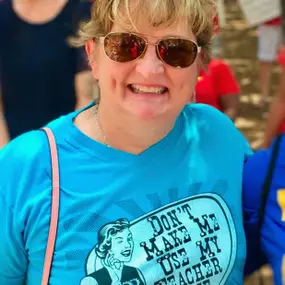
Director of Expanding Pathways in Computing (EPIC)
Dr. Carol Fletcher is Director of EPIC (Expanding Pathways in Computing) at UT Austin’s Texas Advanced Computing Center (TACC) where she oversees research and professional development in STEM+CS education. She is founder of WeTeach_CS, PI for the NSF Expanding Computing Education Pathways (ECEP) Alliance and lead author of the CAPE Framework for examining interdependencies and structural barriers in the CS education ecosystem. Carol is a former middle school teacher and an elected School Board Trustee from 2001 to 2019. Carol’s work reflects her commitment to creating systems in which all students can thrive personally and professionally in a technology-driven world.