Spotify
 Apple Podcasts
 RSS Feed
  Goodpods
  Amazon Music
  Pandora
 Ready Beats Finished ft. Marnie & Nick | My EdTech Life 366


Ready Beats Finished ft. Marnie & Nick | My EdTech Life 366
What does it actually mean to be ready for the real world? Not finished. Not just checked out with a diploma. Ready. In this episode, I sit down with Marnie Stockman and Nick Coniglio, authors of The Business of You and Lead It Like Lasso, to talk about Blue, their app built to help middle school, high school, and college students discover who they are, learn to tell their own story, and step into the world with real confidence.
This is not your typical EdTech conversation. Marnie and Nick are tackling something that report cards and GPA scores have never been able to measure: character, self-awareness, and the ability to communicate what makes you, you. And in a world where AI can generate a resume, a cover letter, and a personal statement in seconds, your authentic story is the only thing that actually sets you apart.
What you will learn:
- Why is there a big difference between being finished and being ready
- How Blue uses scenario-based games to help students discover their core values and strengths without 180-question personality tests
- Why self-awareness is one of the top predictors of success and how Blue builds it at scale
- How Blue is closing the equity gap in college coaching, where families are paying up to $10,000 for the same mentorship Blue puts in every student's pocket
- How districts can finally measure their Portrait of a Graduate outcomes using Blue's readiness framework
- Why authentic storytelling is the skill AI cannot replace
Chapters
00:00 Introduction and Background
04:54 The Concept of Blue
09:43 Engaging Students with Blue
18:16 Personalization and Reflection in Learning
24:56 Asking the Right Questions
31:24 Enhancing Student Readiness and Support
34:04 Equity in Education: Bridging the Gap
36:00 The Importance of Personal Branding
39:02 Authenticity in Student Narratives
40:54 The Future of Blue: Innovations and Feedback
44:58 Reflections on Education's Challenges
50:37 Connecting with the Innovators
📲 Connect with Marnie & Nick:
Website: blueapp.ai
Marnie Stockman on LinkedIn
Nick Coniglio on LinkedIn
Book: The Business of You https://amzn.to/43dgqLA
Book: Lead It Like Lasso https://amzn.to/4vsGyxQ
🎧 Listen to Episode 336 — the first time Marnie & Nick joined the show: https://www.myedtech.life/thebusinessofyou/
💙 Love the show? Support the mission!
If My EdTech Life has ever given you a knowledge nugget you could sprinkle into what you are already doing, consider becoming a member and helping us keep these conversations going. Your support makes it possible to bring you amazing guests, great content, and this community we are building together.
👉 Join here: https://buymeacoffee.com/myedtechlife/membership
🙌 A huge thank you to our sponsors who keep this mission going:
☕ Comeback Coffee for keeping us caffeinated, creative, and ready to record. https://comebackbev.com/
📚 Book Creator for empowering student voice in every classroom
bookcreator.com/ Use Code MYEDTECHLIFE for Premium Access.
🤖 Eduaide.AI for putting thoughtful AI tools in educators' hands
https://www.eduaide.ai/
We do what we do for you and because of you. Thank you for listening, sharing, and engaging with the show.
Stay Techie ✌🏼
Thank you for watching or listening to our show!
Until Next Time, Stay Techie!
-Fonz
🎙️ Love our content? Sponsor MyEdTechLife Podcast and connect with our passionate edtech audience! Reach out to me at myedtechlife@gmail.com. ✨
00:00 - Welcome Back And Six Years
02:00 - Meet Marnie And Nick
04:43 - What Blue Is Built To Do
09:20 - Student Testing Through Games
13:37 - Designing For Youth Engagement
23:43 - Authenticity In The AI Era
29:11 - Readiness Framework And Equity Gap
41:05 - Beta Cohorts And Student Scholarship
44:17 - Edu Kryptonite And Rapid Questions
51:00 - Where To Connect And Closing
Welcome Back And Six Years
Dr. Alfonso Mendoza
Hello everybody and welcome to another great episode of My Ed Tech Life. Thank you so much for joining us on this wonderful day. And wherever it is that you're joining us from around the world, thank you as always for all of your support. As always, we appreciate all the likes, the shares, the follows. Thank you so much for uh, you know, just your feedback, your love. Thank you so much for engaging with our content, sharing our clips, listening to our episodes. It really means the world to us. As you know, we just turned six, also. So that is a big feat. You know, we are up 360-some plus episodes. And again, we do what we do for you so we can continue to bring you some amazing conversations. And today I'm really excited because I first talked to our guests uh, geez, last year, maybe like around October-ish or so like that. Yeah, maybe no September, yeah, October-ish. But I'm always excited to hear when previous guests come back because they have some amazing updates as to what it is that they're working on. So I'm really excited to welcome back to the show Marnie Stockman and Nick Caniglio. How are you all doing this evening? Great. Thanks so much for having us.
Nick Coniglio
Yeah, we're excited to be here.
Dr. Alfonso Mendoza
Excellent. Well, I'm excited that you guys are back. You know, when I got Marnie's message back maybe probably like almost a month ago or a little bit over a month ago, sharing some good news, I was like, hey, here's the link. Let's get you on the show because I definitely want to hear a little bit more about those updates. But before we get into the updates, if you don't mind, guys, because this might be the first time that our audience members may be listening to you and getting to know you and connecting with you. So if you can give us a little brief introduction and what your context is in the education space. And Marnie,
Meet Marnie And Nick
Dr. Alfonso Mendoza
I'll go ahead and start off with you. All right.
Marnie Stockman
Well, I started out as a high school math teacher, uh, where, you know, I sold pre-calculus to high schoolers, so that's a tough sell. Uh, you know, uh, because I knew I wasn't really teaching them pre-calc, right? It was really about logic and problem solving and critical thinking. Uh ended up in uh and uh the administrative part of the world, uh, and then switched to an ed tech company where I landed on my first daily support call and saw one Nick Caniglio. So I'll let him take it from there.
Dr. Alfonso Mendoza
Yeah.
Nick Coniglio
Um, very different background uh than Marty. Uh I'd been in uh small businesses, uh startups, almost my entire career, but most of that time was spent in ed tech. Uh I worked for a company, I was one of the first couple of uh employees for a company called Performance Matters, where uh we basically offered a student assessment and analytics platform. Uh that is where we met Marnie. Uh that's where I met Marnie, long story short. Um through multiple acquisitions, we ended up going off on our own. And at the time uh we had a non-compete in the education space. So we had to do something new, completely different. And um we did that for three years, waiting for our non-compete to to expire. Um, we started sold and scaled a software company to IT business owners of all things, very different space for us. Um but we're back and we have been looking forward to to being back for a long time. So uh yeah, we've since written a couple of books and we've got some exciting initiatives that uh hopefully we'll get a chance to talk about entering back into the ed tech space.
Dr. Alfonso Mendoza
Yeah, absolutely, man. Talk about those darn NDA or non-compete causes, you know. Geez, I tell you. But look at you guys, uh, talk about resiliency, talk about you know, going through all of that and just kind of having to wait. And now, like you mentioned, Nick, I love that phrase you said, and now we're back, and it's exciting because I know you were here episode 336. Right now, we are episode this will probably be episode 367. So I know it seems like a lot of people, oh, that was just 30 episodes ago. Well, in the podcast world, you know, that uh it is a while before we get to those shows, you know. But I'm really excited that you guys are here. And I know that the last time that we talked about that you were on, we talked about blue, and that's uh exactly what it is that we're gonna be talking about today. You know, it was a working prototype app, but I I want the our viewers, like I said, they may have not listened to episode 336, so I want to kind of give it off to you, and Nick, we'll we'll kick it off with you.
What Blue Is Built To Do
Dr. Alfonso Mendoza
Tell us a little bit about Blue and what the intent is behind that app.
Nick Coniglio
Yeah, well, it started with a book. Marnie and I we uh we envisioned creating this app, and I'll explain to you in a second what the app does, but really to help young adults, uh young late teenagers, um, be able to tell their own story, to stand out in this in this ever competitive world because AI, as we know, it's it's prevalent everywhere. It's commoditizing traditional skills, right? So we believe that the only way to stand out is through character skills. So we ended up writing a book called The Business of You. And the book is a fable, uh, written really for middle school, high school, college students. So it's very easy to read, but it follows this young lady named Sydney, who is doing all the right things in school, but is really having a hard time uh standing out and differentiating herself. And she happens to, in the book, run across an app called Blue that really engages with her and teaches her uh how to tell her story, how to market herself. It's called the Business of You because she steps through all the different departments of a business. HR, she understands what makes her tick, what her core values are sales, how to pitch herself, marketing, how to create brand awareness about herself, finance, how to invest her time. Uh, and she's doing all of this through an app called Blue. And really, we wrote the book as user requirements for ourselves to build the app. Um, so we're really excited. That's where Blue comes from. It is, it is really, we like to say um, you know, that high schools today really are so focused on being finished, right? When you graduate, you've checked all the boxes and you're being done. We want to disrupt this world because we think there's a difference between being finished and being ready. And we are all about helping people at scale be ready to enter the real world and be successful with whatever they decide to take on.
Dr. Alfonso Mendoza
I love that, Nick. Marty, before we get into that, I just wanted to just highlight what you just said there. Like the difference between being finished, I I was like, wow, that really took me back because, like you said, it oftentimes it's just all right, check mark, we're done for schools. It's always compliance. We met our goals, we've got our data, uh, you know, CCMR this, we've got our CTE, we've got this. Everything checks off, so we're done and we're good. We did what we needed to do. And I guess we got what we needed from the students as far as those grades and those ratings and so on. So we're done. But it really is, you are far from done, you know, and those, you know, aside from high school, because you got to get ready for that next step. And so one thing that I love, you know, that you were talking as far as blue is concerned is, you know, just Sydney's trajectory going through the different uh departments, you know, like we talked about in in episode 336, and just learning and making her way and preparing for that next step, which many teachers, many educators, many districts may say, Well, we've prepared them for the next step. You know, they've got their their diploma. And I I always go back and even listening to some commencements, uh, commencement speeches over the weekend. But I think the most profound thing that I heard a professor tell me, I was about to graduate a week from graduation, and the professor said, Well, guys, this is your last class, and I just want to tell you one thing. That paper that you're gonna get, all that means is that you're trainable. And I was just like, Oh my word. Like, so I did four years of all of this just to be trainable and do those, and yeah, and you know, and and it just kind of in a way it was just kind of like a wake-up call, but then it at the same time as like, okay, well, let's see what what where we're gonna go from here. So I I know I kind of went off on a tangent, but I think that that was something that was so important that you mentioned there, Nick. And coming back to Marnie, talking about blue again, something in episode 336 that you talked about, that this was something that was kind of sketched out in an airport, and now it's something that is landing in students' hands to help them. Marnie, tell me about
Student Testing Through Games
Dr. Alfonso Mendoza
that. How does that feel? That something that was just kind of an idea that was sketched out is now in the hands of students.
Marnie Stockman
So just today, I actually went into a middle school and was talking with a superintendent superadvisory student board uh and showed them the app, which is always interesting. It's interesting to watch a bunch of middle schoolers connect the dots. So I was talking to them about the fact that like Google Docs didn't operate the way that they did until they realized that students were actually texting each other from within Google Docs and they collaborated in a whole different way. So I was telling them how middle school and high school students can impact the way an app works. So when they realized, like, oh, this woman is sitting in front of me who showed me the app that she and her business partner have created and it's on the screen up there, that was really interesting for them to see. Um so for us, it's always a little surreal on all right, I'm gonna show you like this thing that we built up on the screen. Uh, one of the first things students do, and we I started the conversation with tell me about yourself. And if you've ever interviewed anyone, you know that a solid 98% do this terribly and start with listing all of these facts about themselves, right? Uh and so 98% of the students did the same thing. Um, but the next thing I did was cut sort of started diving into who they were, and I said, give me a pet peeve and let's talk about what that means about you. Then I went in the app and said, Who who wants to play a game with me? And so I got plenty of volunteers and I held they and they played the game in the app, which was all about pet peeves, which of these things did you like or not like? And it was when it was finished, it popped up with a press release uh like Sydney would have in the book, and it told the students, because these things are your pet peeves, I bet you don't like this, and I bet this is important to you. And they were like, Wow, okay. So what's cool to see is that Nick and I have spent decades mentoring students, you know, early career employees, and we've wrapped all of that mentoring into an app that when the students get the results from playing a game, they're like, ooh, that feels like me. So that's pretty cool.
Dr. Alfonso Mendoza
I love that, you know, and and that's so important, that connection. And and yes, even us as adults going through that interview process and going through those questions. I mean, we all could use a little help, but I just love the fact that, you know, putting it in the hands of young, uh young students, you know, middle school up, but just to be able to learn and and that storytelling aspect is so important now because like Nick and you we started talking a little bit too is like the in Marnie in the beginning, talking about generative AI and now everything that is out there, how easily it could be created and produced, and you know, also that cognitive offload of, hey, here you go. I'm just gonna copy these keywords, build my resume, or build my this, or answer these questions. But you you're not really getting your whole story, you know, kind of going in deep. And I think that's something that's gonna set a lot of people apart, you know, in this world of generative AI. It's yes, you're gonna need people that know how to work with generative AI, but at the same time, you definitely need that authenticity, that genuineness, and just really that unique, um, I guess that you those unique aspects of yourself that you can bring into a job space that really kind of sets you apart from everybody else, you know, and and create that that difference. So that's something that is fantastic. And so I love that, that it is something that is very engaging. And Nick, coming back to you as well, you know, kind of continuing here, you know, in your work, you know, shipping uh products, you know, sh ideas for the last for 30 years, you know, in the IT space or in these business spaces. Tell me what the difference was, obviously, for for you or for both of you, you know, working on this application now for students, you know, as opposed to building it for adults.
Designing For Youth Engagement
Nick Coniglio
Yeah, I and I think I think there's a big difference. And and I I will say that, you know, being in my former experience in ed tech, you know, 90, I would say 85% of the work was targeted at the adults, right? The educators, the staff, the the administration. But we did we did dabble with uh we did student testing, right? Online testing and things like that. And it became quick and obvious to us back then, and it's I think even more obvious today, right? That that that young people are very creative and very selective with the experiences they that they want, and it has to be engaging, right? You know, adults are kind of used to the fact that, okay, I just I have to fill out online forms, right? I have to make selections, you know, just multiple choice or something to that effect. Uh students, young people are that's not going to fly with them, right? So I think I think one of the biggest things that that challenges in in developing a product for young people is okay, truly how do you make it engaging and not feel like work? Um and but the reality is, you know, and Marty and I talk about this all the time, you know, self-awareness is the number one predictor, it is a very top predictor of success. You know, there's studies on it. Um and self-awareness takes a lot of work, right? You have to be awkward, you have to be reflective. Um so we had to find a way to do that in a way that that coached the student, in a way that felt engaging to the students. Uh, and I would say that that has been the vast majority of our work. We are trying, actively trying to get this in the communions of students to get their feedback. Because quite honestly, you know, Marnie mentioned it with Google Docs earlier. Young people find different ways to use things that we can never imagine and dream of. Um, and they, you know, they have already provided some insights. You know, we do a lot of story collection, and you know, we missed the mark at the at the very beginning where we just you know gave them a prompt, you know, after kind of identifying some traits of the individual user through scenario-based games, which is real fun. And that was that hit the mark. But they were like, okay, tell us an example of you know when you demonstrate a resilience, right? Yeah, a 45-year-old would probably have trouble answering a question, never mind a 16-year-old or a 17-year-old, right? And they they were very clear, honest, and up front. He said, I'm not gonna answer this, I don't want to answer this, right? So we had to come up with imaginative ways, we had to break it down, we had to coach them along the way, you know, in such a way that they were like, okay, I can I can answer this in one word, I can answer this in three words, with take that one sentence and break it up into seven or eight different paths, not all at once, uh, should just to have them still do the work, but stay engaged and motivated with the process. So I think I think the question is a very simple question, it's a very long response. Um children, I mean, young people are are tough to uh design products for just because they're so creative and and quite honestly, um, you know, we wouldn't be here right now if we just said, okay, and as former founders of companies, that we just knew the answer, right? We have always been successful in meeting our our ideal candidate profile in terms of he's he uses a platform and partnering with them to develop the product. And that's the exact approach that we're taking with Bloo. Excellent.
Dr. Alfonso Mendoza
Now, Marty, you kind of playing off a little bit uh off of what Nick said, you know, as far as doing your due diligence and, you know, putting it in the hands of students and seeing how they're reacting to it and so on. What might be some of the things that surprised you the most as the students were able to or are able now to be able to, you know, enter have that interface with the app? What are some of those major things that you're like, ooh, I never thought about it that way, or you know, wow, you know, I I never thought that we might be able to, you know, do that, you know. So tell me a little bit about that, because that's always an interesting thing.
Marnie Stockman
So you've probably taken plenty of personality type assessments in your world, right? You've got some Myers Briggs or, you know, some some letters, numbers, or color that you are, right? That um so we wanted to be able to get character traits from students without 180 questions, right? Like those those things can be exhaustive, exhausting and tedious to a student. So, like Nick said, we wanted to come up with some scenarios that the students could compare. So today I watched a group of students and three adults, including the superintendent, go through portions of the app and play a game. And we worked really hard to make the games meaningful to students. And a couple of times the superintendent had to say, What did that mean? If somebody, because one of the scenarios was like, which bugs you more? If someone leaves you on red or if you somebody cuts in line. She said, What's it mean to leave you on red? And 100% of the students said, if somebody texts you and you or you text somebody and you see they've read it and they don't text you back, she's like, Okay, good to know. So what's been interesting to watch is how the students take the scenarios that they absolutely know and are really passionate about it and then can talk about why that bothered them. So what we were hoping to see was that they wouldn't just say that bugs me, but at the end, when the app says, Well, if you don't like that, that that probably means you like open communication. And they would then be able to tell the story that connected the dots. But if we had just said at the beginning, tell me a story about why you like communication, they would just think, like, that's very buzzword. What are we talking about here? But when we gave them some scenarios, they locked right in. So that has been very fun to see how they can, like Nick said, getting the story out of them is a lot easier when they've played a game to figure out to like stir up what makes them crazy, what drives them, what strengths they have, what motivators, that type of thing. Nick, you squinted like you weren't thinking I'd answer that. Did you have a different answer?
Nick Coniglio
Yeah, I I love that answer. I'll and I'll add on just one other thing that I think is a little bit surprising. Um, maybe not, maybe it shouldn't be, but you know, when when we um when we take in data, when we're interacting with the user and we kind of throw it back to them to restate who they are in different words, it's amazing to me how how young people want to hear that reinforcement and say, oh my gosh, blue gets me, right? It's they're starting to think of blue as something else, something different. And different than generative AI, right? Generative AI, your your your typical frontier model, Chat GPT or CLOT or what have you, typically goes in and creates these broad strokes and then he changes his mind and says this and it says that. We are very focused, right? And in in just using the data that the student gives us and not injecting in all the data of all the internet. So we do run local vector databases for, you know, not to get too technical, but we are we are running local uh LON for the for the user data specifically and only the user data. Um but but once we start knowing okay what their motivators are, what their demotivators are, what what um what their core values are, what some of their activities and interests are, and then we start hearing stories that start interjecting other things, we can kind of merge all that together and and it it's maybe the first time that a young person is really. Thinking about all of that comprehensively. And we're we're producing something to the forefront that they always kind of knew, but they never were able to put the words of words on.
Marnie Stockman
We hear them say confidence a lot, like they're feeling more confident about how to tell their story.
Nick Coniglio
Which is super cool. I mean, I mean if we're if we don't act like we're pumped up, then we're remissing the mark. Because this really gets us going. And it's it's something, quite honestly, that I struggle with when I was younger. And I've watched my son struggle with it, right? How do I how do I communicate who I am? And we're kind of we're kind of giving them the opportunity to explore that and helping them develop their voice.
Dr. Alfonso Mendoza
Excellent. I love that. And and you know, I think that's something that is so important, you know, and like you said, Nick, you see it with your son, you know, as you uh, you know, you are interacting with students too, you're seeing it, you know, that challenge of really being able to tell your story, your brand, you know, who are you? What do you stand for? What do you hope to do? And and I think oftentimes too, that's something that, you know, within the classrooms have become, I think, very more teacher-centered and not so much, you know, student-centered. And and what I mean by that is there isn't enough discourse, enough discussion, enough, you know, where students are practicing that communication, collaboration, and really learning, you know, from one another and and kind of starting sh kind of seeing how they're shaping out and and seeing other, you know, other colleagues or classmates, you know, and seeing the way that they see things and learning from one another. But I love the fact that what you said is that, you know, using blue in in such a way to be able to draw from them what is already there.
Authenticity In The AI Era
Dr. Alfonso Mendoza
I think that's something that's very important. And kind of like the the way that you were talking about it, um, Nick, I know in the first conversation we talked about, you know, how Sydney, uh, you know, in the business of you, um, Sydney was learning to ask better questions instead of chasing answers. And right now, it just seems that many students, and and I'll even go as far as even in my doctoral program, and maybe maybe even, you know, as adults too, in the workplace, where we're just trying to get the answer instead of learning how to ask the really great questions. And so that be that becomes an abstract, you know, skill. So I want to ask you, you know, how how do you engage the students with that with blue? I know you've given me several examples, but you know, how do you make it in the how do you do it in a way where it just doesn't feel like, oh, I'm just answering another survey, you know, and things of that sort.
Nick Coniglio
Yeah.
Marnie Stockman
Oh, well, I was gonna say personalizing it is helpful. Um and there's one cool piece of it that is reflection questions where they get to choose which ones. So there are cards where they get to like which of these do you want to answer? And I think when they have some ownership and agency in what they get to select is the first step of really getting them to want to be able to do this. And then Nick mentioned one of the other pieces. There's very much a uh a Marnie slash Nick sitting on their shoulder mentor bot in there that is saying, like, what about this? What about this? And and it never generates a story for them, it generates a new question to nudge them. Uh, I'm uh every teacher knows this, every mentor knows this. What do you spend most of your time doing if you're one-on-one tutoring a student? It is just asking the next incremental question or three questions in a row that nudge them to then do the thinking for themselves. And so that's what I think is helpful. Nick, Nick has shown me like he getting into his brain on how he built that out is pretty fantastic. So I wanted to give props to him. So, Nick, now you can talk about whatever you wanted, but it is very cool what he has gotten the app to do. Uh, so I wanted to give him that shout out.
Nick Coniglio
He's kind as always, and probably uh uh embellishes things a little bit. But um I I will say just randomly asking questions, we we have we have introduced something in the platform that is chat with you, chat with your blue profile. So we once we start to uncover all of this information about the user, and again, you go to blue app.ai, we take trust and security like that is the number one priority from our perspective, right? So we have our website talks about this, you know, extensively. Yeah. And we've actually um uh got certified across, I think, 17 states already from our security um uh standpoint. But um we have this notion of add, you know, chat with your blue profile, which is actually you, right? And we give them some cedar questions, you know, right? Tell me, you know, what types of patterns I might demonstrate, or or something to this effect, right? We we have a whole bunch, tell me that I'm a profile on my various strengths with my various weaknesses. So those are cedar questions, and what we find is when people start to use that, right, then they're like, oh my gosh, you know, given what you know about me, right, tell me what types of careers might be best for me. Are there any particular scholarships that might align best with the skills that I bring to keep to the table? You know, and if we haven't collected any information, then we're gonna come back and say, hey, you really need to start filling out your personal operating system, you really need to start filling out the self-reflection. But what I've seen at least is when people start seeing some questions that they can start to ask of themselves in a very protective environment, it's just them and them, right? It's just them, right? They start to get more and more curious and they start to say, okay, how far could I push these boundaries? And you know, we don't have this yet, but it's on our roadmap, right? We want to start, you know, pushing them, right? One of our chapters in the business of you is product management, where we say, okay, it's not about building products, it's about asking the right questions to get to the answer, right? That was our pitch on product management. Well, you're a product as an individual, right? We're talking about the business of you, right? You need to start asking more and more questions about yourself, what your weaknesses are, what your areas for opportunity are. You know, how do I leverage my strengths in this scenario? Um, and we feel like do we have everything built out yet? No, but that was such that's subtitle of our book, right? So that is something that we will lean very heavily into. We've started it with the chat with yourself um feature function, gotten great feedback. And I think what we see is people start getting more and more confident doing the self-discovery on their own, and that's kind of a little bit intoxicating, right? Once you start to feel it, it it just keeps taking a life of its own, and people start asking and asking and asking. And to us, you know, we come from the Ted Lassel world, be curious, not credentialed, asking questions is very important to us.
Readiness Framework And Equity Gap
Dr. Alfonso Mendoza
I think that's something that is fantastic, you know. I know in our previous conversation we had talked about, you know, the the counselor to student ratio. We talked about, you know, advisory periods, letters of recommendation, all of that, you know, college and career readiness. And I think that this is something that is great, that is complementary to what teachers or counselors may be already be doing, but now the students have that individualized, you know, pathway and approach to really building their story, you know, and again, talking about branding too as well, you know, living and building your brand, building your story as you continue to go through um, you know, uh high school, middle school, and so on. So that way when you get into that next step is just a continuation. And I think that's something that's fantastic because there are times where, you know, at in schools, due to those ratios, I mean, sometimes, you know, you not all students are seen. Maybe not all students may get that support, and some students may just feel left out or they don't even know where to start. But just having a wonderful, you know, app that can really get to know you based on the information that you give it and just help you build that confidence and just kind of lead you along the way. And like you mentioned, seeing what scholarships or what things might fall in line based on what uh the feedback that they yeah, who they are and what they're giving. I think that's something that is fantastic and so entirely useful. Uh, and I think that's something that's uh for me, I would definitely put that in any district. If I was a superintendent, I'd be like, I definitely need this for my students because this is where I see it. You know, but I see things in a very different way, and this would be something that would definitely hit the mark of the things that we are missing uh in some of the uh the districts that we meet that we may see, you know. So I think that's great.
Nick Coniglio
Can I just add just two quick yeah, two quick things on that? Number one, so all those things, so we also have addressed the tactical things. So we have letters of recommendation, we have job trackers, college trackers, uh maybe um another scholarship tracker, scholarship trackers. Yeah, um, but we do also do provide a council review, right? So we do package that up for schools where they don't see any of the sensitive information, but they see the high-level information. Okay. Have they have they uh identified their college SA theme yet? Have they gotten their letters of recommendations? Yeah, and maybe the most interesting thing is we have developed a framework, what we call a readiness framework, right? Where districts can plug in their portrait of a graduate, their their human elements of portrait of a graduate, whether it's civic responsibility or resilience or ownership, you know, every district has a little different, you know, message, but that has never ever been able to be quantitative quantitative in the past, right? It never could be measured, right? So one of our goals as a the superintendents that we talk to are big fans of this, right? Is we can give you a snapshot view of has the student provided evidence of the different non-core subject elements of your portrait of a graduate, which every district has. Um and we're like, you know, the one thing that has always frustrated you is frustrating my wife as a parent, right? She's like, oh, my son's school has this poster that's a portrait of a graduate that says they're gonna leave with these, with you know, ownership, civic responsibility, resilience. How do you measure that? Well, we don't. And why do you put it on your wall, right? So we're we're we're very committed to working with schools to give them a way to measure um, you know, how aligned the students actually are to the portrait of a graduate.
Marnie Stockman
And I have to butt in with one more thing, because you mentioned the school to the student counselor to student ratio. Um, it's like 372 to one is the is the number and uh yeah, the average. And and what doesn't sit well is you're right, the one-on-one conversation doesn't scale, and families that can afford it are paying, we kid you not, ten thousand dollars for college coaching. And so there's a huge equity gap that is being just widened by the fact that so many students can't afford that. And we really wanted to address that when Nick talks about the app working at scale, when all students can have a little mentor in their pocket, that is way more equitable.
Dr. Alfonso Mendoza
I love that. And that's kind of a nice segue into what I was thinking too, as Nick was was mentioning this, and then you just really emphasize that point. You know, I was talking about the counselors and mentioning, you know, not having a mentor. I mean, imagine, you know, for for my student, when I was in the classroom with my students, I I mean, they all come from diverse backgrounds. And so I would also know that many students may have working, they had working parents, or maybe they had one stay-at-home parent. Some both parents were working. So when they get home, there was nobody there. And so for a student like myself, growing up, my parents were working. So I was a latchkey kid. I would just be there like by myself, and I just get like, you know, true story, I would just get the little hot dog weenies and I put them over the gas stove and heat them up. And that was my after school snack, you know, while I'm watching, you know, cartoons and things of that sort. So I really didn't have anybody to talk to, like at least until five o'clock when my parents got out and things of that sort. And but, you know, I think that's something that is important because, you know, for a lot of students, how do they get to know what their values are if they don't have that one-on-one or they may not have a mentor at home, somebody that they can network with, or somebody that they can have a conversation on their kitchen table with. And I think that's something that is so cool that Blue can help do as it is something that is integrated within the s within the the district, you know, where students have access to that. And I think that's something that is fantastic, that can definitely help students grow, tell their story, be able to also like uh my next question was actually about branding, because I think that's something that is very important. That, you know, coming back to you, Marnie, uh, you know, you mentioned in the last episode that if you're not telling your story, somebody else is gonna tell it for you. So can we just uh maybe expand on a little bit about that and and also tying in how blue can help the students really expand on their story?
Marnie Stockman
So it's interesting because I spend a lot of time on social media in the parent groups of current high schoolers, and so many times the parents come in with high school junior 1550 SATs, uh 4.6 weighted GPA, you know, take into these classes. And I think, okay, I just watched seven parents give those stats about their kids. So in fact, high performing student is not help does not help them stand out in any way. And that is not their identity, right? So I will often ask them, yeah, but but who is your kid? And when I asked the students that today I asked all these students that I met with on the advisory boards, what would someone else say about you? What would a friend say about you? What would a parent say about you? And then they realized, oh yeah, none of my friends say, meet Nick. He's a 44.9 GPA, right? Like that's not how you're gonna introduce a friend. And then they start realizing, oh, I'm more than those skills and the the clubs that I'm in. I'm actually kind. I stay home after school and help raise my younger siblings because both of my parents are working, right? I am I am a helper, I'm a problem solver, I like to fix things. When they start realizing that there's more to them than just the facts on their transcript, then they can tell their story that is meaningful and shows what they care about, which is the brand that they really want to project. I literally the personal statement on the college essay or on the common app wants to just know the real version of who you are. So they don't need some big glorious moment or some traumatic moment that has changed who you are. What they want to know is literally what is important to you and how does that play out in a day-to-day basis. And I was talking to one student today who very clearly said, what is important to me is communicating. And he was able to talk about an example from second grade, from sixth grade, and from ninth grade about where communication shows up as a strength in his life. And I'm confident he will be confident in telling his story and get in to do something meaningful in that work because he already knew that. Now others looked at him like, how the devil did he figure that out? They're excited, like, all right, I'm gonna have to figure out how to get this story about myself. But when students can talk about what their strengths are in a way that is personal to them, imagine how much more powerful that sounds in a job interview or a college essay. When you really know who you are, why that's critically important to you, and how that's gonna play out in everything that you do.
Dr. Alfonso Mendoza
Yeah, and I I think that's very important also with what Blue is doing, because from what from everything that you said, just to kind of recap, you know, everything is based on the student input. The the way that you made Blue is to draw all of that information out from the student and but really getting their authentic story that you said, building that up. And I think that I really love that because as you know now with generative AI, you know, with Blue, it's actually building your story, but with generative AI nowadays, it could just manufacture making it up their story. Exactly. He can manufacture you into like anything and sound like you know the the world's greatest student in the world, but that's not really you. And we're talking about how important, you know, authenticity, that genuineness, that story that's gonna help you stand out. Yes, you're that 550 kid, yes, you're that that that's gotten, you know, perfect scores, 4.9 GPA. I don't even know how they get to that now. Before when I graduated, when I graduated it, the highest you could go is 4.0. Now it's like 4.5 for the world six. Yeah, exactly. But again, and like you mentioned, and something very important, it that does not define who they are. And and that's the same thing that I would tell my students, you know, working uh in a school district where, you know, you had low socioeconomic and they would feel bad that, oh my gosh, I didn't get the scores that I needed. I said, the score does not define who you are, because they would base their identity on what I got on my state exam, on what I got at the end of the year, what place I was when I graduated in my class. But it's so important that they look beyond that too, and something like blue can help draw out who they really are, because you mentioned it's so important now in those personal statements to not sound like all the other thousand Chat GPT, you know, Claude created statements that are out there and just to really stand out from the rest. So, man, I really love this. I love the work that both of you are doing. So, Nick, coming back to you, right now are we're still talking that blue is in beta, correct?
Beta Cohorts And Student Scholarship
Dr. Alfonso Mendoza
Or is it already getting ready to get out of beta?
Nick Coniglio
It's it's probably nearing the well, no, we're probably about a month or two away from it it being kind of the pay-for version. So, yeah, we've we've had it go through uh we're in second early adopter cohort at this point right now. Um, we are looking for another cohort to start uh within the next couple of weeks. Um so for the next month or two, we'll have another cohort because again, we believe that students should, young people should shape this product, and we've gotten great feedback to this point. So much so that um Murray, you want to talk about the scholarship?
Marnie Stockman
Sure. So we are offering every eight weeks a $500 scholarship for a student that provides meaningful feedback that'll impact Blue. So anybody could ask us to participate in the beta, and then if they provide us feedback, we are like every every eight weeks we're given a scholarship away. Um, so that they really feel like, you know, that there is something they're not just gonna get a better product because of the work, but they could also earn some money from that as well. So um it's interesting, especially the students that think the whole notion of building a uh software is cool. They're like, oh, you know, I I could help design how this game is played. That's kind of fun.
Dr. Alfonso Mendoza
Yeah, and it's something that they could put on their resume and oh 100%. That's that would be something that is amazing. But I I love this uh what you're doing as far as you know, an app for students built by students in that sense of getting that feedback. You know, you you are going out to your audience and really doing the research as opposed to many times now with uh you know ed tech software. It's almost like, no, I'm telling you what you need instead of giving us what we really need and and really taking care of those pain points and not creating other pain points. So I think that's something that is fantastic. And so you said, you know, maybe possibly in about two months we should be seeing it out. Uh I know that there is there I know remember the last conversation that we had back in episode 336, which we'll definitely link in the show notes. The business of you, there there was a link there to connect. Is that still something that is available if anybody purchases the book to be able to um you know run through a glue and try it out? Okay. So we'll make sure we also link the episode. We'll make sure that we link the book, the business of you too, as well. And Marnie, Nick, thank you so much for your time today. I'm really excited. Thank you so much for sharing that update, also as well, because I know that this is something that is fantastic. That as I've seen, you know, through classrooms, just being able to allow the students to really, you know, dig in deep and draw their story out and then really see who they are and be able to. Express it and share it with the world. I think that's something that is fantastic. So I love the work that you're doing through Blue. So keep up the amazing work and thank you for all that you both do.
Marnie Stockman
Thanks for having us.
Nick Coniglio
Yeah, very fine for having us on it. Congratulations on six years. Very impressed.
Dr. Alfonso Mendoza
Thank you. Thank you so
Edu Kryptonite And Rapid Questions
Dr. Alfonso Mendoza
much. But we're not done yet, guys. As you know, and you you you went through it in episode 336. So we're doing it again because I know that a lot has changed, time has gone by, so some of these answers might be a little different. And maybe you don't even remember what answers you gave the last time. So we'll see. But as we know, yeah. So as you know, we always love to end the show with these last three questions. So here we go. And I'll go ahead and start with Nick first. Nick, as you know, every superhero has a pain point or weakness, and for Superman, Kryptonite was that that weakness that or caused him to weaken. Um, so I want to ask you, in the current state of, and we'll go with education as a whole, in the current state of education, what would you say is your current edu kryptonite?
Nick Coniglio
Um I think uh change. Right? I think the it's the feeling that it's it is too hard, too big of a lift to enact change, and I think education in general is in is in major need of disruption. Um because we're we live in different times. I think students need to be prepared very different than the way they're being prepared today.
Dr. Alfonso Mendoza
Absolutely. Good answer, good answer. Marnie, now to you. What would you say is your current educryptonite?
Marnie Stockman
Uh so I think it is the the yes and to all new initiatives instead of stepping back to think about what we can say no to.
Dr. Alfonso Mendoza
Oh, nice. I like that so much better at this game than I am. Oh, here we go. Question number two. We'll start off with you, Marnie, this time. All right, if you could have a billboard with anything on it, what would it be and why?
Marnie Stockman
Uh, it would be the question, would you invest in you? Because I think when thing when people think about that, um, they then stop to think about what am I doing that is not um worth is not making me better.
Dr. Alfonso Mendoza
All right.
Marnie Stockman
Not helping me grow. Nick, and Nick's got that look like I was gonna say what are you gonna say now?
Nick Coniglio
The most important what would your billboard say? I I'm I'm embarrassed to say, and I don't remember, but I might have said this the first time, which is Super Bowl champions, New York Jeffs.
Marnie Stockman
I love it.
Nick Coniglio
I'm dreaming, but you know, you gotta have hobbies, and my interest is a very bad football team.
Dr. Alfonso Mendoza
So yeah, no, no, no, that's all good. And actually, Nick, I'm looking at the transcript right now for the last few questions. So you're it says here, you did say New York Jets Super Bowl champs, because you're a diehard Jets fan.
Nick Coniglio
There you go. So your billboard is nothing else.
Dr. Alfonso Mendoza
Yes, your billboard stayed the same. Marnie, yours said it was all gas, no breaks. Oh, yeah. I can I can see that. That's it. Yeah. All right, here we go. So last question, Nick. If you could trade places with one person, anybody, anybody, for a single day, who would that be and why?
Nick Coniglio
Um if I can trade places for one person. Uh I'm gonna I I'm gonna go away from sports this time. Uh because I think I probably said Scotty Shuffler last time, did I not?
Dr. Alfonso Mendoza
Yes! Okay.
Nick Coniglio
Um you know, if if I could trade places with one person every day, it would be um This is a hard one. Yeah, it would be somebody very influential. Um dead, or is it doesn't matter?
Dr. Alfonso Mendoza
Anyone you yeah.
Nick Coniglio
Okay. Um I would trade places with my late dad, um, and I would I would do everything that he did uh raising his children. So um because I think he did a fantastic job. Very quiet man. He did not say many things at all. Uh I think he was concerned about it, but I'd tell myself I'm doing the right things. So excellent.
Marnie Stockman
Daggy damn it. Now I'm gonna cry, and I don't need a good answer.
Dr. Alfonso Mendoza
I know. Right now it's like, oh man, that's a great answer.
Marnie Stockman
Um uh I think I would trade places with my daughter for a day. Um uh she's a feisty force to be reckoned with. And uh and I'd be in I'd be intrigued. She's uh very perceptive of people. Uh, and so I'd like to uh I'd like to get her take for a day. How's that? Not nearly as good as Nick's.
Dr. Alfonso Mendoza
No, it's all good. You know, hey, it's a different time, different setting, things change. So hey, answers change depending on where we are in life. Myself, I just celebrated a birthday too. So as I'm getting a year, uh year older, I know my dad's getting a year older too, and spending some time with him, you know, it kind of going back to what Nick's saying is like, you know, for the longest time there were my my Superman and Superwoman that they never got sick. They were always strong, they're always there, and then now, you know, my dad's gonna turn 90 this year, and just watching him, and I'm like, oh my gosh, you know, where does the time go? So, you know, it's all good, but I love it. But yeah, you know, now you get to choose your daughter too, the little feisty person now, and then so you get to get a different different perspective on things. So that's fantastic. I love it, guys. You guys are fantastic. Thank you so much to you, Marnie, Nick, the authors of Lead It Like Lasso and the Business of You. And we will make sure we link both books in our show notes, along with episode 336, the first episode that Marnie and Nick were on. And now, of course, this will probably be about episode 367 with a great update about blue. And so this conversation was fantastic. Thank you for the work that you're doing. I really appreciate what you do and what you're continuing to do. And again, this uh, you know, my platform, this podcast, you always have an open invite once you're a guest. So whenever you have the next update, the next book, the next app, whatever the next project is, you always have an open invite. I love talking to both of you. So thank you so much for spending a little bit of your time with me this evening and with our audience members. I appreciate you.
Where To Connect And Closing
Dr. Alfonso Mendoza
Uh Marnie and Nick, before we go though, can you please tell our audience members where it is that they might be able to connect with you? Uh, and just, you know, in case they have any questions or maybe they want to learn more about blue. So, Marnie, we'll start off with you. What's the best way that our audience can connect with you?
Marnie Stockman
So um, blue app.ai is our website. We're on all the socials at Blue, the business of you. And I'm easy to find on LinkedIn with the name Marnie Stockman.
Dr. Alfonso Mendoza
Perfect. Nick, how about yourself?
Nick Coniglio
Uh, same uh best place to get a hold of uh uh who's on LinkedIn, Nick Nigleyo. I think there's only one of me. Um and uh yeah, the there's this secret is that we love connecting with uh strangers all the time. So people have any questions or feeling.
Dr. Alfonso Mendoza
They won't be stranger for long. Yep, absolutely. Absolutely. Well, that's fantastic, guys. Thank you so much for your time. And again to our audience members, thank you as always for all the love. Thank you so much for engaging with our content. And as you know, we love to bring you these amazing conversations each week. So thank you again for all of your support. Make sure you visit our website at myedtech.life where you can check out this amazing episode and the other 366 other episodes, where I promise you you will find some knowledge nuggets that you can sprinkle on to what you are already doing. Great. And I want to give a big shout out to our wonderful sponsors. Thank you so much to Comeback Coffee for keeping us caffeinated, alert, and creative thanks to your awesome coffee soda. So I appreciate y'all. So make sure that you check out Comeback Coffee and also Book Creator, Peel Back Education, and Eduaid. We appreciate all of your support because of you. We're able to continue with our episodes and our shows. And also, guys, if you don't mind, you can go to the website too, where we also do have memberships as well, where you can become a producer. And so you can support the the show through that as well. So thank you all for your time. And until next time, my friends, don't forget, stay techying.
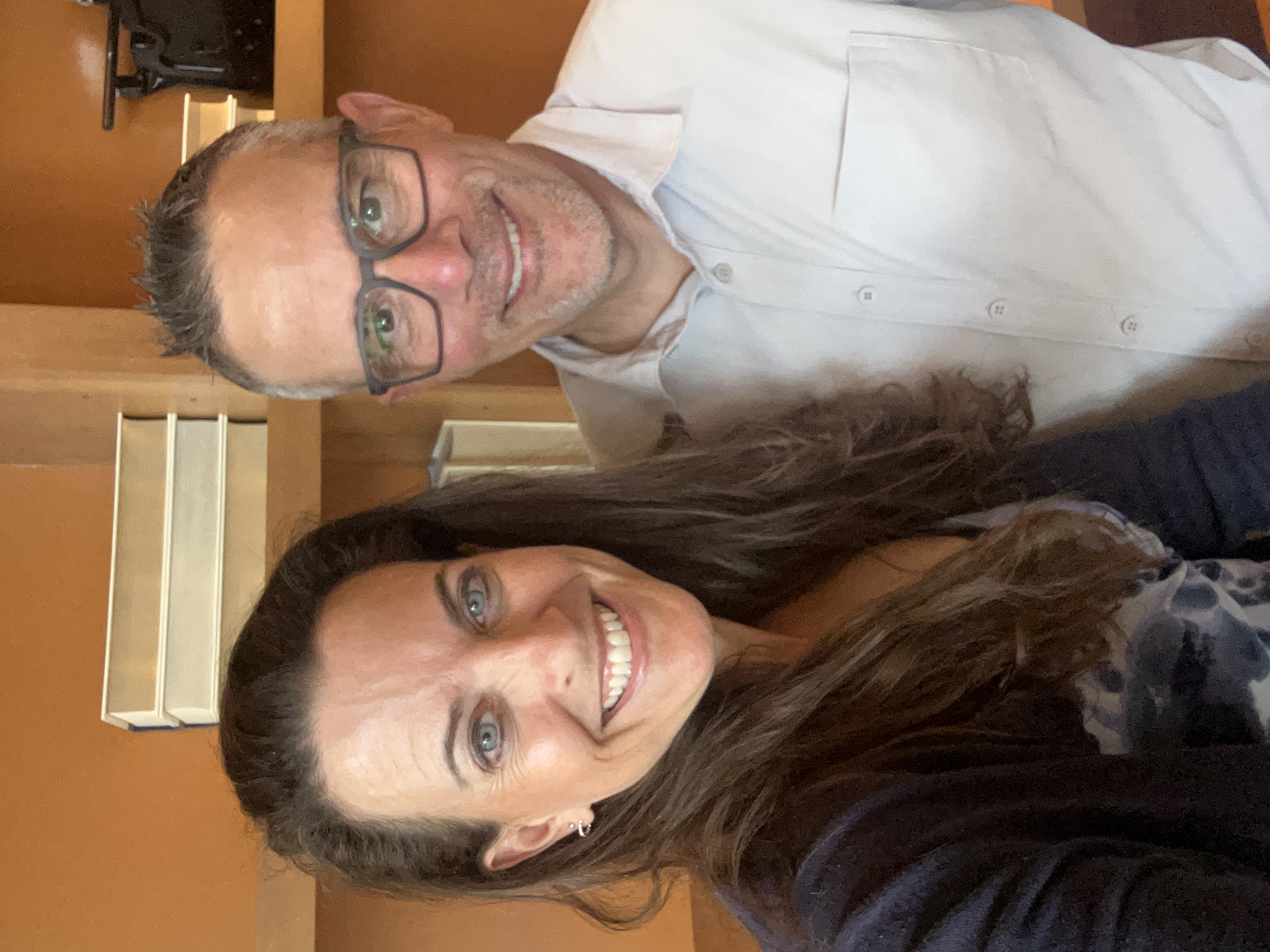
Co-Authors
Marnie and Nick are back! After co-authoring Lead It Like Lasso, they’ve returned with their newest project, The Business of You—a sharp, story-driven guide to running your life like a well-led company. Marnie’s a former high school math teacher who once convinced 16-year-olds that precalculus was fun. Nick’s a tech and support guy turned leadership nerd who thinks clarity is the ultimate power move. Together, they’ve built companies, coached leaders, and now they’re helping students and emerging professionals design their vibe, build their tribe, and level up for whatever’s next.