

 Spotify
 Apple Podcasts
 RSS Feed
  Goodpods
  Amazon Music
  Pandora
 Stop Measuring Logins, Start Measuring Learning | My EdTech Life 373

Logins, minutes, and completed activities may show that a platform was used, but they do not prove that meaningful learning occurred. Dacia explains why districts must look beyond usage data and demand stronger evidence of student thinking, instructional impact, and academic growth.


Key Takeaways
- Logins, minutes, and completed activities prove that an educational platform was used, but they do not prove that meaningful student learning actually occurred.
- Middle school reading proficiency requires moving beyond simple decoding skills to tackle text complexity, background knowledge, vocabulary, and syntax.
- Edtech should support core teacher workflows and student thinking rather than trying to become the main protagonist or creating extra friction in the classroom.
- AI tools in the classroom must be designed to preserve productive struggle, encourage collaboration, and provide timely feedback without replacing human judgment.
- District leaders should move toward outcomes-based contracting, demanding clear evidence of efficacy, safety, and academic impact before renewing edtech platforms.
In Episode 373 of My EdTech Life, Dr. Alfonso Mendoza sits down with Dacia Toll, co-founder of Coursemojo, to challenge how schools measure the value of educational technology.
Logins, minutes, and completed activities may show that a platform was used, but they do not prove that meaningful learning occurred. Dacia explains why districts must look beyond usage data and demand stronger evidence of student thinking, instructional impact, and academic growth.
Together, we explore the middle school literacy crisis, the difference between decoding and comprehension, and why classroom discussions can sometimes make thinking optional for many students. Dacia also shares how AI can support productive struggle, provide timely feedback, and help teachers identify misconceptions without replacing human judgment or student collaboration.
In this conversation, we discuss:
• Why reading proficiency requires more than decoding
• How disconnected interventions can create instructional confusion
• Why AI should preserve productive struggle
• The difference between receiving feedback and using it
• How EdTech can support teacher workflow without becoming the lesson
• What outcomes-based contracting could mean for district accountability
• Why safety, efficacy, and outcomes should guide EdTech decisions
• How educators can look beyond AI hype and evaluate what works locally
Timestamps:
00:00 — Introduction to Episode 373
01:12 — Meet Dacia Toll and Coursemojo
03:45 — Why logins and usage data do not prove learning
07:18 — Measuring student thinking and instructional impact
11:06 — The middle school literacy crisis
15:42 — Decoding versus comprehension
20:10 — How classroom discussions can make thinking optional
24:36 — Designing interventions that support coherent instruction
29:05 — AI, productive struggle, and meaningful feedback
34:18 — Helping teachers identify misconceptions
39:02 — Supporting teacher workflow without replacing instruction
43:27 — Outcomes-based contracting and district accountability
48:16 — Evaluating EdTech for safety, efficacy, and outcomes
52:40 — Looking beyond AI hype
56:08 — What evidence should schools demand?
58:12 — Closing thoughts and where to learn more
The central question is simple: Are we measuring technology use, or are we measuring learning?
Connect with Dacia and learn more about Coursemojo:
https://coursemojo.com
Read Dacia's Article: What It looks Like to Build Educational Ai Based on Cognitive Science
Explore more episodes of My EdTech Life:
https://www.myedtech.life
A special thank you to our sponsors, Comeback Coffee, Book Creator, Eduaide.AI, and Peel Back Education, for supporting our mission to amplify meaningful voices in education.
Subscribe, share this episode with an educator or district leader, and tell us in the comments: What evidence should schools demand before renewing an EdTech platform?
Stay Techie!
Thank you for watching or listening to our show!
Until Next Time, Stay Techie!
-Fonz
🎙️ Love our content? Sponsor MyEdTechLife Podcast and connect with our passionate edtech audience! Reach out to me at myedtechlife@gmail.com. ✨
Frequently Asked Questions
What is Coursemojo?
Coursemojo is a curriculum-aligned, AI-powered teaching assistant designed primarily to support middle school reading achievement and enhance critical thinking.
Why do middle school students struggle with reading comprehension?
While early literacy focuses heavily on phonics and decoding, middle school texts introduce significantly more complexity, demanding advanced vocabulary, background knowledge, and syntax skills that many students lack.
How can AI support students without reducing productive struggle?
AI can act as a personal assistant that Socratically pushes students to affirm and deepen their understanding, collaborate with peers, and correct misconceptions without giving away answers or eliminating cognitive effort.
What evidence should school districts demand from edtech companies?
Districts should demand rigorous evidence of safety, efficacy, and academic outcomes, evaluating products against specific local goals rather than simply relying on usage metrics like logins and time on platform.
00:00 - Welcome And Sponsor Shoutouts
02:55 - Why Middle School Reading Slips
08:55 - Text Complexity Beats Simple Skills
13:30 - Edtech That Fits Teacher Workflow
18:20 - Productive Struggle For Every Student
23:05 - Drawing Clear Lines For AI
27:10 - What District Leaders Should Demand
33:05 - Great Teaching Becomes More Valuable
39:50 - AI Hype Kryptonite And Farewell
Welcome And Sponsor Shoutouts
Dr. Alfonso Mendoza
Thank you so much for joining us on this wonderful day. And wherever it is that you're joining us from around the world, thank you as always for all of your support. We appreciate all the likes, the shares, the follows. Thank you so much for engaging with our amazing content. And thank you so much to our brand new subscribers that are following us, you know, through uh YouTube and of course our social media. Thank you to all the new followers. We really appreciate that our content is resonating where you are at this moment, at this time and place. And uh this couldn't be done without all of our amazing sponsors. So I want to give a big shout out to Comeback Coffee. Thank you so much, Comeback Coffee, for keeping us creative and caffeinated all the time. Big shout out to Book Creator, appreciate all of the support. Please use code MyEdTechLife for some premium access. Thank you to Edu8 and Peelback Education. And I am excited for today, and as I always am, because I get to talk to some amazing people, and really I see it as professional development for myself that I get to share with you all. So I am excited to welcome Daisha Toll, who is joining us today. Daisha, how are you doing this evening? I'm doing great, and you? I am doing wonderful. Thank you so much for asking. Today was a great day, very eventful, and I hope that your day was as eventful and as exciting as mine was. But I am definitely really excited to chat with you today. So, Daisha, before we dive into our conversation, can you give us a little brief introduction and what your context is within the ed tech space?
Dacia Toll
Sure, happy to. I got to spend my day in schools. So that was that's my happy place. Um I this is my 27th, almost 28th year in education. Um, I for most vast majority of the time, 23 years, I was a middle school teacher and principal and led a network of schools um in New Haven where I'm based, and then expanding it throughout the Northeast. And then I'm three years into my ed tech life. Um and uh now uh founded and I'm co-leading course MOGIP, which is providing a curriculum-aligned AI-powered teaching assistant. Um we focus primarily on improving middle school reading achievement, which, as you may know from the NAPE scores, is at a 30-year low, um, those eighth grade scores. And um, and something I'm sort of existentially worried about as a mother and an educator and a citizen. Um, and so that's what we're working on every day.
Dr. Alfonso Mendoza
Excellent. Daisha,
Why Middle School Reading Slips
Dr. Alfonso Mendoza
that is so good to hear. And you being and spending time in schools is something that's very important because we'll definitely talk a little bit about, you know, the ed tech space. And of course, you know, as more platforms come out, are we doing things right? What could we do better? But before we get into that, I know you mentioned, you know, as far as the the middle school literacy emergency, you know, what it is that we're seeing. And uh myself, you know, included, and many other people maybe scrolling to TikT through TikTok and seeing all these teachers that are kind of you know putting that putting it out there that there are students that can't read, there are students that maybe be able to decode words, know what those words are, but comprehension level. So I know with that we spend a tremendous amount of attention on early childhood literacy. And this is coming from myself who just recently transitioned into ed tech from a district role and being able to see at the district level how much emphasis we put on early childhood literacy. But somewhere around middle school, you know, the conversation gets a little bit quieter. I mean, there they're the it's really the focus is on those tested scores and making sure that the students are, you know, focusing on the test. But it does get a little quieter there. So what what might we be understanding or what might our misunderstanding be as a whole about, like I mentioned to you, students who can technically read the words on the page, but they can't comprehend or analyze or make those connections with those words?
Dacia Toll
Yeah. It's such a good question. And and I think it is often overlooked. But so what happens, um, the the focus on fluency and phonics and phonemic awareness and all of the good work that's been done in the early grades is necessary, but not sufficient. Because then we end up with students, as you said. Um, what happens starting in fourth grade, really, it's a little bit before middle school, is the texts get significantly more complex. And um, comprehension, it's not the same. It's much easier to comprehend a simple text that you probably are bringing some background knowledge to than if you're asked to read a text um about which you don't know anything about. If you're talking about baseball and simple sentences, that's very different than talking about black holes and complex sentences with um all sorts of dependent clauses and maybe hidden meaning or um a positive that set off the kids. They just get thrown off by the complexity of this the sentences, background knowledge, vocabulary, syntax, if it's using any kind of archaic language. As I said earlier, if the message is hidden, these are all dimensions of text complexity that student achievement partners has one framework. There are a couple of different frameworks to try to understand that. But I think that is frequently misunderstood. And the implication is we need to keep working on skills or standards, like finding the main idea. And then I'm not saying those things aren't useful, but they're often not the biggest obstacle. The biggest obstacle is one or more of these dimensions of text complexity.
Dr. Alfonso Mendoza
Yes, absolutely. You know, and that, you know, just from my experience, again, like I said, I just, you know, recently moved into the ed tech space about nine months ago, but working at the district level as a digital learning coordinator and assessment coordinator and looking at, you know, the emphasis, like I mentioned in early childhood. And then by the time we get into junior high, it seems like that emphasis is, you know, now, okay, we got to make sure we get those science scores. And yes, the reading scores, but it just seems like there isn't enough maybe practice as far as discourse discussions, being able to give the students that processing time to be able to not only decode, but understand and take that comprehension to that next level. So I want to ask you in your experience, have we confused decoding proficiency with literacy proficiency?
Dacia Toll
I I certainly, again, what we know about Scarborough's reading rope, and I'm sure the the ELA experts out there and know the science of reading. It's not that it's one or the other, it's that there are a whole set of things that have to come together to be um increasingly sophisticated, skilled reader and writer. And, you know, good reading and good writing requires good thinking. Like I think part of why I'm so anxious about the reading issue is it is as much about critical thinking, particularly as you get into the later grades and thinking critically about the text as it is about something like decoding. Again, that's necessary but not sufficient. So I do think there are a bunch of misunderstandings about it. And in terms of why it's happening, there's like there's no easy answer to that. I mean, what we know, unfortunately, is that kids are reading a lot less outside of school. Um, and even in some cases, in schools. And they're the best way to become a better reader is to read um and to think about what you're reading and to discuss what you're reading. Um, but it has to start with reading. And and they, because of these wonderful screens that we have now everywhere in our lives, um, an increasingly sort of spat passive screen time that you kind of scroll through, that is the worst kind. And that is minute to minute, hour to hour, unfortunately replacing the sort of time kids, more kids used to spend doing more reading. Um, it's also the case that COVID did set us back, but this 30-year trend um started before COVID. And so we can't, we can't put all responsibility there.
Dr. Alfonso Mendoza
Excellent. Okay, yeah, great answer. And, you know, one of the things that I I kind of want to, you know, this was actually a nice segue into the next question because
Text Complexity Beats Simple Skills
Dr. Alfonso Mendoza
uh you mentioned, you know, educational technology, you mentioned the screen time. And I know that you, you know, have a really strong stance on ed tech because oftentimes it's the other thing that teachers have to do. Now we have to find time to include that. You know, many districts it's hey, we purchased this platform that is supposed to be that uh, you know, our magical solution to help either support math, science, social studies or all subjects, but we need to do it 30 minutes per day, per subject, and so on. And then are we really looking at the data correctly? Just because you're logged in and answering questions doesn't mean there's engagement or there's learning that's taking place. So oftentimes, and and for myself, I've said this for years, that teachers really don't need another shiny tool, another big thing that is going to become the protagonist in the classroom or the protagonist of the lesson. So they really need, you know, something that is streamlined, something that goes right along with the workflow. So I want to ask you, in your experience, you know, what you have seen, do you think that ed tech has spent too much time building additional experiences instead of making that instructional experience that teachers need more effective?
Dacia Toll
Yeah, I mean, you hit on a fundamental um difference, at least in our strategy. I think for a whole bunch of reasons, ed tech operated in a supplemental space. Um, it was hard to figure out how to support core instruction. Um, often the materials that were part of core instruction um were sort of separately siloed from this whole space that was supplemental. Um, and one of the things I'm grateful for is because of I think AI allowing different sorts of modalities, most importantly, freeing us from a world of multiple choice, we now can have, you brought up, for example, the incredible importance of discourse and discussion. We now can have discourse with the AI, but more importantly, discourse with each other that are supported by the AI. So what we've done very specifically is said if we want to improve um critical thinking and critical reading and writing and the outcomes associated with it, we have to make sure that that core instruction is as effective as possible. There isn't time for lots of extras. Um, and one of the great things that's happened in the last decade is a lot of places have adopted these high-quality instructional materials or top-grated curricula that try to apply the science of reading and have a real focus on building knowledge over time and building vocabulary over time. Um but then you sometimes have tools that are like, wait, don't focus on that, focus on these other things. And I think that's part of no, what we need to do is focus on that and just increase student engagement and teacher efficacy. So we try to find the hardest thinking part of every lesson, where I think well-intentioned teachers sometimes have felt the need to modify those rigorous questions or simplify the complex text because they have a diversity of learners, some of whom are going to struggle because they don't have immediate access. Um, and so we take that part, and that's what we try to supercharge. Um, as a kid said to me, it's like the handout is talking to me. And so it's the same um sort of thinking work that you would be doing, but now you have this um personal assistant, both this kid and the teacher. Um, in the case of the student to Socratically push them to affirm and then push them to go deeper. And then there are a set of teacher tools we can talk about and get into. But we believe very critically what you just said, which is let's help the teacher do what they're already trying to do, as opposed to giving them something extra to do.
Dr. Alfonso Mendoza
Yes, yes. And and you know, it seems like in in these last years, I mean, I I I think my true passion and love for EdTech really came back, came at, I'm sorry, like around 2015, actually, when I moved from high school to elementary, and I think the Chromebooks, uh actually, it was a big cow. I I don't remember what kind of computers they were, but I think they were just like um I don't even know what operating system, but I mean it was literally it looked like the size of a cow that we would roll in, and I just started using those, and then we finally got Chromebooks, and there was only two Chromebook cards in our elementary, and I was that one teacher that checked out the Chromebook, you know, for the whole the Chromebook card for the whole year. I would never return it, it would live there
Edtech That Fits Teacher Workflow
Dr. Alfonso Mendoza
because nobody else knew what to do with it. So I found that passion and I found like, wow, this is what my students can do. They can create, they can be not just the consumers, but now I want you to create, record yourself. I want to hear your voice, I want to hear your thought process and get hands-on. And, you know, as as of course I transitioned into the the digital learning coordinator role, you know, being out there and seeing things, you know, there's a lot of apps that are out there. And to me, when the app is the protagonist, it really takes away from what the teachers could be doing, and of course, that time, and that students can be really investing and having those discussions. So when there's a platform, like I'm hearing, you know, Course Moju being able to do that, you are not necessarily uh revamping the whole pedagogy and revamping the whole curriculum, but you're using like the student described. Wow, it's like this document, this PDF, this handout is now talking to me. It just seems like it's something that fits into that teacher workflow. And it's designed in such a way to fit that teacher workflow. So now in your experience, Daisha, I want to ask you, what would change or what changes would you expect to see if ed tech companies really took that into account and designed around teacher workflow instead of trying to be the protagonist in the room?
Dacia Toll
Well, I think two things I hope would change. Um, one, I think teachers would like it more. Um, because I think there's some real friction sometimes. You you can just tell when a product um has not had a lot of practical use in classrooms, um, because it's it there's just friction um and frustration. And then as a result, low usage. I mean, I'm sure you you know and have talked about all the situations in which products get adopted and then never actually used um because it's too difficult to fit them in or to make them work uh in the very real, complex, and wonderful realities of classrooms, especially middle school classrooms. Um I think the second thing I hope that would change is outcomes. I mean, one of the things TNTP, um, their most recent report is called coherence by design. And it's talking about the gap that exists between core instruction and tier one or intervention and tier two or intervention instruction. And um, that disconnect between tier one and tier two is actually um there are now our studies showing it's a net negative. So if you you're trying to support the kids who are struggling with this extra intervention, but if the language and the material and the the way it's being taught is actually or it's incoherent with what's happening in the core instruction, especially for a struggling learner, it can it can set them back. Um, and of course, the intention is the opposite. And so what they're saying is we need coherence by design. And I think that is coherence in curriculum and it's coherence in the ed tech with what we know is required. We have to double down on what we know works as opposed to trying lots of different things.
Dr. Alfonso Mendoza
Yeah, you know, and you brought up tier one and tier two support, but uh I, you know, that's something that I saw. That's something that we looked at. And then, of course, you know, many districts will look at products that'll say, oh, well, this will take care of the tier two, but then the numbers aren't there as far as the data. Why is the student not doing very well? But like you said, it just seems like there's that disconnect with the way that the teacher's teaching, the vocabulary of the district curriculum doesn't quite match the way that the product is presenting that same, you know, standard. And so now the student is confused because they're getting a lot of information, and the information just quite isn't uh making or connecting to what the teacher is teaching. So I really like that you brought that that up because I think that's something that is very important, especially now, you know, as there are so many uh platforms that are out there that are trying to solve these problems, these issues that are occurring and helping our students continue to grow. But one of my biggest concerns is about AI and education is, you know, how we can make the learning more efficient in learning, but without making the students think any less. So, and especially when we're talking about literacy, where students need to have that productive struggle and wrestle with the text and and look in between, read between the lines to scaffold and get all of those answers that they need. So tell me a little bit about your experience, especially in that literacy piece. You know, how is it
Productive Struggle For Every Student
Dr. Alfonso Mendoza
that we can help students or that you're helping students with those uh struggles or that productive struggle, I should say?
Dacia Toll
Yeah. Well, just one thing specifically back to your really good point about um the need for multiple exposures and the the confusion that comes from from different things. But even one of the big issues, of course, in ELA is that we need to have uh sophisticated vocabulary. Like how many words do we know and understand their meaning and are able to use um comfortably? And it takes somewhere between eight and 12, um, not just exposures to a word, but actually using it and applying it and understanding the different connotations of it in different in order to for us to acquire it into our long-term memory. And so imagine even if both well-intentioned products are trying to teach vocabulary, we're just we're we're not getting the reinforcement that is like so important. Um, and so that's a key part of it. Same thing with knowledge, like there's a knowledge, uh body of knowledge, background knowledge that means we can read almost two grade levels, more sophisticated. Um, so that I would say about reading. In terms of productive struggle, just more broadly, there's no getting around the fact if I just listen to you with all of your beautiful answers and I'm in passive recipient mode, you're sitting next to me in class, it doesn't work. I don't learn. I have to actually do the cognitive struggle myself. Um, and so I think what's happening in a lot of classrooms without technology is again, because, and again, we're obviously focused at middle school, there's like a five-grade level span between the most struggling reader and the most advanced reader, in some cases, even more. And so I'm very empathetic for the situation that teachers are in. Like, how do you teach to that room? And as a result of that, they default to sort of full class experience where they will ask the question of one or two kids and then be able to support, and then maybe ask the next question of another two or three kids. And you can get a bit faked out by the end of 15 minutes of what felt like a class discussion that if you really look at it, and most of us who had the chance to observe and coach teachers would tally it, you might have like nine, 10 or 11 kids out of 27 who've actually participated, and they are often the most advanced. Meanwhile, for the rest of the kids in that room, the thinking was optional. Um, and so I think one of the things that ed tech can do is make it so that every single kid is doing the productive struggle associated with these quality questions about complex, you know, text worth reading. And so, um, but I do believe back to the importance of discourse and just like social skills in the age of AI, God, we need them more than ever. And so our design actually is that kids get to work together and partners, talking first, because oral language precedes written language, about their thinking, sharing their ideas, and then engaging with the AI who will affirm and then push and provide that support. Um, and most importantly, tell the teacher which kids still need their unique human support. Um, like if they I think the AI is powerful at getting a number of kids unstuck and and willing and able to access and dig into the text. But I don't think the expectation is unrealistic that they're gonna get every kid. I don't even want a world, they're able to get every kid to a deep understanding. There's like that wonderful role for the teacher. And so it's this partnership that gives all kids more access and ultimately more success.
Dr. Alfonso Mendoza
Yes, yes, yes to all of that. And especially, you know. I think continuing with that discourse option. And, you know, as as the years progress, many times it's just the classrooms you walk by and the the halls are silent or the teachers are the ones that are talking. But just also just to give the students that processing time to be able to discuss, shoulder partner, be able to share, be able to use the vocabulary, that is a way that you're going to gain that more of that understanding. So I do agree with you. And also, you know, like you mentioned, that supplemental support of, you know, I'm here as the the technology being there as a supplement to the teacher, and not like many people would say, it's like, hey, I'm here as the replacement for the teacher, because you still need that human contact, that human connection. And so that is something that is very important. But I want to ask you too, because this is another wonderful segue to this next question. Oftentimes, our conversations, whether I'm on social media, LinkedIn, or any social media or conferences, is we talk so much and constantly about what the AI can do, but we never really
Drawing Clear Lines For AI
Dr. Alfonso Mendoza
talk about too much about what the AI should not do. So I want to ask you the way that you designed course mojo, what are some of the deliberate things that you decided that the AI should not do for the learner? And what are some of the things that you said, yes, this is definitely something that we definitely need to help our learners succeed?
Dacia Toll
Yeah. So on the not do, um we are interested in only powering about 20 to 25 minutes of uh of an ELA period. And again, it's that that hardest part where normally they would be doing close reading or writing. Um, and that's where we found layering in the AI support again for both kids and teachers leads to more thinking and better thinking. The other thing is we're talking about cognitive sciences, it's it's not enough to just get feedback. You actually have to act on the feedback, like you have to revise your writing um and make it stronger. And then what you encode is success. You know, that phrase practice makes perfect. It's not practice just makes permanent. But if you're practicing the same thing over and over and it's wrong, um, that is is also not good. And it's impossible for the teacher to get around the room and give individualized feedback to 26 or 7 kids at once. So I think that's where the AI can come in. But for us, we really are just staying in that narrow spot where we think we can really add a lot of value. Um, as a parent, again, and a and a teacher, I don't want AI to be everywhere all the time. In fact, the more I think it sits in the background and is an assist, the better. Um, then of that 25 minutes, 75% of it is kids collaborating with each other in either partners, small groups, or full class. Um, and so we've been asked to do more than that. We will not do that. We see it implemented in a purely silent, solo supplementary way, and we explain why both for ELA development, again, the emphasis on discourse, and for the future we need to prepare kids for. That that's there's no reason why we shouldn't be trying to get the thinking work and the social work at the social engagement at the same time.
Dr. Alfonso Mendoza
Yes, excellent. I absolutely love that. Now, as far as platforms, and I know we're talking about course mojo, but we're also talking pretty much, you know, what what we're seeing in the ed tech space, and you have that experience. So now I want to ask you, you know, because the the platforms, what will happen is okay, we will purchase the platform, but then we also need to make sure that we get our data, our data points. That's something that is very important. Now, sometimes I I think that um compliance or just logins are treated as check, okay, that was used, but sometimes there either isn't a person specific, uh specifically working that with that platform to really dig in to see if there's growth. So I and and so I know that sometimes they may be short-staffed at the central office level or things of that sort, but I want to ask you, if I am a superintendent and I come to you with your experience, and I want you to put your your district leader hat, district leader hat back on for me, what evidence should I be able to see as a superintendent? Or what should I demand of a company to really believe that they are something that is going to be sustainable and something that is going to work for my students?
Dacia Toll
Yeah. So I think it's hard to answer the my students question until you engage with your students, because I do think there are some context differences. So I my advice for everybody is um first figure out what issues, what big goals you're going after, because there are lots of things you could go after, and and the prioritization activity should be painful. It should be clear these are the things that are the biggest challenges
What District Leaders Should Demand
Dacia Toll
or the biggest goals we're going after. Then you go and look for partners and solutions that can help you advance that. Um, and I would recommend starting small, potentially even testing multiple products if you can pull off the complexity of two or three and running a bit of a horse race and say, who um get most importantly, gets the outcomes I'm looking for against the goals. You know, in our case, it would be improving ELA achievement. Other folks are focused on other issues. So it should be specific to your issue. You should be very clear about the metrics in advance, um, and then evaluate the outcomes and see which um produces the outcomes. And then I want to make sure we don't throw out qualitative feedback. Like so in our case, we absolutely want to improve ELA outcomes. We can talk in a minute if you want about outcomes-based contracts, because I think that really is the version of putting your money where your mouth is in this conversation. But um, we equally care about student and teacher feedback. Like the learning process and the tea and teaching has to still be a joyful experience. Um and we do hear from kids, oh, it's hard and Mojo makes me do thinking work. But then they love the affirmation and they love the ability to collaborate with their peers and they're proud of their growth and success when they get there. So it can be a complicated story, but underneath all of it, I think people have to still look back on the learning experience and say this is something that was that was valuable uh to me. So I think both qualitative and quantitatively, um, we should be evaluating how products are doing and frankly, relative to each other uh in terms of trying to solve our biggest problems.
Dr. Alfonso Mendoza
Yeah, no, excellent. That is a great answer. And I know, especially now at the beginning of the school year, we know that lots of purchases take place in the summer. As the year progresses too, those conversations come up again as far as okay, we have this now, uh, as far as we have a need. We have a need, what are we looking for? And so, like I mentioned before, too, you know, uh usually it's like, okay, let's let's track the minutes, let's track teacher satisfaction, let's track student growth, state assessment performance, you know, and sometimes it's what is it that we actually need to count to show us that we're not only getting the return on investment, but the return on instruction. So can you expand a little bit more on that? I know you you mentioned outcomes-based uh contracts. And that is something that, to be honest with you, I haven't heard that term yet. So for our audience members that, you know, may might have an idea of just as what it sounds like, but can you tell us a little bit more about that?
Dacia Toll
Yeah, so um, anybody wants to learn more about it, there's an extraordinary uh organization called the Center for Outcomes-based contracting, and they have a great website um that you can go to that will uh explain it and then give a whole bunch of resources. Uh, they're definitely the national leaders. But in a nutshell, it's where um a provider, and I would say it's been used much more often in the high dosage tutoring space, human-powered high dosage tutoring is where there are the most examples than in ed tech, but I think it is coming to ed tech. Um, and so a district and a partner, a vendor, um, would say, okay, what are our shared goals? What are we trying to do? And then what is it going to take to achieve those sales shared goals? And so in our case, the shared goal is uh individual student growth on ELA in a way that then ultimately moves schools and districts. Um, but it really comes back to the individual student and not just like whether they get over the proficiency bar or not, but whether students at every level are making growth. And we get very clear about what those goals are, what historical performance has been and what we're looking for for future performance. Um, and then uh on the district side, we say what is the usage requirement um to achieve that outcome based on historical results. And we also we haven't talked about independent research, but I think there's a real role for independent research as well. But um, you agree on the goals up front, you agree on the implement, the key implementation elements, and then you go after it together. And in all the contracts we've been in, we have a meeting either every two weeks or every month in which we're looking at the data together. And I will say, and then most importantly, for the vendor, well, half of your contract value you get sort of uh on the basis, the other half is contingent on achieving those outcomes, which is very different because uh historically, uh as ed tech, we have gotten paid not only regardless of whether or not outcomes were achieved, but regardless of whether or not the product was used in a lot of cases. So this is like a double layer. It's you, you um, but on the on the other side, I think a lot of us want the product to be used. And so it actually helps that now the district is is on the hook and entered into clear commitments around usage. So it really is a mutually beneficial. And I would say as somebody who's operated, I hope that this is the mindset I bring to every partnership. But when there's an outcomes-based contract, it's wonderfully clarifying. Because if you're not, if you don't feel like you're on track, there is a different level of urgency that you bring to it. If you feel like, hey, we're only dealing with part of the solution, then you want to know who else is impacting the rest of the solution. If there's a partner in or who's providing teacher professional development or coaching, if there's a curriculum that's being used, you you want to connect the dots between all of those because that level of coherence, to go back to that, is what's required to actually achieve um outcomes.
Dr. Alfonso Mendoza
I love that, especially that last part, you know, the coherence. You know, that's something that is very important. And, you know, so thank
Great Teaching Becomes More Valuable
Dr. Alfonso Mendoza
you so much for sharing that. So as we kind of start wrapping up a little bit here, but I I want to ask you, Daisha, like, you know, with so much that you have seen, you know, being out there not only in the schools, but you know, working in the ed tech space, as we see that the AI is getting a lot better, it's getting better at what they say, you know, saving teachers time. It's removing maybe some of the grading, some of the feedback, the sorting, some of the administrative work. So I want to ask you, what parts of great teaching now become more valuable as AI becomes more capable?
Dacia Toll
Yeah. So I both think that AI is becoming more capable, and I'm shocked at times that there are some straightforward things it still is not doing with the level of accuracy and effectiveness that I think we have every right to expect in the classroom. So just as an aside, our team spent a lot of time guiding and constraining um and giving very specific rubrics, question-specific rubrics, in order to get it to perform well. So, but that's I do agree, of course, the trend line is ever improving. Um what I would say, I I'm actually, I think there are people you alluded to this earlier, who are like, eh, it's gonna transform teaching and learning. I actually think in most cases, our vision for teaching and learning can be quite beautiful. And it does have, if you look again, we work exclusively with these high-quality curricula or top-rated curricula, there's a lot of beautiful student collaboration and projects and teacher-led discussions and debates, Socratic seminars, authentic writing pieces. It's just tough to execute, to pull that off, um, given the diversity of learners and and we talked about that five or six grade level span between reading um sort of strength and skill. And so part of what we're trying to do is power that beautiful version of it. Um where kids are allowed to work more authentically in small groups, almost like little book clubs, um, and support each other, and we can still have that beautiful full class discussion. So I would just say we're still our vision of the AI is not to do that, but to be this like constant assist to the teacher so that they can do it. So I'll give you an example. Um, when kids are working, we would like teachers to be actively circulating, reading over their shoulder, figuring out what they know, what they don't know, simultaneously figuring out the class wide trend. And it's possible, but it can be very challenging. Back to that middle school classroom, maybe especially there. Um, so mojo has a live dashboard that shows the teachers every every kid's level of understanding for every question. And so they know right away, hey, it's this, this, these four kids who need my help right now. And this is what they need my help with. So I don't have to try to read every kid's, I can focus that that energy on those kids and I know exactly what kind of conference I uniquely have to have with them to get them on stuck, whether it's a motivation issue or uh or a comprehension issue. Um, so I then I push a button and I it tees up for me. These are the two biggest misconceptions in the class right now by looking across all the student work. Teacher still has to choose. They get they are know what's best for their class, but they get this little assist and then they still facilitate the discussion. Mojo pulls exemplary student work for celebrations or to unpack as an exemplar. Teacher still does that. They well, the kid wants to be celebrating. Yeah, there can be gifts and emojis and stuff that they like in the platform, but they want their teacher and their peers to say, hey, great job. And so how do we assist that as opposed to trying to replace it?
Dr. Alfonso Mendoza
I love that. You know, and I think that's something that is very important. And I think uh, you know, yes, you know, AI can help with some, you know, things that are going on in education, obviously in the classroom. And one of the things, those examples that you shared, are something that could be very valuable and are in fact very valuable to teachers because immediately I'm you know, having a dashboard like that, I can immediately adapt to those concepts that my students might have, that misconception. And like you said, now you're putting on that that small group discussion, you're having that discourse, maybe you're unpacking something there, but it's all with that valuable assist. And I think that's something that I love that I think that you that underlying uh message that I've been hearing you kind of talk through the the this interview and the questions is how the technology remains in the background as that assist. And that's something that I truly love because there are many platforms out there that have to be that protagonist, they have to have that time, and obviously you're investing that time because now I've got to share logins, or now we have new logins and students can't, this isn't compatible with this or that, but they become the star and you know, something that always falls in flow with the teacher's workflow. For me, it's always something that is going to be great, as long as it's that, like you said, that assist. And it's wonderful, and it's assisting in such a wonderful way. So thank you so much, Daisha. I really appreciate your shares. I really appreciate your insight. I thank you so much for just sharing, you know, your experience and what it is that you're seeing in classrooms and in the ed tech space. This has been a wonderful conversation. But before we wrap up, Daisha, can you please let our audience members know how it is that they might be able to connect with you or if they're interested in learning more about Course Mojo, where can they go?
Dacia Toll
Yeah. So we, of course, we have a website, um uh www.course mojo.com. Um, and if you want to demo, I think one of the things we were back to how would a how would a district leader or teacher know? You gotta try it. Because at this point in the AI hype cycle, um, it feels like everybody's got the same talking points and everything sounds the same. And that, and I think every time a good educator just digs in and kicks the tires for themselves, not a sort of controlled experience, but uh let me be every kind of uh sixth grader I can think of. Um, and so, and then let me uh play with the teacher tools, et cetera. So I I think that's uh big part of it. They could certainly do that, they could get a demo. I'm on LinkedIn, I love talking to people on LinkedIn, and so reach out and find me there. Um, and I look forward to connecting with folks.
AI Hype Kryptonite And Farewell
Dr. Alfonso Mendoza
Excellent, Deisha. Thank you so much. But before we wrap up, I always love to end the show with this little mini speed round. And really, it's not it's not that speedy, but it's just great to just, you know, kind of end on a good note here. And so I want to ask you, as we know, in or every superhero has a pain point or a weakness. So for Superman, kryptonite was what weakened him. So I want to ask you, Daisha, in the multiple hats that you've been wearing, the multiple experiences, everything that you have seen, and now within the ed tech space, I want to ask you, what would you say is your current ed tech kryptonite?
Dacia Toll
Um I sort of just alluded to it, but maybe to put a fine point on it. I think now people hear AI and there's a bit of an eye roll, to be honest. Like, I I think there's this sense of it's just so hyped. And for I think probably at this point, all of us who've had direct experience with AI, like there are times that it's delightful, there are times that it's like super frustrating and not effective. And um I really am having trouble just differentiating amongst everything that's out there because it all starts to sound the same. So I find the AI hype and the and the um and talking points to just it kind of drains me at this point. All right, and I'd love to hear in classrooms just doing the work and trying to make things incrementally better.
Dr. Alfonso Mendoza
Love it. Great answer. Great answer. All right. Question number two if you could have a billboard with anything on it, what would it be and why?
Dacia Toll
Um, I think it would be the three tests I hope that uh we'll have for ed tech. Um so it'd be safety, efficacy, outcomes. Um, like safety is the non-negotiable and data security and all of those things that people are rightly worried about. For efficacy, what I would say, we didn't sort of talk about independent research, but um I think products have to commit to it and be willing to publish, have have others publish truly independent research on on outcomes, um aligned to the S tier of evidence. We now at this point have three S tier two studies, which are matched comparisons uh by an independent research firm. And but then to your earlier point, we got to measure the outcomes ourselves in our context um and be willing to be accountable for them.
Dr. Alfonso Mendoza
I love that. And I love that that that billboard actually applies to so many things too as well. So that'd definitely be an eye-catching uh billboard. So thank you so much for sharing. And my last question to you is if you could trade places with any one person for a single day, who would that be and why?
Dacia Toll
There's a lot about my like life that I like. I think if I could trade places, it would be like an Alicia Keys or something. Not because of the star and the fandom, but I have like no musical ability and I love music. And I just can't, I can it brings joy to me, but I'm not capable of of bringing um rhythm and joy and and soulfulness to others in that way. And so if I could just experience that, um, obviously she's got a great voice, but you know, she's a classically trained pianist. I mean, she's just an extraordinary musician. And so for a day, if I could do that, I think that would be something I have never experienced in my life otherwise.
Dr. Alfonso Mendoza
There you go. Great answer. However, Deisha, I do want to say you are bringing rhythm and joy into classrooms from what everything that you've described. So it may not be that musical talent you're seeking, but you're still bringing that rhythm and joy. So thank you so much for being an amazing guest. Thank you so much for this wonderful conversation. I really appreciate you. And it was great to connect with you. And I know that my audience members are definitely gonna get to that link in the show notes, and they're gonna go ahead and start following you and obviously go visit the Course Mojo website too as well. So, our audience members, all of that info will be in the show notes. So please make sure that you visit our website at my attech.life where you can check out this amazing episode and the other 373 episodes where I promise you you will find some knowledge nuggets that you can sprinkle on to what you are already doing. Great. And again, a big shout out to our sponsors. Thank you so much. Come back coffee, book creator, eduate, and peelback education. I really appreciate you believing in our mission to bring these amazing conversations into the education space so we can continue to grow professionally and personally as well. So thank you so much for that. And for all of you all that have given me all of your support throughout these six years. Thank you as always. But my friends, don't forget, stay techy.
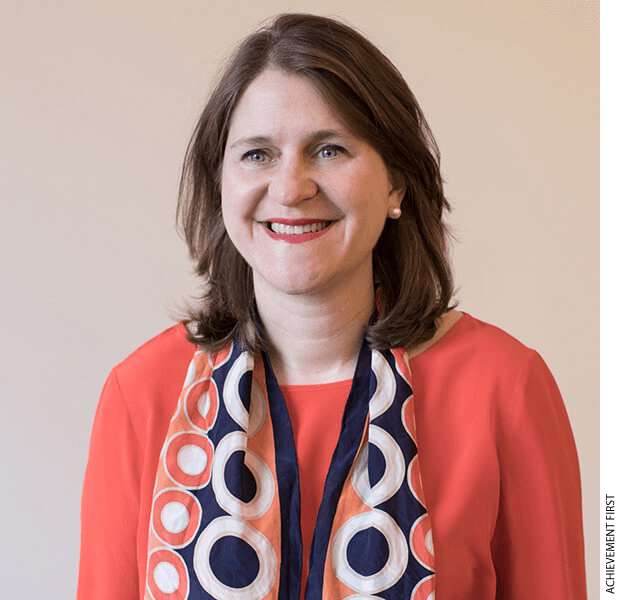
Co-Founder and Co-Ceo of Coursemojo
Dacia Toll is co-founder and co-CEO of Coursemojo, a leading ed-tech company, which has developed a best-in-class, curriculum-aligned, AI-powered assistant teacher. “Mojo” is designed to bridge the gap that exists between the high-quality instructional materials that districts have adopted and the diversity of student needs that exist in classrooms, especially with the learning gaps from the pandemic. With the goal of supporting both teachers and diverse learners, “Mojo” helps educators differentiate instruction by providing each student (MLL, students with IEPs, advanced students, struggling readers) with targeted, Socratic, one-on-one and small group support (in 50+ languages) in the context of either core class instruction or intervention support. In 1999, Dacia led the founding team and served as the principal of Amistad Academy in New Haven, CT. Under Dacia’s leadership, the school posted the greatest achievement gains of any middle school in the state. Dacia then co-founded and co-led Achievement First (AF), which became one of the nation's leading charter school networks with 41 schools across the Northeast and college graduation rates that were five times peer averages. Dacia left Achievement First in July 2021 to launch Coursemojo. Dacia was also a founder and board member of Relay Graduate School of Education and 50CAN. Dacia received a BA from UNC-Chapel Hill, an MA from Oxford University, and a JD and teaching certification from Yale University.



