Spotify
 Apple Podcasts
 RSS Feed
  Goodpods
  Amazon Music
  Pandora
 Bossing My Robot Overlords Around ft. Dustin Rimmey | My EdTech Life 368
"I can boss my robot overlords around and go, 'I wanna try this thing.'" That line right there? That's the whole episode with Dustin Rimmey. This week Dr. Fonz sits down with Dustin Rimmey, aka Rimmey, a 19-year Kansas educator who went from "programming languages just don't stick in my brain" to building his own classroom tools with nothing but a keyboard and a stubborn refusal to quit. No computer science degree. No dev team. Just what Rimmey calls "caveman prompting." You describe what you want. You fail. Yo...


"I can boss my robot overlords around and go, 'I wanna try this thing.'"
That line right there? That's the whole episode.
This week Dr. Fonz sits down with Dustin Rimmey, aka Rimmey, a 19-year Kansas educator who went from "programming languages just don't stick in my brain" to building his own classroom tools with nothing but a keyboard and a stubborn refusal to quit.
No computer science degree. No dev team. Just what Rimmey calls "caveman prompting." You describe what you want. You fail. You try again. And somehow, a Wordle-style history review game shows up on the other end.
In this episode, Rimmey breaks down:
What vibe coding actually is (and why "caveman prompting" might be the most honest term in EdTech right now)
How he built a Macbeth review game for a colleague's English class using nothing but iteration and grit
Why he intentionally builds tools he can't afford, instead of waiting for district approval
The "AI-resilient assignment" approach he's testing so students still show their thinking, even if they use AI
A wild cross-border collaboration story with a UK educator working around strict student data laws
Why failing in front of 30 kids might be the best thing you do for them all year
This one isn't about mastering code. It's about mastering the courage to hit "generate" and see what happens.
Chapters:
00:00 Welcome & Sponsor Shoutouts
00:03 Meet Dustin Rimmey: Journeyman Teacher, Full-Time Tinkerer
00:07 How Rimmey Fell Into Vibe Coding
00:12 Building Classroom Tools From Scratch (Macbeth Game, Timers & More)
00:19 Bridging the Tool-Access Gap for Under-Resourced Teachers
00:25 The TCEA Story & a Cross-Border Collaboration With a UK Educator
00:34 Teaching Kids to Fail on Purpose
Speed Round Highlights:
Rimmey's EdTech kryptonite: literally all of it (he'll test every tool, every time)
Who he'd trade places with for a day: a school librarian
His billboard message to the world: "Play, period."
Grab your coffee (shoutout Comeback Coffee) and get ready to rethink what "learning to code" even means.
Connect with Dustin Rimmey:
Twitter/X: https://x.com/JustRimmey
Instagram & TikTok:@teachersplaiground
Website: https://www.teachersplaiground.com/
A huge thank you to our sponsors, Book Creator, Peel Back Education, Eduaide.AI, and Comeback Coffee, for believing in this mission. If you'd like to support the show, visit https://buymeacoffee.com/myedtechlife/membership.
Blessings. Stay Techie ✌🏼
Peel Back Education exists to uncover, share, and amplify powerful, authentic stories from inside classrooms and beyond, helping educators, learners, and the wider community connect meaningfully with the people and ideas shaping education today.
Authentic engagement, inclusion, and learning across the curriculum for ALL your students. Teachers love Book Creator.
Thank you for watching or listening to our show!
Until Next Time, Stay Techie!
-Fonz
🎙️ Love our content? Sponsor MyEdTechLife Podcast and connect with our passionate edtech audience! Reach out to me at myedtechlife@gmail.com. ✨
00:00 - Welcome, Sponsors, And The Guest
02:40 - Remy’s Teaching Path And Platforms
06:10 - What Vibe Coding Looks Like
15:05 - Designing AI-Resilient Assignments
20:40 - Intentional Screen Time Over Hype
26:47 - Sharing Builds, Beta Testing, And Collaboration
34:49 - Modelling Failure So Kids Risk More
42:24 - Rebuilding Curriculum With New Tools
45:04 - Speed Round And Quick Reflections
48:39 - Where To Connect And Closing Thanks
Welcome, Sponsors, And The Guest
Dr. Alfonso Mendoza
Hello, everybody, and welcome to another great episode of My EdTech Life. Thank you so much for joining us on this wonderful day. And wherever it is that you're joining us from around the world, thank you as always for all of your support. As you know, we appreciate all the likes, the shares, the follows. Thank you so much for engaging with our content. Thank you so much just for all of your support. And talking about support, we definitely want to give a big shout out to our sponsors. Thank you so much to Book Creator, Peelback Education. Thank you so much to Edu8. And thank you so much to Comeback Coffee. Because Comeback Coffee definitely keeps us caffeinated and highly creative. So thank you so much for your support and believing in our mission to bring you some exciting and wonderful conversations like every week. And I am really excited about today's conversation. Now, my guest is somebody that I I kind of lurk around and follow for a very, very long time. But it just so happened that we ended up uh we had the opportunity to present at a same event, and I got to sit in on his uh presentation, and it just kind of blew me away that immediately during that time, or he just maybe finished, I said, Hey, do you want to be on my show? And I was just so excited to get him on. And so I would love to welcome to the show today, Dustin Remy. Dustin, how are you doing today?
Dustin Rimmey
I'm enjoying the end of the school year and getting to parent before the craziness of all things summer go down.
Dr. Alfonso Mendoza
Excellent. Well, Dustin, I'm so excited that we've been able to connect. I mean, longtime followers of one another and just admiring people's work, your work, and admiring just our our network. You know, the the work that they do has been fantastic. And it was great to see you at that event. And really what I saw was something fantastic to that just really blew my mind, the fact that you're able to do this in your classroom and really enhance the learning and really get the students involved and just really excited about technology use, because as you know, uh right now in the news, we do see a lot of screen time backlash and things of that sort. But before we get into the meat of the conversation, Dustin, because I got all excited, I was like, for our audience members that might not be familiar with your work just yet, can you give us a little brief introduction
Remy’s Teaching Path And Platforms
Dr. Alfonso Mendoza
and what your context is in the education space?
Dustin Rimmey
Uh so my name is Dustin Remy. I've been, everybody just calls me Remy. Uh I've been teaching since 2007 in Kansas. Uh, my background is mostly speech and debate and social studies. And I got hired directly into my dream job. And two years ago, I decided it was more important for me to be a parent and be present for my kids. So I changed things up, and I've spent the last two years as a middle school social studies and avid teacher. Last year I was an academic interventionist at the high school level, and then next year they are moving me back into a social studies classroom to fill uh a need there. So I've been a journeyman uh uh across the last couple of years, but uh I think the one thing that has been consistent across where I've been at or what I've done is I've always been fairly tech forward in trying to find ways to engage that in uh you know both my personal learning and development, but then also trying to get some technology skills into kids uh as ironically tech classes kind of slowly go away as we've gotten more technology in their hands. Um outside of the traditional classroom space in Kansas, um, I run a website called the Teacher's Playground where I just kind of scream into the void about whatever I'm into in education. It could be an app that has kind of tickled my fancy. Uh it has been, oh, I saw somebody cool at a conference talk about these things. And then really the last two months I've kind of fallen into the pattern of Mondays. I'm talking about here's a quick strategy or something you can pick up and do. Wednesdays, I've been kicking it old school. I've been going back to like visible thinking routines and like kind of stripping the tech away from it to kind of ask pedagogical questions. And then Fridays, I like to get on my soapbox and rant about anything from why do we get rid of recess once you hit beyond the fifth grade to I hate grades to uh let's argue about screens versus technology versus Google versus AI. So I just kind of like to pontificate from time to time and sometimes poke the hornet's nest of playing devil's advocate in some of these online discussions so we you know don't get stuck in echo chambers all the time.
Dr. Alfonso Mendoza
Yeah, you know, and that's something that is fantastic, Dustin, because I mean I see your posts and there there definitely is a lot of variety in those posts. But one of the things that I love is like you said, is that you don't get stuck in those echo chambers, and often has been the case, especially since you know November 2022, and generative AI, and you know, you just simply hear the same thing, same people, same groups, same everything. And so it's great to hear like you mentioned, kind of like poking the hornet's nest, but it it's uh it's questions, ideas, thoughts that maybe people tend to forget about because they're so like just you know, in their space so much that they just keep hearing the exact same thing. So I love
What Vibe Coding Looks Like
Dr. Alfonso Mendoza
that you do that. Also, I do want to say that I commend you too, because I know that uh speaking of kind of like you mentioned, like a journeyman in education, but you've also been a journeyman at conferences, like for various uh platforms that you advocate for that you use personally and that you have found success in. And I think that that is a testament to your work, your voice, and really amplifying, like you mentioned, the the great points that the platforms have and how you've used them in a mighty way. And that's something that is fantastic. So uh let's go ahead and just kind of talk a little bit about this because I know we started off with generative AI, and I I want to talk a little bit about your presentation that you shared during that um Waygrounds uh coaching event that you had. And I mean, in 20 minutes you blew my mind, but I want to ask you, you know, what what what started you on the vibe coding and and what was your idea like in uh initially to implement it what in in the classrooms and what you found helpful and useful?
Dustin Rimmey
Um so I've always been that kid that has wanted to get into computer programming and design and things like that, like being that child of the 90s when we had like the hackers movies really start to take hold when the internet was still in its baby infant form. Like I always wanted to do that stuff. And as I would try to teach myself the different programming languages, it just wouldn't stick, right? That I have one of those same things, like you know, as I listened to your presentation at that Ed Camp on working with uh language learners, I have one of those brains that other languages just cannot stick in my brain. That even when I go, oh, it's a logic puzzle, or the structure, once I know it, it becomes the same. It nothing has ever stuck. Even, you know, the Duolingo owl and I get into fights about my C minus Spanish abilities, and that's what has kind of kept me away from wanting to try some of the creation things with coming to programming and stuff like that, that I go through block coding courses and be like, ooh, I did this neat thing, but then got stuck because I couldn't take it to the next level. So, what really got me into uh the idea of vibe coding was during the winter of this past school year, during Matt Miller's winter ditch that like online asynchronous thing, it was Tony Vincent, and I can never remember the other guy's name, and I feel terrible for it. Uh, but they did a session on vibe coding where they just kind of walked through how they used, you know, various AI agents to create things. And I went, oh crap, I have ideas. I can boss my robot overlords around and go, I want to try this thing. And given that I really don't mind wasting a bunch of time to create things that fail, uh, it gives me kind of that grit to sit down and just kind of do that constant airterf prompting to get, you know, something generated that I want. And I started with a lot of the simple things that, you know, we go all over the internet to use, to get my own lovely digital timer with some kind of hanky music in the background, or you know, a chat bot where, you know, instead of using some of the other apps that I've fallen in love with, can I peel behind the hood and go, here's my here's my own Google Gemini space, so I can understand the technology behind it, because that's part of the curiosity that I always have when something goes awry with kids is was it a me problem with the way something got prompted? To is it can I understand what the our evil robot overlords are are doing in the conversation with the kids? And then it just spiraled where I was like, ooh, I like doing the wordle. Can I create a wordle that's just history words or you know, logic puzzles or things like that? And it was this past year was fun being an interventionist because I got to teach literally every subject with you know to get kids back on track to graduate. Uh, but then I also shared a room where an English class was taught, and the the two women who taught this class were very, very content brilliant, wanted to lean more into technology, but did not have like a lot of they're not in like the bigger ed tech world that some of us dive into headfirst. And I would always be like, ooh, can we try this or ooh, can we do this thing? So they would let me try and code things to then share with their class of students. So we reviewed for their McBeth uh final essay by playing the Myrtle puzzle game that was coded to each act of the play. So I like with the you know the idea of vibe coding, especially now that you know uh co-pilot, Gemini, ChatGPT, Claude all have these specific coding modes now where I could just caveman prompt it into creating something that I want, and then playing with it until I'm willing to share it with an audience of either students to try something or colleagues to try something, and then with my kids who are like me that are either programming interested, or my kids who are like, you're literally killing computer sciences by doing this. Uh, they help me understand some of the processes and things that it does. So it opens up some of those bigger conversations where I can learn from it and the kids can see how they can use it as a tool, even if they don't have like the language learning deficiencies that I run into. So it's been it's been a fun journey that my chat histories are like four million things of failed ideas that I can't delete because I do it on like my Gemini school account.
Dr. Alfonso Mendoza
Yeah. No, but you know what, you you hit on so many great things here, Dustin, that I kind of want to unpack a little bit, especially, you know, for a lot of educators that are out there that are still, you know, it's been, you know, going on, what is it gonna be four years now, you know, and and it just seems like the time has flown by, but there are still, you know, that are teachers that are AI hesitant, they still are maybe a little scared, or maybe they're just simply saying, hey, you know what, uh, you know, by the time they hear this episode, it's gonna be summertime, and they say, you know what, I'm ready to kind of dip my toes a little bit. But one of the things that I love that you said that that I know you said it at the conference too was that you said caveman prompting. And I I think that, you know, for a lot of us, like you mentioned, especially feeling overwhelmed because it's like, oh my gosh, I need to learn, you know, uh C, or I need to learn this language and this language and uh so on and so forth. With this, I what I love is like you mentioned, you have that idea, you're essentially communicating that idea, whether it's through voice and just prompting one of the LLMs to say, hey, this is what I see, or this is what's in my mind. And then they're taking that information and trying to create and replicate what it is that you had in mind to come to fruition, which I think with that alone, too, is a great exercise in critical thinking. It's a great exercise in academic vocabulary and engaging with proper academic vocabulary that even though you may not know it, but as you learn and you see some of those outputs, you continue to learn that language as well. And and I think that that's something that is fantastic that I can see your students and even yourself and us as the the end users too, being able to grow with this and still, like you mentioned, use it as a tool to get us to a certain point, but not to just do away with, hey, now I understand what you know uh Boolean means, or I now I understand what you know all that great stuff. So it leads you into that. And I love that that you mentioned that.
Dustin Rimmey
Yeah, and I like how so I've been doing a lot of thinking and writing about creating AI resilient assignments, right? Because we're afraid in a world where AI
Designing AI-Resilient Assignments
Dustin Rimmey
can now literally do just about anything and sneak it past us. I want to think about how can I create something that even if a kid just does their assignment in Chat GPT, how can they document to me their iterative processes, their, you know, their journaling along the way? So it's had me think a lot, even while I've gotten done vibe coding something, I'll go, oh crap, and go back and look at either an assignment that I've given kids, something that I've started kind of prepping for with my history classes that I found out that I'm teaching next year, and go, how can I create it either as an explicit option for kids to use, or if even if I go, hey, this is should be an AI-free assignment, even if they do it, how can I ensure that they are still learning something either content-wise or skill-wise, from going through a similar prompting process. And then I also like when you said Boolean, I love how a lot of that stuff is coming back because I remember in the early days of the internet, you right, we had to get those very specific search logics burnt into us of like where to put quotation marks and with and without and within and all of those things. And it's it's fun seeing a resurgence of those things coming back in a both search like academic researching context again, but then also in the way that we want to play with and instruct AI.
Dr. Alfonso Mendoza
Yeah, no, and that's excellent. And that's really a great point. But also, like you mentioned, what I love is just how you as an educator find a need that there is, and you say, Hey, you know what? Let me see what I can come up with and immediately be able to find or create, I should say, a resource, an intervention for a student that, like you said, they may not be understanding it in this way. However, if I can create something in this way that, you know, leveraging their likes or leveraging their the the the way that they themselves uh learn and say, hey, here's how we can still have that intervention. And you demonstrated and shared uh, you know, a couple of things that you've created. But what comes to mind too, Dustin, is that now with some of the the abilities that even just the free platforms have to be able to buy code, I mean, I remember, you know, teachers having to pay stuff out of pocket just to get like, you know, something like um to put up on their classroom classroom screen with a timer and things of that sort. Yeah. Now you can create it specifically for you for your needs, and you have it readily available. You have, you know, practices like I've seen teachers create math practices, seen teachers create vocabulary practices that are, you know, still pertain to what is being taught in the curriculum, but making it in an engaging way that, you know, even though it is screen time, but it is solid learning screen time, not just like, hey, I just keep them busy.
Dustin Rimmey
I think as we've kind of followed each other because as I DM'd you as like we kind of started off on opposite areas of kind of the conversation where you have been a little bit more hesitant about quick adoption of things, and I am very much the I'm gonna dive in and play with it before I unleash it on the world. But I think I've kind of landed back where you just said that the the days of giving kids uh something to do with technology is now as unproductive as when you know my kids at home earn their their screen time, right? That they get their Kindle to play their games or watch something for an hour and a half in the day, and just going here, they don't get anything out of it. So, you know, looking at instead of arguing about whether or not technology or screen time is good or bad, making sure that everything is done with an intention, I think, is important. And I think AI has become more accessible than it was, you know, two years ago from uh us being able to control the input standpoint, that I can make sure that I'm embracing a lot more intentionality. Right, we both have a variety of different platforms and tools that we love and we will die on a hill defending, but sometimes I might not be able to pay for a teacher premium subscription out of pocket. Sometimes my district might cancel a subscription, so it's how can I understand how to create similar experiences and offer the same kind of safe and productive environment uh and safe and productive tool, you know, if I lose access to these things that that I love or have discovered, you know, across the the internet. And I think that's been the fun thing with five coding, especially is, you know, I know that I'm not going to be able to do all of the amazing things that you can create with a brisk or a magic school or a school AI, right? Because I don't have a team of devs and programmers and curriculum experts. I have me, my reptilian brain, and word vomit into whatever agent I'm in.
Intentional Screen Time Over Hype
Dustin Rimmey
But I think the more that I've just felt comfortable doing what they say you shouldn't do with AI and treating it like Google and asking dumb questions and asking simple questions and you know doing those iterative things, it's made me feel more comfortable being able to defend why I've had students engage with specific AI models or specific technology to colleagues, to administrators, or to parents. And I think that becomes the most important thing is defending the why we did it, other than it's new, shiny, and a skill that we want kids to have. It needs to be beyond that. And I think the more we can understand it and play with it, the the better we feel, and the better the experience our kids will have in terms of learning anything and engaging with any kind of content.
Dr. Alfonso Mendoza
Yes, absolutely. And you know, you mentioned something like you know, and and of course, in following each other, you know, like you said, you you are and you were always one of those, like, hey, like move fast, dive in, break things, fix, reiterate, and go. And I'm more of like that kind of cautious advocate. And and and I still am, but but my goal, like I always say, is like, I I really want to just bring like those extremes, like you know, if you're over here. And over here, let's just meet in the middle. Let's find some great stuff. And as time has progressed, and hearing educators like yourself and seeing the work that you're doing, and especially what I got to see firsthand, and the way that you help um, you know, students be able to learn in that way or create something that you feel like you said, like, man, I I I mean my school does not have this specific platform. However, I can go ahead and create something that can help the students. I think that that there's so much value in that, and also the fact that you said too that even while you are still showing kids or or the the young adults these activities, they're still learning so much about the process. And it's not just fun and games. They're they're learning, they're building those critical thinking skills, just like you had to when you know you iterate, you iterate, you're changing language, you're changing skills, you're changing whatever the case is. And I think that, like you mentioned, that makes you so much it brings value to what you're doing, and then also the ability that you have to adapt immediately and overcome just by tweaking a couple of things and getting to what you need to create for a specific student or a specific subset of students in a fast, easy way to intervene and enhance their learning. I think that that is something that oftentimes we don't hear enough of. So I'm glad that we're having this conversation that you're able to amplify what it is that you're doing because there's still a lot of districts that are out there that are very scared and don't know what to do. And maybe they play it safe. And I'm not saying like, you know, they they play it safe in the sense of, okay, I'm gonna get this platform or get this platform and get this platform because they're gonna do exactly what I need for them to do. However, you know, a little bit of vibe coding here from a teacher uh such as yourself, and then all of a sudden you're helping out other teachers, then it's like, okay, you know, we can go in a little bit deeper and really bring that learning to life. And it really kind of reminds me of many years ago when Chromebooks just started coming out. I was the Chromebook Heavy teacher. I signed it out for the whole year, and then it's have my students create. It's like, okay, we I I was that learning engineer because one of the things that you mentioned was you're engineering those learning experiences. Um, and I think that's something that is so important and engaging them. So using the technology for that to capture the learning, the growth, the process. And like you mentioned, those AI uh resilient um uh assignments, sort of in that sense, to where they're still showing you the process, justifying their work, and being able to share with you that yes, there was some assistance, however, I can demonstrate how, why, and when it was that I used this to get to this outcome that shows that they've mastered the learning. And I think that I'm loving it. In other words, it's getting me really excited, and uh, we need more voices like yourself to help more people get excited about this and the possibilities that can occur in classrooms.
Dustin Rimmey
Yeah, and that's what the ironic thing of all of this, and what really started me wanting to do more either conference sessions or creating content about vibe coding is at TCEA in February, I had a session that was like gamifying your social studies classroom. So we talked about like the hardcore gamification experience, we talked about game-based learning, and then at the very end, like the last 20 minutes before I transitioned into QA, I had an example of here's something that I had vibe coded. And in a room full of a hundred people, maybe five people were familiar with the term or the process, and someone was like, Hey man, I know that you know you were all busy with all kinds of things, but would you mind creating some resources or just showing some of the things that you've done? And of course, with
Sharing Builds, Beta Testing, And Collaboration
Dustin Rimmey
that post-conference energy, I was like, Oh heck yes, I will. And I created, you know, a little e-booklet. I created some YouTube videos, and then World of Warcraft released its new expansion. I was like, I got daddy's got to grind, and the warlocks gotta get the best gear. Uh, but now that's my plan for the rest of the summer is to kind of finish up some of the stuff that I've started and then kind of talk about the 2.0 level of that. The now that you've gotten your feet wet and had ideas, instead of the I'm gonna create a timer in five minutes, like how do I go through this long form process of creating and destroying things? You know, how do I get to the programmer adjacent stuff? Uh, because I think this is where, you know, the the best ideas will come with, especially in the you know, the circles that we're both in online. We have those people who we know, they'll create their idea and it will be their cash cow and good for them. And my good old Midwestern ethos is the I've built this thing, I will share with you, you please destroy it, so in the name of my good pride, I can rebuild it and have that sense of good, good work at the end of the day to share. And that's been the other fun thing is that I've shared things in you know, online where somebody was like, I got to this point and it was broken, or after 20 minutes it finally started giving some incorrect content, which I might miss because I'm not gonna, you know, super bang my head into it until I'm ready to unleash it with students. So I like that we, you know, both know areas of uh of the uh the online ed tech or you know teaching community where we've got people who we will mutually beta test stuff for each other, uh, because we all know that if I have a good idea, you're gonna go, ooh, I'm gonna create a version of this, and we can bounce ideas off of each other, and it becomes more useful than maybe some of the forced collaboration that we've got with the people that we physically work with. So that's been the other just fun part of creating it is knowing that I am still a novice with a lot of it, that I've got people who can help me step my game up, and people who have gone, ooh, could you create this and I'll start with a framework of something like oh there was a I was working with a woman in the UK where they have some very restrictive policies for uh their children under the age of 15, and she was wanting to do like an online discussion web with uh like some seventh or year seven, grade seven, grade eight, whatever the UK moniker is. And I was like, okay, let me create this, you know, D-version of a website tool that I like to use that she can't access because they're forced to physically log into it and their privacy standards wouldn't let them do it. And it was like, okay, here's where you can control everything, here's where it saves all of the data to a text file just for you. And she was like, ooh, great. She then two weeks later emailed me back with the the file that I sent her and went, Hey, I fed it into you know my AI agent of choice, and here's where I made it look not like crab, where I made it have some of the more bells and whistles that I didn't put into it because I was like, let me see if I create this option. And we've gone back and forth a couple of times creating our own fun discussion web version of a tool that you know I'll probably never use because I don't have the same kind of account restrictions in Kansas that she does in the UK, but it was fun just with the back and forth, and then it lets me go, okay, with this tool that I actually use or my district actually pays for, how can I leverage my knowledge of it to use that tool better? Or how can I ask the right questions to their community team, their product development team, to go, hey, have you thought about including this to get it on the list? Because I know it will be done infinitely better and look way better than anything I can ever create.
Dr. Alfonso Mendoza
Yeah. No, but you know, that's something that is fantastic that I I want to dive in a little bit deeper because right now, in my mind, as you were describing that and and your collaboration and still continuing to grow and iterate and finding how you can improve things. Again, I mean, right now what I'm hearing and what I'm seeing too, like I guess, because I saw your presentation, but really what I'm hearing, and and in my mind, what comes to mind is isn't that what learning is all about? I mean, you're gonna get to a certain point, you're gonna hit a brick wall, but then it's like, okay, how am I gonna get through that brick wall? How am I gonna improvise? How am I gonna adapt? How am I gonna overcome this? And then it's whether you do it on your own through iteration, through uh, you know, your your chatbot of preference or your LLM of preference, or that collaboration with somebody else and joining forces and seeing how can we solve the problem. And I think right now in my mind, what was coming through this is like everybody's so scared that, okay, I'm just gonna go ahead and get the answer and I'm gonna submit that. Well, yes, because there are gonna be some assignments in that way. However, if we start thinking and start thinking a little bit in deeper as far as how we might leverage, like you have been leveraging vibe coding, to get students to a certain point where they're like, okay, now I'm here, but I'm stuck. Okay, so now what are we gonna do? What's the next step in the process? What do you think should happen? You are they are learning these skills that are truly needed, which are those problem-solving skills, and more than anything, too, is just the the ability to adapt and and and not be scared of failure because that failure is gonna be there, not to give up and then just continue and iterate and not stop. But what I love too is just like the collaboration. Look at you, you are collaborating with somebody with the UK. How often do we miss the mark on collaboration collaboration in classrooms? My my experience the last eight years, you know, as a digital learning coordinator and assessment coordinator was walking into classrooms where there is no classroom interaction like student to student. It is teacher-centered, and you know, the teachers are the subject matter experts per se, and and they are giving the content to the students, and the students are getting so bloated with that content that I mean they're looking for an output or an outlet, but we're not giving it to them. But something like this, whether it's a vibe coding activity or something that you created so they can demonstrate their learning i in a nice simple way. I mean, that goes a long way. And I think that's what really gets me excited about the
Modelling Failure So Kids Risk More
Dr. Alfonso Mendoza
work that you're doing and and the success that you're seeing in working with, you know, content teachers that may not feel a little tet, you know, uh, I guess comfortable with tech, but you're there to kind of help them, gently nudge them, offer your help, and then all of a sudden they just take off with it. And that's something that is fantastic. It's just another resource that is there to enhance the learning experience. And that's what I'm the message that I kind of hear and feel from you. And it's something that needs to be discussed and be talked about. So I'm glad that you are that person that is out there just sharing away and sharing your wins, but you're also sharing, you know, some of those, like, uh, you know, this kind of broke here, but hey, guess what? I I ended up fixing it. That's what it's all about, you know. So I love it.
Dustin Rimmey
It's definitely gonna be something that I see showing up a lot more on my website in the fall. Uh, because I've got, you know, almost 20 years of lesson plans and things that I've created from the history classes I've taught in the past. I am jumping into this, uh, teaching these classes next year like it's a year one. I'm going, I don't have any of these resources. I've got all of the cool bells and whistles that I understand now, and I'm designing everything from jump. So I am kind of jumping in with the excitement of that first year teacher of the, ooh, is this gonna be a good thing that goes off? But I've also got the confidence of 20 years in the classroom of well, 10 minutes in, it's a bad lesson, we've ate shit, everything is broken. I know how to at least limp through the rest of the hour productively, and then go, well, this is not a critical judgment of myself. I took a swing, you know, we missed. How do we bounce back for the next one? So I think that's gonna be the fun part of sharing my, you know, everything I knew. We all say if we, you know, we knew uh the first day of our teaching career, everything that we know now, how would it look differently? I'm ready to to laboratory test that uh and share you know the wins with the kids, but then also the here's where my failure went spectacularly and publicly. And was I stupid enough to fail twice in two consecutive class periods without audibly? Probably. Uh and I just think that you know, something that really made me more comfortable in in embracing the failure was something that, you know, one of my mentors told me in the the coaching space that uh, you know, I was very competitive as a debater in high school and college. I coached very competitive teens at the state and national level. But I was always told don't live vicariously through them, don't judge your self-worth from their successes and their failures, or you'll burn yourself out, you'll stress yourself out. And I was like, well, crap, that's true for what I do in a classroom anyway. So if I'm more willing to, you know, take a hot L in front of 30 kids who are gonna make fun of me, uh, does that then make them more comfortable to do the same kind of thing, to take the same kind of failure? And my experience so far has been if I'm willing to, you know, either purposely uh with that bit of that like wrestling K-fade failure of like I'm gonna play in a failure because I want them to take more risks, or the real-time meltdown, will they try more and be more willing to take risks? And that's been fun from you know regular classrooms to inclusion classrooms to especially with teaching some advanced placement classes that you that you talk about, kids that are way too high strung that need to learn how to fail. It's the kids who are uh if I get a you know a 97 on an assignment, my life has come to an end. If I can get them to fail and feel comfortable with it, like that's that's what we should be modeling, right? The we're yes, we are content experts. Yes, we know all of the things, right? I've got two pieces of paper that say I should be pretty good at teaching and talking about history things. I will tell my students on day one I'm the world's worst history teacher because I cannot remember dates in chronological order. I cannot remember these big things, but here are the concepts that I can remember and play with, and I think the the more they hear the instead of me bolstering how hard my classes and how rigorous things will be, like I'm a slightly functional dumpster fire most of the time. Like, those are the messages that our kids need because they're kids, like we're not gonna wreck them, we're not gonna destroy their future by getting some productive struggle out on our end or their end, and that's what makes it waits way more fun.
Dr. Alfonso Mendoza
Yes, yes, yes, to all of that. I mean, as you were talking, I think that that that is something too that now, due to certain things, certain moves and districts, and you know, the way that that teachers are evaluated, I think that we've lost what you are describing that you do, which is the ability to just take that risk and and and just demonstrate and show the content in a different way, presented in a different manner that you know gets the students engaged, or even allowing them to also engage in creating their learning and going through those phases of okay, I I've got some success, or man, I really blew that. You know, can I go back? But because you yourself are giving that example of like, hey, I messed up, it's okay, no worries, let's just pivot, let's go ahead and go over this and and come back again. They're learning a valuable lesson there too, also as well, you know. So, I mean, I I love what it is that you're doing, and especially that that risk-taking aspect and the fact that you're gonna start like year one going in and like a brand new teacher now with the tools and the knowledge that you have, and I'm having fun. Yeah, you're gonna be having some fun, you're gonna learn a lot more, and now you're gonna be able to apply that learning and see how it's gonna work and see how you're gonna tweak it and see where it goes. But at the end, the result is you know, and and I guess the goal, I'm saying the goal is still to help our students learn, get to that, you know, learn what they need to learn, be successful, but doing it in a maybe slightly different way than that formulaic way of you know just going through one chapter at a time and making it more engaging. And I I think that's something that is fantastic. And I'm really excited for you, and I definitely would love to follow up with you, and maybe what we'll do is we'll do like, okay, um, you know, Dustin's first semester, you know, first semester back, and we'll do a follow-up show, like your for your first semester, you know, and then we'll do the second semester, and then just share your your findings, like what have you found, what worked, what didn't, and
Rebuilding Curriculum With New Tools
Dr. Alfonso Mendoza
and how you might, you know, how you overcame and how you adapted, because I think that that's a wonderful case study to be able to share with the world and say, hey, you know what? Like we've got the tools that can help us uh as teachers really expand our knowledge and be able to create something specifically at that very moment or adjust it for that very moment. Why not leverage what we have with, like you said, maybe the little know-how that we have, but you're starting and that's gonna take you a long way. And you know, this is fantastic. But uh, Dustin, it's been fantastic, man. I I loved that I had the opportunity to catch up with you and really get to know you a little bit more and get to see in your mind a little bit more, which really excites me because you really have a heart and for a heart for teaching and and the way that you speak to is you really truly care not only about the art of teaching and the way that you present it, but also in helping our our students succeed. So thank you for what you're doing and just please continue doing what you're doing. And I definitely want to have that maybe first semester, second semester show, just to follow up. I think that'd be great.
Dustin Rimmey
I laughed when you said that because I immediately think of the memes of Barack Obama looking at how horribly he aged across the eight years he was in the White House and how well he's aged now in the what eight years after, and it's like you're gonna see one of two versions of me in December. You're either gonna see Barack Obama year eight, where like I'm all gray and in a puddle, like I have seen some shit, or like I'm gonna be bright-eyed and bushy-tailed with no care in the world. There's not gonna be a gray area, it's gonna be one of those two Obamas.
Dr. Alfonso Mendoza
Perfect. Well, I'm excited. We're looking forward, and I'm I'm saying it right now. We will definitely bring you back maybe around that December time, and then we'll bring you back in that May June time, and then we'll follow up. But Dustin, thank you again. I really appreciate it. But before we wrap up, I always end the show with these last three questions. So hopefully you are ready to go. So here we go for a little mini speed round. Or not really a speed round, but you know, I just like to call it that. But anyway, so as we know, every superhero has a pain point or a weakness. So for Superman, kryptonite was what weakened him. So I want to ask you what in the current state of education would you say is your current edu kryptonite?
Dustin Rimmey
I mean,
Speed Round And Quick Reflections
Dustin Rimmey
it's all technology. Uh like I've said, my ethos has been I'll try anything, I'll run into it head first. And then I also have that stubborn side of like I will go down every rabbit hole to test its worthiness. So the amount of time that I have wasted testing and just playing with all kinds of tools, toys, platforms, it's it it all All all technology. Excellent or any technology that offers a digital badge. Because as you can see by looking at behind me, I like to collect physical things. So if you're like, hey, do this, and we'll give you a digital badge. And I go, say less.
Dr. Alfonso Mendoza
There you go. Awesome. All right, Dustin, here you go. Question number two: if you could trade places with one person for a single day, who would that be and why?
Dustin Rimmey
Uh I want to spend time as a librarian for a day or two that I've met some very prominent librarians in the schools that I've worked in, but then I've also talked to a lot and learned a lot from library and media specialists online. So like I'm a big fan of Rachel Lamansky. So like if I could go live in her young, like dealing with younger children in a library context for a day, like I think I would learn so much from an experience like that because it's just so violently different from the world that I live in. But I also think I could gain so much from in an information literacy perspective. A like anybody who makes the physical library still relevant in the year of our Lord 2026, where you can do everything technology, like all of these people should be, you know, given their miracles for sainthood, uh, because they make them thriving, inviting spaces in an era where like physical media is dead. Excellent.
Dr. Alfonso Mendoza
All right, and big shout out to Rachel, she is fantastic. I follow her as well, and she's doing some great things. So big shout out to Rachel. All right, Dustin, last question. If you could have a billboard with anything on it, probably maybe in I I guess in the biggest freeway that Kansas has in your area, what would your billboard say and why?
Dustin Rimmey
Play. Period. Like uh we have gotten rid of the spirit of play in school that yeah, high stakes testing, you know, we can name all the things that has kind of pushed play and curiosity out is a big thing. But I also think that's true with us as adults that you know we are all work rigorous jobs, we have our own children that we have to feel like we're not failing. You know, we all have things that take away from our ability to let our hair down and have some fun. I think play period is the most important thing that we can do because that's the most joy we have when we're little kids. We're being creative, we're being inventive. We don't care if we fail when we're playing anything. So if the more play we have, the better.
Dr. Alfonso Mendoza
Excellent. Great billboard. I absolutely love it, and I absolutely loved our our chat today, Dustin. Thank you so much for spending a little bit of time with me. And again, it was great that we got to connect uh, you know, on the uh the session that Wayground put, and now we're
Where To Connect And Closing Thanks
Dr. Alfonso Mendoza
here talking, and I love the insights that you shared, your passion, your heart, and you know, like I said, continue doing what you're doing, and I promise you soon. Oh, oh, I also real quick, how can our audience members connect with you if they're curious to either see or hear more about vibe coding or anything that you might be doing?
Dustin Rimmey
Uh, so I should be the person that has like the same social media for everything, but I violently do not. Uh, so I tweet a lot, uh, both education stuff, and then I got real mad about baseball announcers over the weekend. So on Twitter, I'm just Remy. Uh on Instagram and TikTok, I'm teachers playground and plays AI. And the same thing is true with my website. And then you can find me on LinkedIn, which I forgot I created a LinkedIn profile in like 2009 and was like, oh, actual things are happening on LinkedIn now. Uh, where I'm I think I'm the only Dustin Remy on all of LinkedIn. And you can connect with me and play the daily puzzle games so I can be excited at being in the top 90% of Dustins uh on a daily basis.
Dr. Alfonso Mendoza
Excellent. Well, we'll make sure we link all of that in the show notes too, Dustin. So thank you again. And to our audience members, as always, thank you so much for your support. Please make sure that you stop by our website at myedtech.life where you can check out this amazing episode and the other 368 wonderful episodes where I promise you you will find some knowledge nuggets that you can sprinkle on to what you are already doing great. And again, a big shout out to our sponsors for allowing us and helping us make this show and continue with the show and believing in our mission also. So, again, big shout out to Comeback Coffee, Book Creator, EduAid, and Peelback Education. Thank you so much. And if you're interested in becoming a sponsor of our show, please reach out via email. You you can find this on our website too as well. So, again, if you'd like to sponsor the show, please feel free to reach out. We would love to have you join us in continuing our mission. And again, my friends, one more thing. Until next time, don't forget, stay techy.
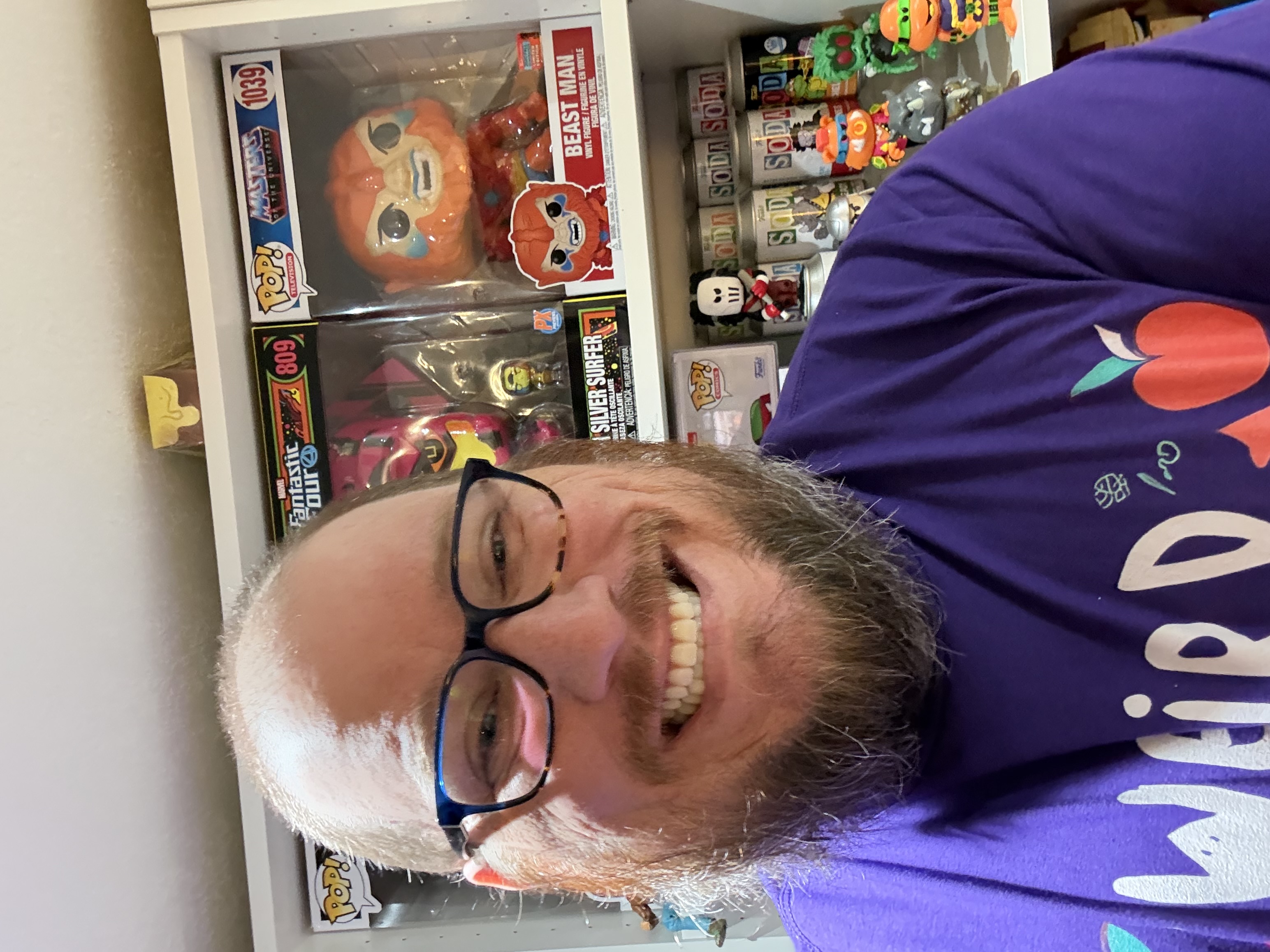
Academic Interventionist/Tech Fanboy/Blogger/Aspiring Author
I spent the first chapter of my career at Topeka High School, where I taught pretty much every Social Studies course that wasn't Psychology or Sociology (that's not hyperbole, I checked). For nearly a decade, I also served as the Social Sciences department chair and the Director of Speech and Debate, which is a polite way of saying I spent a lot of weekends in high school spaces watching students argue about things with impressive conviction.
In 2024, I made the decision to teach closer to home because having three kids in elementary school will rapidly reorder your priorities. I started what I have lovingly called my "middle school era," teaching Social Studies and a collection of electives that let me get genuinely weird with curriculum design.
Now (2025-present) I work as an academic interventionist, which means I get to go deep on the question that has always driven me: how do we actually help students who have been left behind by the systems that were supposed to serve them?
Spoiler: play helps. AI helps. Curiosity helps. Worksheets, generally, do not.
I run a website called the Teacher's plAIground where the goal is to figure out how to keep teaching joyful, sustainable, and deeply human — even when the robots are very, very good at their jobs.
You'll find blog posts, classroom-ready templates, resource collections, and the occasional YouTube series where I try to teach teachers to vibe code in under five minutes.