Beyond the Curriculum: Reigniting the Spark of Curiosity in Your Classroom
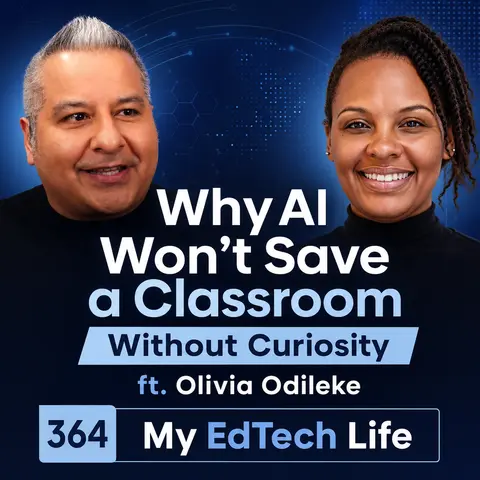
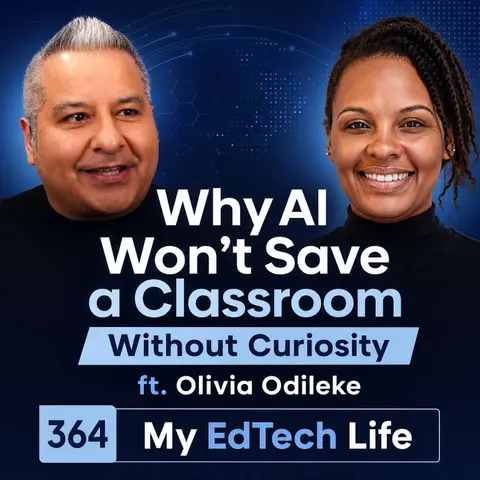
Welcome back to the blog! In our latest episode, we delved deep into a topic that is absolutely fundamental to truly impactful education: curiosity. Specifically, we explored the compelling arguments of Olivia Odileke, a visionary educator who champions the idea that fostering student curiosity should take precedence over simply covering curriculum content. This blog post expands on those discussions, offering a more in-depth look at why this shift in focus is not just beneficial, but arguably essential, for unlocking the full potential of our students and preventing teacher burnout. If you haven't already, I highly encourage you to listen to the full episode, Why AI Won't Save a Classroom Without Curiosity ft. Olivia Odileke | My EdTech Life 364, to get the complete context of this vital conversation.
The Overlooked Key: Why Curiosity Trumps Curriculum Coverage
For too long, the educational landscape has been dominated by the relentless pursuit of curriculum coverage. We are, as educators, often measured by how much ground we’ve “covered” rather than by the depth of understanding or the lasting intellectual engagement we’ve fostered. This isn't to say that curriculum is unimportant; it provides a foundational structure and ensures that students are exposed to essential knowledge and skills. However, when curriculum coverage becomes the sole metric of success, something vital is often lost: the intrinsic motivation and wonder that drives genuine learning. Curiosity is the engine that powers inquiry, the fuel that sustains deep learning, and the spark that ignites a lifelong love of discovery. When we prioritize simply ticking off boxes on a syllabus, we risk creating students who are adept at memorization and regurgitation but lack the critical thinking, problem-solving abilities, and creative confidence to truly thrive in a rapidly changing world. Olivia Odileke's work powerfully asserts that curiosity isn't just a nice-to-have; it's the overlooked key to unlocking a student's true potential.
From Engineering to Education: Olivia Odileke's Journey to Sparking Inquiry
One of the most compelling aspects of Olivia Odileke's perspective is its origin. She doesn't come from a traditional education background; instead, her formative professional experiences were in industrial engineering. This unique vantage point allows her to approach educational challenges with a different lens – one that is often characterized by systems thinking, efficiency, and a deep understanding of problem-solving methodologies. In our episode, Olivia shared how her background in engineering instilled in her a mindset of continuous improvement and a focus on understanding the underlying mechanisms of a system. She realized that the same principles of inquiry, experimentation, and iteration that drive innovation in engineering could be applied to the classroom. Her transition into education was fueled by a desire to bring this proactive, problem-solving approach to the development of young minds. This engineering mindset helps her dissect the challenges of education, identify inefficiencies, and design innovative solutions that prioritize student engagement and teacher well-being. It’s a powerful reminder that valuable insights can often emerge from interdisciplinary perspectives, and that the best pedagogical practices might just be waiting to be discovered outside the traditional ivory tower of education.
The Burnout Cycle: Why Teachers Feel Weighed Down by the Curriculum
The reality for many educators today is one of overwhelming pressure and chronic burnout. The constant demand to cover vast amounts of curriculum content, often within tight deadlines and with limited resources, creates a relentless cycle of stress. Teachers are expected to be experts in their subject matter, skilled in classroom management, adept at differentiated instruction, and proficient in navigating a complex web of assessment and accountability measures. When the primary focus is curriculum coverage, teachers often feel they have to rush through material, sacrificing opportunities for deeper exploration, student-led inquiry, and meaningful dialogue. This pressure can lead to a feeling of inadequacy, as teachers may perceive themselves as failing to meet the unachievable demands placed upon them. Furthermore, the joy of teaching, the initial spark that drew many into the profession, can be extinguished under the weight of these pressures. The focus on content delivery rather than the cultivation of understanding and curiosity can leave both teachers and students feeling disengaged and uninspired. Olivia's insights highlight how this curriculum-centric model inadvertently contributes to the very burnout it aims to combat by creating an unsustainable work environment.
Unlocking Potential: How Shifting Focus to Curiosity Transforms Learning
The transformative power of shifting the educational focus from curriculum coverage to curiosity cannot be overstated. When we intentionally cultivate curiosity, we are essentially empowering students to become active participants in their own learning journey. Instead of being passive recipients of information, they become explorers, investigators, and critical thinkers. Curiosity encourages questions, promotes exploration, and fosters a deeper, more meaningful engagement with the subject matter. When students are curious, they are more likely to remember what they learn because the learning is intrinsically motivated. They develop a sense of ownership over their education, leading to increased self-efficacy and a greater willingness to tackle challenging problems. This shift also fundamentally changes the teacher's role, moving them from a dispenser of knowledge to a facilitator of discovery, a guide, and a coach. This not only makes teaching more rewarding but also allows teachers to foster stronger relationships with their students, understanding their individual needs and interests better. The classroom transforms from a place of memorization to a vibrant hub of inquiry and discovery, where potential is not just met, but actively unleashed.
Practical Strategies: Olivia's 'Spark Task' and the Seven-Minute Rule
Olivia Odileke doesn't just talk about the importance of curiosity; she offers concrete, actionable strategies for educators to implement. One of her most powerful concepts is the "Spark Task." These are designed to be engaging, multi-faceted challenges that provide multiple entry points for learners of all abilities and backgrounds. The goal is to ignite interest and encourage exploration, rather than to test prior knowledge. Spark Tasks are not about getting the "right" answer immediately, but about sparking the process of inquiry. They are designed to be open-ended, allowing students to approach them from different angles and utilize their unique strengths. Coupled with this is Olivia's "Seven-Minute Rule" for teacher talk. This is a practical guideline designed to maximize student engagement and minimize passive listening. By limiting direct instruction to short, focused bursts, teachers create more time for student-led activities, discussions, and problem-solving. This simple yet profound strategy shifts the classroom dynamic, placing the focus squarely on student thinking and exploration. These strategies are not about reinventing the wheel; they are about making small, impactful changes that can dramatically enhance the learning experience and reignite the spark of curiosity.
Fostering a 'Fail Forward' Culture: Creating Safe Spaces for Innovation
A crucial element in cultivating curiosity is the creation of a "fail forward" culture within the classroom. This means fostering an environment where mistakes are not seen as failures, but as invaluable learning opportunities. In a traditional curriculum-driven model, fear of making mistakes can stifle experimentation and discourage students from taking intellectual risks. When students are constantly worried about getting things wrong, they are less likely to venture into the unknown, ask probing questions, or propose unconventional ideas. Olivia emphasizes that the smallest unit of school improvement is a teacher who feels psychologically safe to try something new. This safety extends to students. When educators create a classroom where it's okay to not know, where questions are encouraged, and where challenges are embraced, students feel empowered to explore, to experiment, and yes, to sometimes get it wrong. This "fail forward" mentality is essential for developing resilience, adaptability, and the confidence needed to tackle complex problems. It's about creating a learning environment that is not only intellectually stimulating but also emotionally supportive, allowing the natural human drive to explore and discover to flourish.
AI as a Thought Partner: Amplifying, Not Replacing, Student Thinking with Olivia's GPT Coach
In today's rapidly evolving technological landscape, the role of Artificial Intelligence in education is a topic of much discussion. Olivia Odileke's approach to AI is particularly insightful, as she advocates for using AI as a tool to amplify, not replace, student thinking. Her creation, the Spark Curiosity GPT Coach, is a prime example of this philosophy in action. Instead of using AI to provide instant answers, Olivia's tools are designed to act as a thought partner, prompting students to think more deeply, ask more relevant questions, and explore concepts from new angles. This is a critical distinction. When AI is used merely for answer generation, it can circumvent the very learning process we aim to foster. However, when used as a guide, a sounding board, or a source of novel perspectives, AI can significantly enhance a student's cognitive development. It can help students refine their arguments, identify gaps in their understanding, and explore alternative solutions. This approach aligns perfectly with the goal of fostering curiosity, as it encourages students to engage with information critically and to use tools to deepen their own understanding, rather than relying on them for passive consumption.
The Future of Curiosity: Insights from the Spark Curiosity Conference
The insights Olivia Odileke shared in our episode are not just theoretical; they are actively being modeled and explored at events like the Spark Curiosity Conference. This conference serves as a living laboratory, showcasing what a genuinely curious classroom can feel and look like. It's a space where educators can experience firsthand the power of inquiry-based learning, explore innovative pedagogical approaches, and connect with a community of like-minded professionals. Events like these are crucial for disseminating best practices and inspiring widespread adoption of curiosity-centered education. They demonstrate that transforming education is not an insurmountable task, but a series of intentional steps that can lead to profound and positive change. The discussions around AI at these events further highlight the potential for technology to serve as a catalyst for curiosity, rather than a threat to authentic learning. The future of education, as envisioned by Olivia and demonstrated at these gatherings, is one where curiosity is not an afterthought, but the driving force behind all learning.
Bringing Curiosity Back: A Call to Action for Educators
This exploration of Olivia Odileke's powerful ideas serves as a vital call to action for educators everywhere. The relentless pressure to cover curriculum can lead to burnout and disengagement for both teachers and students. By intentionally shifting our focus towards cultivating curiosity, we can unlock deeper learning, foster critical thinking, and reignite the joy of discovery. It begins with small, manageable steps: implementing strategies like Olivia's Spark Tasks and Seven-Minute Rule, creating a safe and supportive "fail forward" environment, and thoughtfully integrating tools like AI as thought partners. Let us move beyond the confines of the curriculum and embrace the boundless potential that lies within the curious minds of our students. Let's create classrooms that are not just places of instruction, but vibrant ecosystems of inquiry, where the spark of curiosity is not just present, but actively fanned into a lifelong flame of learning. Thank you for joining me in this deep dive. Remember to listen to the full episode for more insights from Olivia Odileke!

Dr. Alfonso Mendoza Jr., EdD. Educator, host of My EdTech Life (360+ episodes), and a cautious advocate for pedagogy-first EdTech. Doctoral research on AI in education. Google Innovator (VIA20), Adobe Education Innovator, EdTech Digest Top 100 Influencer. 8,500+ educators trained. Servant leader at heart. Blessings.
Stay Techie ✌🏼
Why School Librarians Must Lead AI Literacy Policies in K-12


 Goodpods
  Amazon Music
  Pandora