Spotify
 Apple Podcasts
 RSS Feed
  Goodpods
  Amazon Music
  Pandora
 Podcasting in 2026: Grow Your Show with AI & Descript ft. Aaron Makelky | My EdTech Life 355
Dr. Alfonso sits down with Aaron Makelky of Descript to unpack the real future of podcasting beyond vanity metrics, beyond over-polished edits, and beyond the AI hype.


Dr. Alfonso sits down with Aaron Makelky of Descript to unpack the real future of podcasting beyond vanity metrics, beyond over-polished edits, and beyond the AI hype.
This conversation is a masterclass for creators, educators, and entrepreneurs who want to amplify their voice without burning out.
From workflow wisdom to sponsorship strategy to the rise of hyper-niche podcasts, Aaron delivers practical insight with zero fluff. If you’ve ever wondered whether your downloads are “enough,” whether video matters, or how AI fits into authentic storytelling, you won't want to miss this one.
Chapters
00:00 Introduction to Podcasting and Descript
02:50 The Evolution of Podcasting and Its Accessibility
06:04 Changing Perspectives on Sponsorships
08:53 Building Relationships and Trust in Podcasting
11:58 The Surge in Podcasting and Content Formats
15:00 The Role of Video in Podcasting
18:02 Enhancing Audio and Video Quality with Descript
20:54 Leveraging AI Tools for Podcasting Efficiency
29:02 Enhancing Video Interaction with AI Tools
32:00 Streamlining Podcast Editing with AI
33:37 Balancing Polish and Authenticity in Content
41:30 The Importance of Learning and Repetition in Podcasting
44:51 Future Trends in Podcasting and Content Creation
Try Descript: https://descript.cello.so/hVfs5yHcBjx
Sponsor Shoutout
Thank you to our sponsors: Book Creator, Eduaide.AI, and Peel Back Education for supporting My EdTech Life.
Get 3 Months of Book Creator Premium Access Free!
Use Code: MyEdTechLife
Stay Techie ✌️
Peel Back Education exists to uncover, share, and amplify powerful, authentic stories from inside classrooms and beyond, helping educators, learners, and the wider community connect meaningfully with the people and ideas shaping education today.
Authentic engagement, inclusion, and learning across the curriculum for ALL your students. Teachers love Book Creator.
Thank you for watching or listening to our show!
Until Next Time, Stay Techie!
-Fonz
🎙️ Love our content? Sponsor MyEdTechLife Podcast and connect with our passionate edtech audience! Reach out to me at myedtechlife@gmail.com. ✨
00:00 - Welcome & Guest Introduction
02:55 - Aaron’s Path Into Podcasting
05:14 - Podfade, Standards, And Standing Out
09:42 - Sponsorships, Niches, And Real ROI
15:40 - Format First: Why Audio Often Wins
18:53 - Video vs Audio: Reach And Algorithms
22:20 - Descript For Quality And Speed
26:42 - Underlord: AI That Finds The Gold
32:00 - Killing Post-Production Bottlenecks
36:07 - Authenticity, Over-Editing, And Trust
43:14 - What Aaron Would Tell His Past Self
45:29 - What’s Next: Niches, Batching, Live Events
52:39 - Rapid-Fire: AI Kryptonite, Billboards, History
Dr. Alfonso Mendoza:
Hello everybody and welcome to another great episode of My Ed Tech Wife. Thank you so much for joining us on this wonderful day. And wherever it is that you're joining us from around the world, thank you as always for engaging with our content. We appreciate all the likes, the shares, the follows, the comments, the feedback. You guys are fantastic, and I am excited to, as always, bring you some amazing content and an amazing guest. And I'm just so excited to dive in with my great friend Aaron McKelkey, who is joining us from DScript. And for those of you that may not be familiar with DScript, after today, trust me, you are gonna learn more about DScript, and I promise you that you are gonna jump right on it because of all the capabilities. Because if you are a podcaster or would like to be a podcaster, and you're a current content creator and editing video and audio and all that great stuff, talk about a robust platform. So, Aaron, thank you so much for being on the show. How are you doing today?
Aaron Makelky:
I'm doing great, Dr. Fonz. Thanks for having me. I'm excited to be on my favorite educational podcast of all time.
Dr. Alfonso Mendoza:
Thank you, Aaron. I really appreciate you. And I've been a fan of yours too, as well. As you know, both you and I have conducted connected on LinkedIn and especially, you know, surrounding conversations around AI and you know, since 2022, you yourself also being in education and also taking that ed tech leap, you know, a little bit before I did. But I'm just really excited to have you here because I think as educators, we're always educators at heart. And now with what you're doing in DScript and bringing forth uh podcasting uh as or educating us, you know, independent creators or full-on creators, as uh, you know, through podcasting and helping us with eScript, this is something that I am really excited to speak on because recently I just came back from a conference and presented, and I always do a presentation on podcasting and education and the importance of that. And then of course, independently through my ed tech live, truly believe the power that amplifying voice has and what better way to do it through podcasting. And then I said, you know what? I need to reach out to somebody that is already in that space, such as yourself. So I'm extremely grateful for your time today as we get to learn a little bit more about you and the work that you're doing. So, Aaron, for our audience members that may not be familiar with your work just yet or haven't connected with you, which I promise after this episode, I know that they will definitely jump on your socials too as well and follow you after all the great stuff you'll share. Can you give us a little brief introduction and what your context is within the podcasting space?
Aaron Makelky:
Yeah, I actually got started because I was trying to pitch a friend on he should start a podcast, and he said, I don't know how to edit, record, it's too much work. And I actually started my own just to learn not to get sponsors or make money or care about anything other than just getting reps. And then it turned out he never really wanted to, and I just kept going. And now I actually work for a company that enables millions of people to create their own content, podcasters like yourself, get to learn from them, teach them, help them. I do uh community and developer relations marketing for D script, but basically I help people learn how to use the tool. Uh, we do live streams. I'll do, you know, somebody has a question, I'll just jump on a Zoom and help them or ask them what their their questions are. And now I get to work with those people all the time from big multi-million dollar YouTubers to English teachers that just wanted to make their lessons more interesting for their students. And it's a ton of fun.
Dr. Alfonso Mendoza:
That is wonderful. And that's what it's all about, you know. And I think, you know, there's just something about um both you and I and and very similar, and we just love to help and connect people and you know, with whatever project it is that they're working on and seeing how we may help their workflow and things of that sort. So it's fantastic that like you said, you just started because you're pitching somebody on it, you got your own reps in, and now you get to work with DScript, which by the way, I have been using probably since late 2020 when it first came out. And I have it has made my my workflow so much easier. And I honestly think that I'm gonna be six years old, or the podcast will be six years old this April, and having a tool like D Script that can help your workflow is probably something that is great because as we know, a lot of podcasts may fizzle out after, you know, maybe episode seven, episode eight. But now that you've joined D script and and joined that uh wonderful platform, I want to ask you how has your perspective on podcasting's potential changed or evolved as now that what you see as part of the team now?
Aaron Makelky:
Great question. Everything's changing in education and in technology. With podcasting, I think the standard has gotten higher. And it used to be if you just were consistent and didn't pod fade, I don't know if you're familiar with that term, but that's what everybody calls it. I started, I got three, five, six episodes in and too much work, didn't make money, didn't get the downloads, and I quit. If you could just not do that, you would make it. And with the tools that we have now, it's never been easier to record and edit your own podcast. And everybody thinks that. But I'll tell you the story of the first podcast episode I recorded for myself. In class, one of my students said, download this app on your phone. It's free. I downloaded it, I talked into my iPhone 14, I hit upload. No, it wasn't good, it wasn't polished. With a free tool in about 10 minutes, I had a podcast episode that anyone could download from Spotify. That really reinforced me. Okay, if you if you want a podcast, if you have an opinion, if you have interesting guests, you want to teach your audience, there's never been a better time to do it than now in terms of like the tools and the time it takes. But that also means the barrier of entry is really low. So you have to do something that other people don't do or bring something to the table that some guy talking into his iPhone 14 can't do or doesn't do well. And that could be an interesting format. That could be an interesting topic. Uh, and the other one is I think people that never thought, oh, a podcast would be a good solution for me are realizing it's actually great. So I'll give the example of somebody who does coaching in a school district. If they're a district technology person, back in my day, they would send email newsletters, three, four page long PDF, probably mostly text. And I go, that person should have a podcast. Your district should have a podcast for PD, because you're going to give the trainings anyways. Why not talk into a mic or just wear one and record it? Businesses come up with podcasts and realize SEO-wise and finding our ideal customer profiles through a really specific podcast topic, not a million downloads, but a thousand of the right people who want to hear that conversation. So it's almost like there's a new world open to podcasters that didn't exist two or three years ago.
Dr. Alfonso Mendoza:
No, and I agree with you on that. You know, it just a couple of things that I do want to pull the string on out that you did mention, especially uh there towards the end, you know, building traction. Many times I think as a podcaster, when I first started, you know, kind of like that pod fade was kind of coming in because immediately you start looking at numbers and you start looking at downloads and you start looking at everything like that's going on on social media, and you can wear yourself thin on that. But I love one thing that you just finished saying right now that as a business, uh yes, you may not have the 10,000, 100,000 downloads, but all you really need is maybe one download of the right person that's listening to your podcast that can make a huge difference. So I want to ask you, Erin, now that you're on that site where you get to work with multi-million dollar companies and so on, I know that when I'd reached out to companies for sponsorships and so on, it's always, well, I want to see your downloads and I want to see your numbers. Has that perspective changed, or is it still that numbers and downloads game? Or is it almost more like, okay, this person is really niche down to the audience that we need? And yes, we can see that there is some great fruit that we can reap from this episode.
Aaron Makelky:
Uh, it depends on the company. I see both directions. One is the old way. So YouTube is all about how many subscribers do you have. Uh, my hot take is I don't care about that at all. No, I'm not the expert on the paid sponsorship stuff. We do have a team. I get to work with them. They're better at it than me. But I think that's a five or 10 years ago, that was the most important metric. I think it's never been less important. I won't say it doesn't matter at all, but it's never been less important. The same thing is true with, you know, your downloads on a podcast, because what does that convert into? A lot of that has now become a vanity metric that people say, look at my profile. Here's my one pager on my podcast that I send out to sponsors. I think there's a couple ways to approach it as the creator. One is sponsor yourself until you get the sponsors you want. It boggles my mind that people go, Well, I can't find a brand deal with Adobe yet. Okay. Well, you started your podcast three weeks ago and it has 50 downloads. I they're probably not going to sponsor you. So just sponsor yourself. Another one is there are networks, just like TV networks, where people can buy an ad or get a sponsorship that goes across a similar topic of podcasts. So, for example, I have a friend who has a podcast network with 35 to 40 education-focused podcasts. Well, if you get into his network, it's a small slice, but you're going to have sponsored content on your show. More than making money right away, what it's going to give you is experience. Like, I have to know where to run the ad. I have to know which kind works. I have to have some sort of data to back up how many people heard the ad, clicked the link, downloaded the thing, signed up, whatever it was. So if you're not in the place where you can get that brand deal or sponsorship yourself right away, sponsor yourself or try to join a network and talk to them and say, hey, I don't even care about the $3 an episode I'll get when I start from the sponsors. I just want to learn how do I work with them and measure this stuff. Um, and I think another one is maybe sponsorships aren't the right way to approach it right away. I just had a conversation the week before we record this episode with Dr. Fawn's where an ed tech startup wants to do a podcast. And I was talking to them about how are you going to measure if this was worth your time? And they said the same thing you brought up, you know, downloads, clicks. And I said, I would challenge you to think of it this way. Those are a great byproduct. Yes, you want those, but they're going to happen organically. What you should focus on is have the right conversations with people on your podcast as your guests. That's your real audience. And then you just happen to publish it to Apple and Spotify and everywhere else for whoever else wants to listen. But bring in who you want to work with as a guest and build trust with them. And that's going to pay way bigger dividends than a $50 sponsor you're going to get on your podcast episode when you're first starting. So just being creative and how you use it to market is, I think, going to be way better than waiting for a big brand deal to come through, especially if you're new or small.
Dr. Alfonso Mendoza:
I love that. And, you know, and that's something that I hear oftentimes. It's like now, even smaller creators can get those sponsorships. But again, going back to what you're saying, it is something that's going to be difficult and that you're going to have to work on for a while because it's not like it, you know, maybe two episodes in, you can't expect something, you know, somebody big already saying, okay, I'm going to go ahead and pour this much amount of money. And I think that for a lot of creators, and maybe like you said, the on the creator side is, you know, for that income, that side hustle, you want to work and you're that consultant, you know, whatever business you may be in, that would be something that it's like, okay, I have some income here, but you're still gonna have to work for it just to make sure that also you want to work with the right company and you want to make sure that it's a good fit and not just take anybody's money because at the end now you're tied to that company in some way, shape, or form. So I know I've learned a lot of things in the past, uh, you know, going on six years as far as sponsorships are concerned. And I must add that your advice that you just gave right now, I think was probably the best in inviting those companies or inviting, you know, those entities that you would love to work and collaborate with. And like you said, the importance of building that trust, that's how you build, you know, those sponsorship opportunities that can lend you, you know, a long-term deal as opposed to, hey, I'll pay you $250 for, you know, five episodes of you just putting me as in a mid-roll or something like that. You know, you're gonna get more out of that in the long term. So oftentimes, you know, maybe you know, people just want to play the short game and just take whatever they can get right away. Uh but then I think that also causes some burnout there in that sense, because now, like I said, it it's short term, you're working a little extra as opposed to let's do long term, pace yourself a couple of episodes, a whole season, depending on how long your season is in. But the relationship aspect that you mentioned, I think, is the most important. So I kind of want to ask you now, uh hearing so much about podcasting, not only now you work with multi-billion dollar businesses, you know, you work with small creators, and of course you do a lot of the YouTube, which is kind of off the geared for us smaller creators, but but from your vantage point at D Screar, what is the surge in podcasting? Where does that come from? And how can people start building some traction, you know, for those that are just kind of getting started?
Aaron Makelky:
Yeah, I just had a conversation with somebody who works for a state agency that supports public schools, and they realized that the format is often far more important than the content. And the example was we send out email newsletters once a month of services we offer and educational things. And we both had a laugh as former classroom teachers and public school employees. We go, we don't read our email. I mean, it might get filtered, we don't open it. The same message, if it was available as an audio version or video version as a podcast, people would eat that up. They'd love it, they'd engage, they'd click through to your link, they'd want to use your resources, whatever you're offering. And I think that's really just a shift, and people are busy, and now you can have content in whatever format you want. And very few of us want traditional long form text. You know, we want either bite-sized video. Uh, my wife is a great example. Whenever she's doing things around the house, she has earbuds in and she's listening to podcasts. It's just what she does and educational content too, not just yeah, entertainment stuff. So now that people can have that, I think there's a real competition for you, don't just have to have good content. You have to package it in the right context and give the format that your viewers really want it in. Um, and I think now it's what I tell people is this turn on a camera and a mic. You're also going to get a transcript with a few tools you can automate if you want to. Now you can have every format you want. You can clip this for reels, you can do the long form video on YouTube, you can do the audio on the podcast platform, you can still do an email, a newsletter, a written version of this. But now that we all have cameras and mics, I don't even have to be high quality. Why wouldn't you capture that and use that source material to fit the format that your viewers really want?
Dr. Alfonso Mendoza:
Man, that is great. And you know, that's one of the things too that often people I hear in in our podcast space talk about is like, well, you need to do video. It's like, no, you don't have to do video, it's just podcasty and voice. So I think that also is up to the the choice of the consumer. I mean, like you mentioned, I myself, you know, I'm out due to the yard. I've got my earbuds in, I'm listening to a podcast. Obviously, I'm not going to be doing the video while I'm driving or anything, but I'm listening to it. But then, you know, there's also the people that say, well, no, you have to have uh video now. So I want to ask you, like, what's your take on that? Because I know I've seen several debates where people will go into these um, you know, groups and say, like, no, podcasting, you know, it should just be voice and it's a voice medium only. And if you're including video, you're not really podcasting. So what what are your thoughts on that?
Aaron Makelky:
Yeah, I completely disagree. What I tell people is why not capture the video? You don't have to use it. You can go on Apple, which is still, especially for educational podcasts, the biggest platform. There is no video component. There's nothing wrong with that. But why wouldn't you want to reach Spotify, which is going to push your content more if there's video attached? YouTube, they claim is the biggest podcast uh consumed platform there is. And I see I saw this all the time with my students. They would listen to YouTube without the screen, whether that's music, a podcast, an educational video, they would open a YouTube video, put the screen down, and have an earbud in. And to me, I go, as the creator, why do you care which version, if you really want to share your message, educate your audience, teach them? You have to give them the style that they want. And you you can do the audio only thing, but the problem with that is algorithms dictate reach with a lot of these tools. And if you're trying to grow on Spotify and not doing video, you're just making it harder for yourself. That doesn't mean impossible, doesn't mean it can't be done, but it's gonna be harder. YouTube's the same way. Why not put the video there? Even if it's just talking head and you frame it as side by side with your guest with nothing, that's gonna get more reach than the audio only. So it's a sacrifice you're making if that's a hill you want to die on. And I totally respect the OG podcasters that have been doing it that way and don't want to change. More power to you, but especially for somebody new who's trying to grow, I think you're trying to climb a pretty vertical incline there if you're not using video.
Dr. Alfonso Mendoza:
Yeah. And I mean, even if you don't want to do video, I think like even an audiogram that you can create and at least put that up there if you don't want to do if you want to do a faceless kind of podcast and faceless social media, which is I think fantastic. And going back to what DScript has available, I mean, you've got all sorts of templates that are available, which kind of leads me to my next question that I want to ask you. You know, as far as uh podcasting as a medium, I know accessibility you mentioned and I know can be a very low-hanging fruit to create a podcast. But now as people uh want to I guess uh get better at their quality and put out some quality outputs as far as audio and video, I want to ask you as far as D Script's approach to audio and video, how can that change what people can do or were able to do to what they can do now? Because using it for the since late 2020, like I said, it has helped my workflow tremendously. So tell us a little bit about how D Script can really just amp up your game.
Aaron Makelky:
Yeah, I think every podcaster knows the only piece of equipment that matters when you start is your microphone. And there was a time where to make podcast quality audio, you had to get a condenser mic, $300, you know, at least $200 to start. Now, with either your phone or even some of the portable wireless ones, you can get surprisingly high quality audio, especially when your tool can process that on the back end. So we have a feature called Studio Sound. Basically, you click a button, it's gonna take out background noises. It's kind of like Zoom, it knows the dog barking and the truck going by or different frequencies. So it can clean up your audio. That's good enough for 99% of people's use cases, even if you didn't have a high quality mic. So the reason that matters is the bar just got lower. A $20 or $30 piece of software can make your $50 mic sound like a $300 mic. And also the excuse of, well, I got to find the mic and the cord and set it up and all these things that there's podcasters that go, yep, I know that feeling. Until I get the next thing, I can't start. That's really gone away. The other one that I would say, besides not needing the top quality hardware because the tools will help you, is just the polish. You know that. You have your brand, you have your logo up there behind you in the blue background. With a tool like D script, you can see. Save a layout and basically say a logo, a blue to black gradient, however you want it to look visually. If you're putting captions on your clips, if you want to put a little title card that says your name as the host and my name as the guest, whatever it looks like, you can save it as a template essentially. And people have this idea that, oh, every podcast episode, Dr. Fonz has to go in and drag this thing and make it blue and click that button. And there's other tools that do it too, but ours is really good at this and I've used it the most. You just say, Oh, I have a layout called two-person podcast. Click it, it pulls the camera feeds in, it frames it, it puts the speaker based on the transcript that has my name already as a speaker. It auto-populates the text field. If you want to do social media with two people, but now it's going to be framed vertically, you can just have a layout called two-person clip. And it puts your captions with your typography on there. And now once you create it, it's saved. So the third episode is way easier to edit than the first. And the fifth season, the only time you're changing stuff is if you just want to tweak it and update it, maybe adding like a sponsor logo or running a different ad. And the groundwork that you do to make it look good is so easily repeatable now that you can make it look and sound great without fancy hardware or a ton of editing skills because there's also pre-made templates. If you don't know how to make your podcast look good, pick a pre-made one and put your logo and colors on. It's going to be good. It's not going to be bad. And then it's repeatable, it's saveable. Um and I think people, people who haven't gone in and tried it have an idea of what it's like to edit podcasts. When you're first starting, you just need reps. So use something that you can save and apply. If you have an intro and an outro with your little beat that fades in and out, it's it's a file saved in your projects. And you just go in and call it my ed tech life intro. Boom, throw it in the first 30 seconds. My ed tech outro, boom, throw it in the last 30 seconds. You don't have to record those or do anything once you have them.
Dr. Alfonso Mendoza:
Absolutely. And that's everything that you described there. It just really falls into my workflow. And that's the one thing that I would love to let all our audience members that are listening today, whether you're in education, whether you're a business, whether you're in academia, you know, a power of your voice and amplifying what it is that you're doing with tools that are low barrier to entry. Once you get in there, you get some reps in. And just like DScript says, you know, editing video is as easy as using docs or slides. I mean, going in there, you know, and taking, like if you've ever edited a Google Doc, you just what you see is what you get, you delete, you, you know, and so on. The same thing is that's what I love about D script, that you see your whole transcript. If there's something there that you don't like, you can do a strike through and it'll go ahead and just uh play over that, or you could delete, you know, and it just makes it that much easier. But going back to the tools that you were telling us, tell us a little bit about Underlord, because you described a lot of the things there, the AI tools, which are gonna help definitely your voice. They're gonna help, you know, be able to create some clips and that again going back in there and taking this episode that'll be maybe 45 minutes, 50 minutes long, and then just telling D script to say, hey, I need you to find me 50 or 50-second clips or 45-second clips. I love that I can control that and then give it a prompt, and then it's gonna find the spiciest Aaron McKelkey uh clips that I can go ahead and put out, and that's what I love. So, but tell us a little bit more about what Underlord can do for our users.
Aaron Makelky:
Yeah, I think the best way, especially if you're new and not a career video audio editor, is actually use it to discover things, not to do things for you. I'll share this example. I am embarrassed how many hours of podcasts and video that I edited without using markers. Markers are basically a text label on the transcript that nobody sees once you publish it to Spotify or YouTube. And I was using Underlord before I even worked for DScript, and it kept putting markers on the project. And I would ask it, there's a chat window just like any LLM. And I said, okay, like what is a marker and why would I use that? And it explained things like chapters, changing topics, or just being able to refer back to places in your transcript easily without saying 12 minutes and five seconds. Maybe at 12 minutes and five seconds, you tag it and say, Dr. Fons asked the question about microphones. Oh, now it's really easy to zip back there, but it's also really easy to give context to a tool like an AI tool if you wanted to do something at that marker. So it was actually teaching me a feature and a tool that I probably should have been using, but because I wasn't a real pro, I didn't know. And now I use that all the time because of the example that it gave and the explanation. Some of my favorite uses of it are just finding clips. The first thing that I do, I'll drop in a project. So say one of your episodes is 45 minutes long, and I'll just say, find five clips of the best ideas my guest had that are all self-contained and under a minute. And you can do a layout like a vertical TikTok Instagram reel layout with your style on it. But then you could also find what's one of the best back and forth moments. So it can tell in the transcript, Dr. Fonz, Aaron, Dr. Fonz, okay, find a little conversation that fit under a minute. Give me three clips of that. Oh, yeah. And the question about uh getting a sponsorship in 2026, find that too. And because the AI tool can refer to everything in your project, you don't have to go back and scrub through a timeline. You don't even have to go back and scroll through a transcript. It can go through and say, here's the clip, here's the clip, here's the clip. I'm not posting those without looking at them. Just like we all know, with any AI tool, the human is going to be in the loop somewhere between asking it to do the job and hitting publish. But here's what I find: in the time it takes me to review those 10 clips, I'll probably find five or six good ones I use. And it's way faster than if I went through manually and found the good five or six clips myself, plus they're all set up. Another one that I love is text uh interacting with your transcript. So it's really hard to build uh an AI tool that can interact with video. It's not perfect, it's getting better all the time. But it's really good at interacting with your transcript. And something that I was guilty of is take a clip, put the captions on there, but the punctuation, the spelling, sometimes there's a double comma in there. And you have to go into the transcript and say, you know, change this, delete that, not mess up the video that's associated with it. Now, what I do is I point underlord. So say it's a 40-second clip, and I say, just clean up the transcript so it's formatted and punctuated for captions on socials. And in about five to 10 seconds, it's going to clean up punctuation, it's going to put apostrophes in there because the auto captions, even if you're using a different tool like Cap Cut and you watch things on social media, the captions are very poorly written. Sometimes it's the wrong there or the wrong to, or it'd spell someone's name wrong. Well, Underlord knows how to spell Alfonso and Aaron because it's labeled in the speaker, and it'll go through and just go boop, boop, boop. I cleaned up all that punctuation spelling for you. And it just turns into the low-level editing grunt work that you don't want to do on a Sunday at 8 p.m. You just want to get your podcast ready to publish. Lovely.
Dr. Alfonso Mendoza:
And that's fantastic. I mean, everything that you said there, you know, for anybody that is interested in podcasting, I I highly recommend eScript. And of course, you're hearing Aaron now being able to show with you the types of tools and of course the the way that the platform can work to make things so much easier. Because as we know, I think one of the biggest bottlenecks is always the post-production. Now, I know I've seen a lot of people out there that are still like, well, here's the easy way of doing it. And they're showing and the free way, I guess you'd say, in the sense of using audacity. And I was like, oh my gosh, to be able to go and read those WAV files and cut and do all of that without seeing, no, no way. There's no way that I can do that after seeing what DScript can do and just taking that transcript and just deleting things that I don't need from that transcript and just cleans it up immediately. So it'll clean up not only my audio, but it's going to clean up my video. I'm like, this is it. Like, you know, so tools like Audacity that are out there, although they do serve a purpose. And they if you're just starting and you want to get an idea of how you know podcasting works and maybe doing some editing, it's great. But I highly recommend you do move to uh a video editor that works with a transcript and it just makes your life so much easier because again, you don't want to burn out, like you said. You know, it's Sunday, you want to get your your uh podcast out by Monday. I mean, you're talking about hours upon hours of editing there through Audacity and reading the way files, and it's like that that becomes very tedious for sure.
Aaron Makelky:
Yeah, I think a good goal that everybody should have if you're new to the editing part, is find a tool in a workflow that you can do a one-to-one ratio of recording to editing time. So if you have an hour-long recording, that's the finished length, is you want to shoot for I can get everything from the blank project to published in an hour. And you probably can't do that right away if you're new, but you'll get to the point where you find ways to make it repeatable, simple, something I can copy and paste or templatize. And if it's a 30-minute episode, there's no reason to spend more than 30 minutes on it once you've had some reps editing it.
Dr. Alfonso Mendoza:
Perfect. Now, Eric, I want to ask you as we kind of start uh wrapping up, but I want to ask you about, of course, AI. 2022, obviously, both you and I in the education space saw Chat GPT come out, then we see so many AI tools being released, you know, for business, education, creativity, you know, and even here like podcasting and and the use of AI has been very prevalent since for people that we've seen on social media, and even of course, we're talking about tools that can help you in producing podcasts. And so sometimes the question is, is like when you do have a platform that can really help you polish your content, remove all filler words, no more ums, no more pauses and things of that sort, or now you have voice cloning that can happen. I want to ask you like how can somebody think about the balance between a very polished product and still maintaining that authentic voice and messaging, whether it was a podcast or whether it was a message intended for just social media?
Aaron Makelky:
Yeah, that one's evolving. I'm not endorsing this, but you and I have seen it. People on social media will purposefully leave in typos. Students on assignments will insert strategic mistakes to essentially trick the audience into thinking, well, it can't be AI because it used the wrong spelling or the wrong punctuation. Uh, I'm not a believer in that. I don't do that personally. If I have typos, they're organic and I'm just not a smart guy, but they're definitely not on purpose. With the level of polish, I do think there were trends about when AI came out, and this was hard to automate that you need retention editing and sound effects and crazy transitions. And what a lot of people have found, especially if you're an educational podcaster, is actually your superpower can just be distilling the value and getting straight to the point, teaching, explaining, not trying all these crazy things that are just really overstimulating me. My personal preference, I love podcasters and YouTubers that are kind of boring, but they're no fluff direct. Just tell me what this is going to be about, then explain it, and then tell me what you told me. If you can follow that formula without all the crazy fluff, you don't need flashing lights and crazy transitions and sound effects. That that used to be a thing. Uh, I think that's dying out. And now there's just if if you can really condense an idea and give us the best explanation of it, there's a ton of value in that. And that takes less time than all of the post-production editing that somebody might do if the message isn't going to be valuable in the first place. You're just wrapping it up in fancy wrapping paper, but the present side's still not very good. Um, and what I do, like when I edit my podcasts, I leave in filler words and it's always a conversation I have if there's a guest. Do you have a preference? And almost everybody I talk to the last probably two years has said, you can leave anything as long as it wasn't a terrible take or the accidental swear word or something like that, because that's part of a podcast. It's a conversation, and they're not always perfect. I use ums and likes and uhs when I talk to people in real life. And the worst thing you can do, this I think everyone can agree on, is over-editing. So say you take out every single filler word, and you're doing video and they're harsh cuts, and my hand was over here, and then the next frame it's here because you skipped out. I think that's the worst thing you can do. Um, there's a really respected podcaster, brilliant, big brand deals. And I tried to watch theirs the video version, and it was just so heavily edited and polished. I had to turn it off. I just went back to audio. So maybe shout out to some of the OG people that say audio only is still true podcasting. But I think that was a function of the editing style. It wasn't just the video. And you have to strike a balance for yourself. So if you're starting your own show, you have to think about where's the bar for polish and how can I get there as quickly as possible without a bunch of extra effort and time on my part. One balance that I like to strike in mind, I leave filler words in the audio and video. But if you're doing uh transcription or captions where the words are text, I will remove those. So if this was a TikTok reel and I said, um, I'll I'll edit that out from the text, but I'm not going to take the audio and video because it's natural and it's funny how less you will notice filler words if they're not in the captions. Because we're just used to that. That's our society. We talk that way. And if you haven't tried that, just ignoring something in the transcript, believe the media in, I think that's a good standard to start with, and then you can polish up or down from there.
Dr. Alfonso Mendoza:
I love those tips. I know I remember when I first started the podcast, it was it was all live shows, actually, all live streaming, everything was live. And for me, it the reason that I did that is number one, I said, Well, I'm gonna get some authentic conversation, really good stuff, really good content. And even if you get the dog bark or if you get sirens or, you know, whatever the case is that you would hear, said, you know, it's authentic, it's genuine, you're getting what you see is what you get. And so immediately I would just download, you know, and at the time I was using um StreamYard, so I would just download the episode and boom, just uh, you know, put it, process it, add my intro, outro, use D script, and just uh and maybe some studio audio just in case, like sometimes you know the guests might have been a little too low and things of that sort. So and above and just boom, immediately upload, and that was it. I mean, uh all the ums and verbal crutches and all of that stay there. And even to this day, I still I don't do the live shows, and it's been a while that I don't because now I match my content, so now I do slowly release and you know gives me a little break on that. But I leave everything in there in the audio, and I do a little bit of polishing just on the social media side of it, just to kind of clean things up a little bit. So I'll, you know, remove any like little retakes or, you know, little, you know, even some of the filler words, like you said, you know, as long as it's not a harsh cut, which I love now, you know, remove filler words, except if there's a harsh cut, you know, then you can just leave in. So again, the workflow kind of changes. And like you said, you know, the more you do it, you kind of figure out your style of doing things and what works for you. For me, I I tweak a little bit every single time, as much as I can. I'll learn something new. But one of the things that I did fall into here, and you mentioned this earlier, was the over editing in the sense of there's a there's a specific uh app, and I won't mention who they are, but it's a you pop everything in there and it'll do you know all your subtitles and then it'll bring in like uh B-roll pictures and so on. And it just looked she at at first it was like, oh my gosh, this sounds great, and it looks great, and I just fell into that. And then now I'm seeing that people are like, we we don't wanna be overprocessed, over polished. It's it was just like you said, what is your message? What are you trying to teach me? And then just what's the value that I'm gonna get from it, and then I'm good. And so I've also seen that transition now where it's more just rough. I've seen some YouTube channels that look very just rough, head talking head, and they've got millions of listeners, but because of the content, and it's not heavily edited and things of that sort. And so I think for our audience members that are thinking about this, sometimes they may see, you know, podcasters that and they're like, oh my gosh, there's no way that I can get to that. But that's you might be seeing the finished product, but it doesn't mean that just because you're not at that level, people aren't gonna be attracted to your content. You know, it's about you and the value you bring to them, and you're just using this as a medium to share your message, your passion with your audience, and they'll end up finding you no matter what. So that's kind of something that I want to leave our audience members with. What would be the best advice now that you have transitioned into D script? What would you tell you the initial podcasting Aaron? What would be your best advice to him now after what you have seen and what you have learned working through D script?
Aaron Makelky:
Yeah. Well, I actually had a good friend and mentor who told me this when I started my own just to get reps. He said, Learning the tools and the workflows and the software will be far more valuable than the first podcast that you make. And I remember thinking, what? How I know my podcast isn't going to be big, but like who cares if I know how to edit things? And it's doubly ironic because now I work for the company that I built my first podcast in. But I've been asked a lot more. Can you teach me how to do this? What's the workflow? How's this tool work in podcasts than I have about my own podcasts I've made or recorded or probably been downloaded? Um, so that was very true. And I think teachers, professors, people who don't consider themselves content creators or audio engineers, 15 years ago that was true. You'd have to be in a waveform with a blade tool slicing. If you don't know what that is, consider yourself lucky. Today, if you can turn on a mic, a camera, and type on a Word doc, a Google Doc, you can make a podcast and you can make it sound and look really good without losing your mind. So just try it. If you don't know where to start, there's lots of resources online. Find somebody who's done it and just say, could I jump on a Zoom and watch what you do after you click done recording, say on this episode? What's your workflow? Where do you take it? What do you do first? Um, and there's all sorts of free resources. But if you just find somebody who can show you theirs and then you make it your own, and the biggest thing, like all learning, you just need reps. You need to apply it, not read articles or watch videos about how to do it. Just do it. And give yourself some time and say, okay, within a month, I'm gonna publish my first episode, no matter how it looks or sounds. Like I gotta go. And give yourself a deadline, and you'll be shocked at what you can do.
Dr. Alfonso Mendoza:
Yeah, absolutely. And I think that's some sound advice. Like you said, it's all about getting those reps in and finding a platform that you're gonna be comfortable with. And and I know we've been talking about D script a lot, and I highly recommend it. You know, like I said, I it's been what I've been using probably going on six years now, and I've seen the evolution, but also how it has helped my workflow and also as a team of one, oftentimes I get asked like who does your video or who does this, and I was like, hey, you're looking at it, you're looking at them right now, you're looking at the CEO, manager, and janitor, you know, all in one right here of my ed tech life. But again, for to be a one person team and to be able to put out content the way that I've been able to put out content. I mean, it it again, learning the tools is definitely gonna be the best way to start first. And then once you dive in and you figure out that. workflow oh man it just makes it it makes it that much easier to be able to amplify educator voices amplifying guest voices like Aaron today who joined us and so I'm really excited about podcasting where it is now and I want to ask you because now that you're working for tscript and you're getting to see a lot firsthand as maybe some slight changes or trend that you may be seeing I want to ask you what do you think or and what you've seen what might be coming in the next two to three years as far as podcasting is concerned.
Aaron Makelky:
Yeah well I don't claim to have any answers but I have lots of thoughts and ideas. I think one that's already happening and will just accelerate is the rise of super specific niche podcasts. Because before people thought I need a big audience to make it work I need tons of reach and now people go if you had a podcast for busy suburban dads who want to um learn skills on the side like woodworking or something that's that could be a whole podcast that 10 or 15 years ago you just couldn't get enough traction. In education I think we've all seen though the these people that used to be I'm AI for education they're now AI for undergraduate English professors. And you can have a whole channel just about that very specific application of knowledge in your domain. So you don't have to be the world's leading expert on a big thing just narrow down a niche and be hyper specific and disciplined about your topic there's lots of questions about is it just going to get automated? Can somebody train an AI tool to just do the audio and video we see this in social media already. I think social media is trending out in front of podcasting with like the influencers that aren't real people. The the problem with that podcasting is about relationships and interesting conversations. I don't know how well you can automate that number one. And then number two, even if you could do people want that just because the tool exists to create it it's possible because I mean that's what you should do. I personally don't think so. I actually think the other thing it's like a tennis ball effect. The further the trend goes one way it's going to bounce harder the other direction once it hits the wall with the avatars the faceless the AI generated babies and dogs on podcasts. That was so novel a year ago that you could have a baby talking into a sure mic but how long did that last? You see it three times like okay that was cool but I'm not watching the whole podcast episode. So I I actually think going the other direction being more authentic your editing style you talk about how you've evolved back away from automate the B-roll and the effects and the transitions to just be interesting and be human. And what are things that you're not going to get from chat GPT or Claude? What are conversations that no one can find anywhere else besides on your channel there's still a ton of space there for humans to own that domain. I think the other one that shifted and I would consider this a positive is so many more people realize if I tried to make all the content I know I need for my creator side hustle or for my business, I'd go long form video and then I have to do some reels and then I have to do some text and people realize turn on the camera and have a podcast even 20 minutes a week you can use that content and slice it up and rearrange it in all the different formats and pump it out across all the channels and it was 20 to 30 minutes to record. You're a big fan of batching so am I okay on Sundays I do 30 minutes of recording and then I repurpose the content for the next week and then I have a 30 minute recording on Sunday. I know people who do that on a monthly basis. They take a day on the weekend and they're recording hours. I don't do this but then they repurpose it and schedule everything for a month and I go I'm just really intense I send it out boom that's it's not a daily or weekly thing. And when I started a podcast thing I thought man you have to have a guest every Thursday which is so naive because like well it was recorded two weeks ago I had to edit um another trend here's a cool one that I know some people doing in-person podcast events. So their guests are coming to the city you're in or you're meeting up somewhere and it's a whole experience you just happen to get on a podcast recording while you do this but they'll bring in all of the guests who are let's say it's a business podcast. So they're all entrepreneurs or investors or whatever. And they get to hang out and do things on a weekend in Jackson, Wyoming or LA, but you also each have a slot to do a podcast episode. So you're batching it, but you're also making it a human in-person experience that those people can't get anywhere else. You might find a bigger podcast with more listeners, but they didn't let you ride a horse or a snow machine in Wyoming after you're done recording. So people are just getting really creative with how you connect it to in-person things. I know you're at ed tech conferences all the time you were probably just at a big one last week how many people now record at their booth that was never a thing five or seven years ago.
Dr. Alfonso Mendoza:
Yeah no and that's something that I saw um they're actually called Clubcast and it's an education company that really works with after school programs like boys and girls clubs and what they do is they actually have a curriculum not necessarily all podcasts Aaron so this is what I want to show you. They show you how to do the podcasting but they actually have curriculum where we'll say okay this is a social studies curriculum here is your content and then what they will do the end product is a podcast that they record. And I thought that that was something that was great to be able to bring podcasting to students but the gentleman that was there his name I believe is Adam um was interviewing teachers on site making those connections and I think that's something that is fantastic and it was something that was great. I mean even just myself being there it wasn't technically a podcast but just those little mini clips and interviews making it personal talking to people interviewing them learning more about what they're doing and highlighting some of what the work that they're doing there at the conference is something too that is very beneficial too as well. So I I it and it really fell in line with what the conference theme was which is back to that human connection. You know and you know I think that those are some wonderful tips that you've shared there in the way that podcasting is changing and the creative the creative component of it but also keeping it human. And I think that as AI continues to evolve more and more people are going to seek that human connection and having those true authentic and genuine conversations. Aaron, can you please let our audience members know also how they may get in contact with you or connect with you on social media.
Aaron Makelky:
Yeah I'll let you drop the links in the show notes or the description but I'm just Aaron McKelke on LinkedIn on Twitter I am the Aaron T-H-E-A-A-R-O-N. I actually got my start on TikTok that was like my creator starter drug uh partially because my students said oh if you're gonna start making content just start there it's really easy you can do it on your phone and it grew a lot that the first year I did a video a day so I had probably about 400 videos in a year on TikTok and a few of them got some views so I learned a lot there. But LinkedIn is probably the best place my website's aaronmaky.com a-a-r-o n m-a-k-e-l-k y dot com but yeah I appreciate you having me on Dr. Fonz uh I've been on back when you were a live streamer I was on a bunch of your LinkedIn lives listening to recordings just like this one. And a good example of the human connection you've had this happen hundreds of times how many people do you send a link to and say your episode is live and they put that in the group chat they show it to their friends they share it with people AI is not going to replace that and as a podcaster you can bring that to people so lean into it.
Dr. Alfonso Mendoza:
Excellent well Aaron before we wrap up I always love to end the show with these last three questions so hopefully you're ready.
Aaron Makelky:
Um question number one every superhero has a pain point or weakness and we know for Superman kryptonite was his weakness and just weakened him just you know the way that goes so I want to ask you Aaron in the current state of AI you know just AI in general what would you say would be your current AI kryptonite for me personally yeah yeah um that's a great question I think all of us have heard of this concept of cognitive decline it's kind of like what word spelling checkers did to our ability to spell 15 or 20 years ago where we're just like oh that's automated I don't have to worry if you haven't tried this I actually just did this three days before the recording uh try to do your normal tasks or day jobs even if AI can even if you normally use AI on your own and it's a struggle. And I think there's definitely the idea that if you outsource too much of your thinking for too long, you lose the ability to do the original thinking yourself and that is a dangerous thing. That's probably my biggest kryptonite is I'll automate certain things and then not go back and rehash them manually I guess is the term like all human not machine. And so that's a good it's a good practice to engage in periodically even if it's just to remind yourself wow I used to do this all by myself and it's really hard and takes longer than it does when I automate it. Awesome great answer Aaron thank you for so much for sharing question number two if you can have a billboard with anything on it what would it be and why wow I've never thought of this uh I do tell people all the time especially now that I work in marketing is the content about the billboard is always more valuable than just the eyeballs you get on the billboard. So you have to use it strategically like make a video in front of it or make it so outrageous that people tweet pictures of your billboard for you. For me, one of the things that I've really been reliant on in my own life the last year, year and a half is just human agency. And there are lots of concerns and negative side effects and even intentional things from AI and technology. I'm the first to admit all of those. But one of the great things is if you're a person who wants to do things and make things happen, it's never been easier. So we talked about podcasting but it could be building a website it could be getting a college degree it could be starting a business. It's never been a better time to be a human who has high agency and you just you own decisions yourself. You don't make excuses or say that can't be done. You can really do things that would have been impossible with teams of 20 two or three years ago. So I think I would do something about just being a high agency human uh you know like the internet version of that is you can just do things. I think we've all heard that on social media but it's really true. I would I would just frame something about agency like if you have an idea you can make it happen. Don't just let it be a daydream.
Dr. Alfonso Mendoza:
Well actually that right there that last thing that you just said that could be the billboard right there. I love that. All right Aaron and the last question all right I'm always curious with all my guests if you can trade places with a single person for a day who would that be and why does it have to be present day and they're still alive? No they could be anyone and so I just want to know why.
Aaron Makelky:
Yeah um I was a history teacher I I still consider myself a historian at heart so I always tell people my history teachers have bro crushes we're all into certain civilizations or we all have favorite presidents. I was more of a world history guy so my top three interesting not saying good people but just interesting figures in history are Genghis Khan, Napoleon Bonaparte and Marcus Aurelius, I would be more than happy to hang out with any of them for a day. I think I would like a yurt you know you wouldn't have a mortgage you don't have any plumbing that could leak if you live in a Mongol yurt you could just pack it up and move if you don't like the weather. So I think I'd hang out with the Mongols.
Dr. Alfonso Mendoza:
There you go. Great answer. I love that and still have that historian at heart that's wonderful Aaron. Well Aaron, thank you so much for being a guest on my edtech life today and I know like you and I go way back connecting on LinkedIn and I I am so excited for you and your new role with DScript because honestly it is a wonderful company wonderful platform. Like I mentioned for all of you that would love to start a podcast and we'll make sure we drop Aaron's information uh in the show notes but also a link to DScript so you can go and check it out for yourselves as well. And for our audience members as always please make sure you visit our website at myedtech.life where you can check out this amazing episode and the other 352 episodes that we have available where I promise you you will get uh grab some knowledge nuggets that you can sprinkle onto what you are already doing great and a big shout out to our sponsors book creator eduaid and peelback education thank you so much for believing in our mission of bringing some amazing conversations into our space to continue to grow personally and professionally as well and until next time my friends don't forget they techie
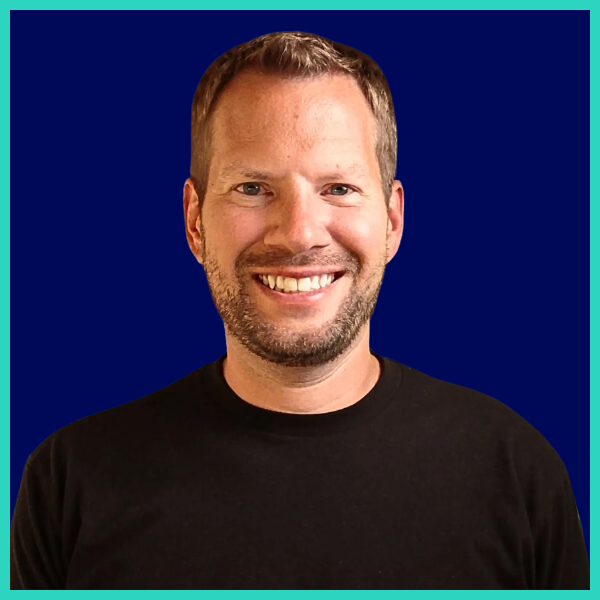
Content Creator | Marketer | Educator | Leader
Aaron Makelky is a career educator who has spent 16+ years educating, coaching, and developer relations marketing. He is an AI practitioner who focuses on fundamentals and tool agnostic approaches to integrating technology into everyday work. He loves sharing his thoughts and ideas across social platforms and teaching other builders how to use generative AI & video tools.