Spotify
 Apple Podcasts
 RSS Feed
  Goodpods
  Amazon Music
  Pandora
 The #1 AI Governance Mistake Schools Are Making ft. Betsy Cooper | My EdTech Life 360
Episode 360: The #1 AI Governance Mistake Schools Are Making ft. Dr. Betsy Cooper What's the biggest mistake schools are making with AI right now? According to Betsy Cooper, it's not taking it seriously from day one. In this episode, Dr.Alfonso sits down with Betsy Cooper, Founder and Executive Director of the Aspen Policy Academy, for a powerful conversation on the AI governance decisions quietly reshaping schools — and what educators, leaders, and parents can do about it.


Episode 360: The #1 AI Governance Mistake Schools Are Making ft. Dr. Betsy Cooper
What's the biggest mistake schools are making with AI right now? According to Betsy Cooper, it's not taking it seriously from day one. In this episode, Dr.Alfonso sits down with Betsy Cooper, Founder and Executive Director of the Aspen Policy Academy, for a powerful conversation on the AI governance decisions quietly reshaping schools — and what educators, leaders, and parents can do about it.
Betsy brings a one-of-a-kind perspective shaped by her work as a former DHS attorney, her time leading the UC Berkeley Center for Long-Term Cybersecurity, and her doctorate from Oxford. Through Aspen Policy Academy, she's on a mission to democratize policymaking, helping teachers, parents, technologists, and community advocates learn how to identify problems, build solutions, and actually drive change.
Together, Dr. Alfonso and Betsy unpack why "ooh, that looks pretty, let's try it" is the wrong way to evaluate new tools, how smooth vendors and shrinking budgets are pushing districts into risky decisions, and why K-12 students need adult stewards more than ever in this moment. Betsy also shares the castle and moat metaphor every school leader needs to hear, a three-step crisis plan for overwhelmed CTOs and superintendents, and her four-step policy impact framework for educators ready to advocate for change.
Whether you're a teacher, CTO, superintendent, or parent, this episode will leave you with practical tools and a renewed sense of agency to push back, ask better questions, and advocate for the students who can't speak up for themselves.
Chapters
00:00 — Welcome & Sponsor Shoutouts
01:30 — Meet Dr. Betsy Cooper & The Origin of Aspen Policy Academy
07:00 — What Policy Literacy Means for Educators (and Why It's Free)
14:00 — The 4-Step Policy Impact Framework
19:30 — The #1 AI Governance Mistake Schools Are Making
24:30 — How CTOs Should Evaluate AI Tools & Vendors
31:00 — Who Should Be Writing AI Policy for Schools
35:00 — Cybersecurity in K-12: The Castle, The Moat & The Breach Plan
39:30 — Cyber Civic Engagement & Becoming a Local Advocate
43:30 — Speed Round & Closing Thoughts
Don't forget to:
✅ Subscribe to My EdTech Life on your favorite podcast platform
✅ Leave a review and share this episode with a fellow educator
✅ Visit www.myedtech.life for more amazing conversations
💜 Thank you to our sponsors:
Eduaide.AI | Book Creator | Peel Back Education | Comeback Coffee
Peel Back Education exists to uncover, share, and amplify powerful, authentic stories from inside classrooms and beyond, helping educators, learners, and the wider community connect meaningfully with the people and ideas shaping education today.
Authentic engagement, inclusion, and learning across the curriculum for ALL your students. Teachers love Book Creator.
Thank you for watching or listening to our show!
Until Next Time, Stay Techie!
-Fonz
🎙️ Love our content? Sponsor MyEdTechLife Podcast and connect with our passionate edtech audience! Reach out to me at myedtechlife@gmail.com. ✨
00:00 - Welcome And Guest Introduction
01:15 - Betsy Cooper Origin Story
06:40 - Early Advocacy And Learning Policy
10:07 - What Policy Means For Schools
12:10 - Programs Webinars Courses Fellowships
14:52 - Free Training And Why It Matters
16:45 - Teach For America Policy Skills
19:20 - Biggest AI Governance Mistake
25:32 - Vetting Edtech Risks With Stories
32:27 - Who Should Write AI Policy
35:32 - PowerSchool Breach And Cyber Basics
39:39 - Cyber Civic Engagement Scam Fighters
42:34 - How To Get Started Today
44:49 - Cybersecurity Kryptonite And Speed Round
47:39 - Final Thanks And Where To Listen
Welcome And Guest Introduction
Dr. Alfonso Mendoza
Hello, everybody, and welcome to another great episode of My Ed Tech Life. Thank you so much for joining us on this wonderful day. And wherever it is that you're joining us from around the world, we thank you as always for all of your support. We appreciate all the likes, the shares, the follows. Thank you so much for interacting with our content, sharing our content. Thank you as always. And of course, I want to thank my sponsors. Thank you so much to Eduaid, Book Creator, Peelback Education, and our newest sponsor, Comeback Coffee. So thank you so much for keeping us highly caffeinated so we can bring you some amazing shows, just like the one that we have today. And today I am really excited to welcome an amazing guest that I promise you, once you hear about her background, but also the work that she is doing through Aspen Policy Academy, I guarantee you you're gonna run to your LinkedIn, you're gonna run to the website, and you're gonna want to follow and hear more and learn more about the work that she is doing. So today I would love to welcome to the show Betsy Cooper. Betsy, how are you doing this evening? I'm doing great. Great to see you. Thank you, Betsy. I appreciate you joining us here on My EdTech Live. And first of all, I just kind of want to get started here with kind of like your origin story and mission because you in doing my research and you know, seeing your bio, the extensive amount of experience that you have that you're bringing in to tonight's conversation, to me, it's mind-blowing because you know, the background that you have, number one, you know, you served as a DHS attorney, UC Berkeley Cybersecurity Center, also, um, also Yale Law. But I mean, this is amazing. So thank you so much for joining us with this amazing background. And I'm really excited to dive into the conversation. So I want to ask you at this moment, based on all that inf the that experience that you have, and I know you have some more experience there. Can you give us a little bit of insight as far as how you went from having all of that experience to saying, you know what, this is the moment where I want to bring in this experience to teachers, technologists, community leaders, you know, and have them learn more about policy and how policy works.
Betsy Cooper
Yeah. So, like you said, my background actually has always been in policy. My very first job out of college, I worked in DC at an immigration think tank. I did my doctorate studying policy. I went to law school because I wanted to learn how to write policy. Um, so that's always been my passion and background. Um, but it was when I was at UC Berkeley running a cybersecurity center, as you mentioned, that I got really passionate about sharing that information with others. So I was running the cybersecurity center, and we would have these amazing faculty members who were doing work that the world should know. And they weren't translating that work into uh into bite-sized pieces that policymakers could understand. So, you know, I'd go to a research seminar and we'd have a faculty member present research about data privacy, then I thought, oh man, the Federal Trade Commission should know about this, or the Washington Post should be writing about this. And you'd go up and ask these folks, what are they gonna do with this idea? And they'd say, I'm gonna publish a peer-reviewed paper, maybe in a year or two. Like, what should I do? And it started to occur to me that while I had chosen a path to do policy from a very young age, most people learn policy in one of two ways. One, they make that decision and do a degree program, or they move to Washington, D.C. or Sacramento or some other policy center and learn essentially by osmosis. Like I never did a policy degree per se, I learned because I followed around a bunch of people working in policy in DC and learned by osmosis essentially. And so I asked myself, what was the path for some of the folks, like the faculty members I was working with at Berkeley, who weren't going to do a junior master's degree. They were already, you know, tenure track faculty members, who weren't going to move to Washington, D.C. to try to learn policy by osmosis. Like, what was the path for someone like that? And that was why I decided to build something that would help speak to those interests.
Dr. Alfonso Mendoza
That is fantastic. Now, I gotta ask too. I mean, as far as what you gave us uh going into policy, now when you were much younger, is that something too like, you know, somehow, you know, landing in policy, uh, you know, and you said at such an early age, was this something more so that came along while you were doing your studies? Or was this also something that, you know, while you were young too, you were just an advocate for yes, you know, helping people and helping others understand, you know, policies or, you know, just certain ways of doing things?
Early Advocacy And Learning Policy
Betsy Cooper
Yeah, I think it was a combination of both. I mean, certainly I would I didn't really dig in until college, where I ran, I went to Cornell University and I founded a group called the Cornell Political Coalition, trying to bridge nonpartisan divides on our campus, which seems very accurate to what I'm doing now, 20 plus years later. Uh, but even before that, um, as a child, uh, I grew up uh in Buffalo, New York, but was born in Canada, in a rural part of uh Canada, North Bay, Ontario, for any listeners who might be Canadian. And uh there was a dangerous corner near where I lived. And my mom and some of our neighbors advocated to put a stop sign at that corner and like went to the town council meeting and advocated for that. So I really, you know, from a young age sort of felt like that was the type of lesson that was important to me that if you see an injustice in the world, you see something that needs to be changed, you should stand up and do something about it. Um, but even as an as a young person, I had an instinct that, like, how do you know that it's the town council that you should go to? Or how do you know what to do or what to say? And as I've gotten older, I've seen many times that these systems are not structured to make it the easiest possible for people to get involved. And that's why groups like ours are so important because we help people actually navigate those challenges. Excellent.
Dr. Alfonso Mendoza
Well, that's where I want to, that's a great segue because I want to learn more about what you're doing. And like I mentioned prior to the show and doing my homework, I got so excited about what I read that you're doing through Aspen Policy Academy. And so here, you know, it it talks about democratizing the insider realm of policy, policy making. So I want to ask, you know, for somebody in my space, in the K-12 and higher ed space, which is generally my audience, for those that are listening right now and have never thought about themselves as a policy person, what does that actually mean in plain language? And why should we care about that in the K-12 and higher ed space?
Betsy Cooper
Awesome. So I just want you to take a second and think about something that you want to change. If you're a parent, is there a school policy that's driving you nuts? For me, uh as a parent, it's our 805 start, which we struggle every single day to get our uh our pre-care on time, right? Um, if you are a teacher, is there a rule that's affecting the way that your teaching is working? So for instance, uh our associate director of policy, uh, she was a former teacher, and there was a rule in her school that actually was uh, you know, requiring kids to have two years of language and they weren't catching the kids that didn't have two years of language before their senior year. And so sometimes they would have to take like Spanish one and Spanish two at the same time. Like that seems like a bad policy because how can you take Spanish two if you haven't taken Spanish one? Um, if you are a leader in the education space, sometimes your city council or other places might have a rule that you want to change. So just like take a minute with me and think, what is that one thing that you wish you could change? And then I'd say, you can actually try to change that. Like you can stand up and try to make that change. You can go to your school board and say, you know, the parents in our community believe that, you know, the evidence suggests that school should start after nine o'clock. Uh, you can go to uh your school and advocate for new changes to the language requirements to catch those students that are falling behind. So we're actually working right now uh with uh Teach for America and they have a rural leadership academy, and we're working with teachers and educators to train them so that when they see those moments where they want to change something, they actually have the tools to stand up and change. But long story short, the reason why this should matter is that everybody has moments where they see something they want to fix. Most people don't feel like they have the tools to do that. We give you the tools so that you have the confidence to be able to go out and change something in those moments.
What Policy Means For Schools
Dr. Alfonso Mendoza
I love that. Now, going back and going a little bit deeper into what Aspen Policy Academy actually does, can you tell us now, you know, based on what we're able to do? And maybe we don't know where to start, those parents, those teachers, those professors that are seeing policies that they would love to change, but don't quite have that experience. Uh, what does Aspen Policy Academy offer them as far as programs or maybe the fellowship model? Um, you know, how is this designed and how can somebody get involved?
Programs Webinars Courses Fellowships
Betsy Cooper
Great. So I think about it like a funnel. Um, so at the top of our funnel are webinars that are free and open to the public. So we have uh, you know, we have programs policy one-on-one or how to tell governments what you think. We have how to write a public comment. A public comment is an opportunity where the government is asking you to give feedback and we teach you how to write that. How to write an op-ed for your local newspaper for policy. So, not just how do you write one, but how do you write one when you're trying to get something changed? So we have these webinars free and open to the public. There's several of them every month. So there's lots of opportunities for you to just come in, get a little nugget-sized bit of training, and sort of get yourself situated in that. Um, then at the next layer of the funnel are short courses, and we run a bunch of different types of short courses. Um, we've, you know, some of them are for more uh subject matter experts, like we've run programs for artificial intelligence experts, but some of them are also for ordinary community members who want to advocate for change. So, for instance, we've run several environmental policy accelerators where if you have a strong idea for an environmental change, we can teach you how to advocate for that change in your community. Uh, one key area that we do a lot of work in, as I know we'll get to, is cybersecurity and scam fighting. So we have scam fighters workshops where you can learn to advocate for stronger cybersecurity and scam prevention in your community. Um, and then at the bottom of the funnel are more intensive programs. So a short course would be like 10 hours of commitment. Then we have an annual fellowship where people come to the Bay Area, they get a small stipend to do so, and they really get the opportunity to be immersed in all of our methods. Uh, and then we also have programs uh like a tech executive leadership initiative, which helps people prepare to go into government. So we're really excited about the education space. And so we're hoping to expand our educational programming over time. So there's even more specifically dedicated for the K through 12 space. But even if you're just looking to sort of get some experience now, we've got a lot of opportunities where you can come in and basically learn the fundamental methods of how do you advocate for change in your community.
Dr. Alfonso Mendoza
You know, that is so important. And I think one of the things that I'm really loving, and like I said, when I first learned about this, and I was talking to uh our our point of contact mutual friend uh Genevieve, also and talking to her, I was just blown away by all of these offerings. Now, I want to ask you before we get a little bit more uh in-depth into this conversation, I'm pretty sure that a lot of my audience members right now are hearing and some of them are getting really excited, especially when it deals with policy. And like we're gonna talk a little bit about that cybersecurity aspect, but also policy with uh the use of generative AI in schools, you know, and things of that sort. But what is the cost for somebody to be able to be involved or get involved with uh the academy?
Betsy Cooper
Nothing costs you nothing, it's free. Everything is free. Uh, we do uh have programs that even pay you. So the cost to you is nothing except your time.
Dr. Alfonso Mendoza
There we go. And I just wanted to get that out of the way too for our audience members because sometimes I know they get so hyped, and then at the end they're gonna be like, oh, I didn't know that there was this much. But it guys, it is absolutely free, and we'll make sure we link all that info in the show notes as well so you can get in contact with the academy, see all of their offerings, and just get involved. Maybe, like you said, there's something that you want to advocate for, you want to make some change. Well, here's a wonderful resource for you to be able to go into and start making or learning how to proceed in making those changes and making them possible. Now, real quick, uh also, uh Betsy, I want to ask you because I know I was really struck right now that you did mention the Teach for America partnership and specifically for the rural school leadership academy, also, and being uh also in somewhat of a rural community. I'm like deep South Texas, they they call it the South Pole of Texas. That's really where I'm at, you know, right along the border. So, as somebody that's based in South Texas, I mean, this really hits close to home, also as well. So, what does it look like when an educator goes through this experience and comes out on the other side?
Free Training And Why It Matters
Teach For America Policy Skills
Betsy Cooper
Yeah, so uh the program we're doing with Teach for America is really focused on four skills. And we sort of put these skills in the bucket of policy impact. Uh, policy impact means trying to change something, and we talk about it in two ways. First, you need an idea, and then second, you need to advocate for that idea. So the first two pieces uh that we teach are in that ideas bucket. So, first, we teach people how to define a problem. Like, what is the problem that you actually want to change in your community? And it's not uh, not every problem is a policy problem. A policy problem is one that can be answered by an action. So you might have factual problems like why are there not more students getting bilingual education in the United States? Like the answer to that would be a bunch of facts. That's not a policy problem. That's that's a factual problem. A policy problem would be how can I get more bilingual education into my school district in rural Texas? That's a policy problem because the answer will be things that you can do, actions. And so we work with students to come up with policy problems. So that's the first step under the ideas track. Then the second step is now you need a solution. You need an answer to that problem. So we work with the students to brainstorm a bunch of different solutions, and then we give them tools to help them pick the solution that's most likely to solve their problem. So that when they end that portion of the training, they're coming out with a specific thing that they want to advocate for change for. So that's the ideas track. Now you got an idea. Okay, so now we got to turn to the advocacy track. A lot of people stop with the ideas track and say, okay, I've got my idea. It's a brilliant idea. Someone should do it. Reality is that policymakers of any stripe are very busy and they need to be convinced that your idea is the one thing they should spend time on right now. So uh we teach them stakeholder mapping. So, how do you figure out who are the people, the decision makers that can implement this, and who are the people that have the ear of the decision makers? So if you're going to your school board, who are the people that the school board are likely to listen to? If you're going to your principal, who are the advisors that that principal might be relying on? So that you have a sense of the stakeholders that might be able to do something in that space. And then finally, you have to actually go out and advocate. So we work on helping people develop stuff, deliverables like written documents or talking points or whatever it might be that will make them effective advocates to their idea. We help them think about ordering. So, like maybe before you go to the school board, you want to distribute that petition to show that it's not just you who likes this idea, but 200 of your closest friends or whatever. Uh, we work on trying to help people do internal resourcing. So, like, you know, John's gonna write the petition and you're gonna actually go to the meeting, and all of you are going to do a presentation, like thinking about that ordering. So it's all the tools that you need to actually get from. I have a spark that there's some sort of problem over here, too. I have an actual plan for how I'm gonna go out and actually advocate for change. So in this Teach for America program, each of those points is a session, and then they do homework in between. So we go through problems and then they have to develop their own problem for their own community. We go through stakeholder mapping and then they have to develop their own stakeholder map. So that's the that's the way that we do it. And we hope that when they leave, they're gonna have the opportunity to actually have something they want to change in their community, and that many of them will actually go out and try to make that change.
Biggest AI Governance Mistake
Dr. Alfonso Mendoza
That is wonderful. I mean, that what more do you want? I mean, this is just a way of going through step by step and really improving the the leadership amongst those educators in seeing that now their voices can be heard. And oftentimes what we hear and what we see, you know, just in in my world is obviously the there are never any teachers at the table. You know, the stakeholder table is always going to be upper leadership, school board members, directors, but the teacher is never, you know, taken into account. And so I really love that, you know, the educators are really, you know, taking that first step in going through a program like this, being able to learn exactly what it is to do and the process in a very detailed way. And again, with the hopes that once they finish this program, they're able to go out there and advocate for change and the changes that may be needed. So I think that that is something that is wonderful and something that is much needed. And I'm just so thankful that I had the opportunity to speak with you today. So I kind of want to bring you a little bit more into my world, and I know that this is a of your world too now, talking about cybersecurity and so on. But right now, we know that every district in America is making decisions on generative AI at educational technology as a whole, whether to embrace it, whether to restrict it, whether to ignore it. But most of those decisions, like I mentioned to you, are done without the right people in the room. At the end, I always say that the end user is going to be your teacher and the end user is going to be your students as well, but they are never part of any of the decision-making process. So I want to ask you from your vantage point, that you are there right at the intersection of the cybersecurity, AI, and of course policy training. I want to ask you, what is the biggest mistake that schools or school districts may be making when it comes to AI governance at this point?
Betsy Cooper
I guess the biggest mistake is not taking it seriously enough from the get-go, right? Um, so I think schools are under a lot of pressure. Uh, they're under pressure from vendors who are very smooth and very excited to bring new technology. They're under pressure because they're being asked to do more and more with less and less resources. And they're under pressure because in a post-COVID era, there's a lot of assumptions that, like, hey, we can, you know, there's snow day today, let's just move everything online. Like, there's uh there's a lot of movement in favor of a digitized school environment. And so it's very easy to just say, ooh, pretty new technology. Let's give this a shot, right? Like, let's give this a try. Um, but that technology has a lot of potential risks. It has risks for the students in terms of the information being collected. It has risks for the school district if it has vulnerabilities that could lead that district to get hacked. So I think one of the biggest challenges is in this day and age, you can't just jump to, ooh, that looks pretty, let's try it. You have to understand the risks that may come with introducing that technology. And that's particularly true because K-12 students can't advocate for themselves. They're not able to tell us, you know, that whether they want this uh digitized environment to exist for them or not. So we are the stewards for them and we need to make decisions that keep them safe not only today, but as they go forward uh in their futures.
Vetting Edtech Risks With Stories
Dr. Alfonso Mendoza
Yeah. And that's something you hit on something that's very interesting because oftentimes it it's uh I always say that we suffer in education, or at least in the K-12 space, we suffer from that shiny object syndrome. And normally what tends to happen is there are so many platforms that are out there. Some have already kind of distanced themselves within our educational technology space as kind of like you know more of the front runners, the the guys that are kind of at least seen as doing it right. However, you know, by by the conference, by the week, by the month, there are so many new platforms that are coming out. And usually what happens is it's an attraction for a lot of the K-12 space where it could be sort of even a duplicity of efforts between this platform and the new platform. But because the other one or the new one has one more extra button or one shinier thing, or they have uh shinier, glittery stickers, you know, as opposed to the other one. It's we just want to hop on and we want to get on and we want to say, okay, students, everybody's gonna log on. And I've seen it myself because at the very beginning of my educational career, getting that excited, I would go to conferences and bring back those tools and say, hey, let's try it out. Let's use the freemium account without really knowing what the consequences may be later on. Obviously, talking about data, talking about data breaches nowadays, it's all about reading the fine print in a lot of those uh platforms that are being adopted. What I have learned in doing research is that most of very reputable platforms that are being used within our K-12 space, a lot of the data is not even stored in the US. The data is stored overseas. You know, then if you read the fine print, you know, really it's telling you that all of this data is being shared with, you know, other third parties, whether it be Quad, Chat GPT, or any other large language model, but it'll say there it's not being used. But effectively, if you look, if you keep looking, you're definitely going to find that information that it is being used. And then they don't mention anything about knowledge cutoff dates and so on. So I know that that could be very, very difficult. And so I want to ask you, based on your experience and what you're seeing through uh your experience in cybersecurity, um, if I'm a CTO or for any CTO out there that is listening right now, that is kind of caught in the middle of, hey, let's push this out, let's push this out from the teacher side. But then they're like, no, no, no, we got to be that cautious advocate and we got to do our due diligence. What would be some of the best advice that you can give them or maybe start reading more carefully within that fine print to make sure that they don't fall into a some sort of data breach, some sort of danger where student information is leaked out and used um in an unsafe manner?
Betsy Cooper
Yeah, I mean, I wish I had the uh silver bullet. If I did, uh I guess we'd all be gabillionaires by now. But um uh a couple tips. So, first, if you are in a role where you're helping to procure the technology, you need to go through a real good pro-con analysis as to whether the benefit of the technology outweighs the risks to the students. So the benefit, like what problem is this technology actually solving? Like, you know, I'll I'll use a silly example, but if somebody's pitching you an idea for a new system to monitor your alarm bells for your school and automate them, and it wants to collect a bunch of data on the back end. Hmm, is the benefit of actually getting that technology on your platform going to actually change your life very much? No. How much data are you collecting? Ooh, there's a lot there. Like that should be uh, you know, the analysis. So on the one hand, you take into account the benefit. Is that a real value to you, to your students, to your teachers, to your administrators? And then on the other hand, what data is that platform collecting? And sometimes there could be a real benefit, but it's also collecting very sensitive data that you may then have to weigh that pro and con. So, second, use your lawyers. You got to dig into those, you know, uh those license agreements and to what data you are actually given, what rights your school district has, what plans they have for a breach. Um, it is great for your school district to ideally have some sort of uh, you know, data breach management uh tools to be able to ask these vendors how do you handle if something like this happens? How many incidents have you had over the past length of time? Like really getting into some of that nitty-gritty. Um, but even if you're a smaller district and you can't have that, you need to understand the basics of what the relationship is. And again, is the value of this technology really going to uh be worth the risk that you are encountering? Then you also mentioned there's another problem, which is like, even if the CTO is thinking, no, I don't want to get this technology, there may be pressure from the other side, you know, from the teachers or from the educators to try to obtain it. And so I think having stories is the best way that you can actually make clear the risks that are available. So if you start talking in vague terms about cybersecurity and breach notifications and blah, blah, blah, blah, like they're gonna go to sleep and probably aren't gonna be very convinced. But if you can tell the story of school district X that signed on to a technology that wasn't all that helpful, had a ransomware attack that locked the school district out of its uh, you know, systems for two weeks and lost a bunch of sensitive data, which meant that you know their seniors didn't get their graduation certificates on time or whatever. Like that's a story that's going to actually compel people to understand like the real implications of why this matters. So I would first do your analysis if you're the CTO, understand whether you think the pro-con analysis makes sense. I would arm yourself with stories if your answer is no. And then I would listen. I would make sure that you take into account and let the people who are advocating for the technology share with you their argument for why they think it's needed in case you've missed something in your analysis about why this would be beneficial, for instance. Um, the last point I'll make on that front is also that I think there's a lot of uh misunderstanding right now about the benefits of generative AI and what people think it can do. And so the other suggestion I have for you is to let people experiment with the tool themselves in some sort of sandbox that doesn't affect your other systems, uh, so that they can see, ooh, this isn't that great. So, you know, maybe there's this great technology that claims it's gonna grade all your papers for you. And then you realize that it's, you know, it's gonna show up with a bunch of jargon and you would never use it anyways. Like those sorts of conversations can be really helpful in helping people understand what these things can and can't do. Or, you know, it looks like it's gonna fill in all your citations and they're all made up. I've had this happen with my own reports, right? Really great. Put this citation into Chicago Manual of Style format and it completely makes up the date and the author, even though they're in the original, right? So sometimes I think everything that comes out of these generative AI tools looks so pretty that it gives you a sense that it's going to really revolutionize your lives. And that may be true in some cases, but often is not. And so giving people the chance to see it for themselves can be another way to handle those conversations.
Who Should Write AI Policy
Dr. Alfonso Mendoza
Oh my gosh, excellent points. You've hit the nail on the head on so many things there that I think are going to be just very useful for not only CTOs, but again, also for teachers that are out there. Oftentimes, like I said, it's the teachers are the ones that get the most excited. And many times, although at the district level, you may say, no, for safety purposes, all of a sudden it's like, well, it's I'm here in my classroom. Let's go ahead and use it anyway and do those things. Because I trust me, I was there once before I learned about this and started doing research and all of this. And when I started doing my dissertation and learning about day uh data renteership and what like data is a new currency for a lot of these applications and you know, the danger that goes into being able to just even put personal information within these LLMs later on appearing, or you're just putting it out there, it's just something that is very dangerous and can have some consequences there. So, talking a little bit more about policy, um, and then we'll I'll ask you some of the cybersecurity questions too, because I don't want to dismiss that at all whatsoever, because I do have some questions uh specific about that. But as far as policy is concerned, you know, you've said that uh the most exciting policy ideas come from humans and not AI. So obviously, you know, with large language models, somebody can put, hey, I give me a new policy for, you know, my school district, and it's gonna go ahead and split something out. But we did talk about that the hallucinations or talking about the inaccurate data we've heard on the news about Deloitte and some of their reports with a lot of hallucinations and countless others uh that are have been out there in the news. But I want to ask you as far as writing AI policy for schools, who do you think should be maybe at the forefront of writing those policies? Should it be the companies also that are selling the products, the tools? Should it be the federal government? Should it be the states? Should it be the educators? What are your thoughts on that?
PowerSchool Breach And Cyber Basics
Betsy Cooper
Yeah, so I guess there's again no silver bullet here. I think that it's got to be a group of people who get involved to do write the best policies. I would love to see model school policies that school districts can adopt uh that are based on a multi-stakeholder sort of conversation that then, you know, so because obviously, like it would be really hard for each individual school district with varying degrees of sophistication to write their own policies. Uh, and so if we can create one place where people can go to get some basics and tweak it for their needs, I think that would be very helpful. In those conversations, I think you definitely want teachers, students, educators. You want people who know the technology, though ideally not those with conflicts of interest when they're trying to advocate for the technologies. Um, I think, or at least you want a balance between, you know, the companies and individual technologists who might not have a stake in that particular fight. Um, the federal government is almost certainly not going to regulate in this space. So I think you're looking at uh other government officials helping to guide that, um, maybe even at the city or school district level. Um, but I think the more that we can create templates that people can draw from, that helps uh advance things forward. Now, let me say one thing about the AI policy writing. If you use AI as a tool to assist rather than as the drafter of the policy, AI can actually be really interesting, right? So I am not somebody who says that, like, you know, we should never use AI for these purposes, but you have to control what you're using. So, for instance, you know, give me five examples of real-life cybersecurity policies for school district uh technology usage. And you can ask AI and give me your sources, and then you can get five templates that you would be able to look at. That's a really useful tool. Or rewrite this paragraph to take into account generative AI when it doesn't currently do that. Give me three options and you can look at those options. Like then you're using AI almost as a research assistant rather than as the under the underlying fundamental values of your policy. It's a that's a good use of AI. Where I do agree is a problem is if you just say spit out a template school AI policy. Well, who the heck knows what inputs the AI is drawing from to develop something like that? That's where you're gonna have problems. So use AI as your research assistant, not as your brain.
Dr. Alfonso Mendoza
There you go. Excellent. Great advice. Now, this past year in 2025, there was uh the power school breach. Now, so I want to talk a little bit about that because you know, recently, like prior to uh my new role here, uh I was in a school district that did use Power School, and I was like, ooh, like what is this about? And then all of a sudden it's like you see this all over the news where it exposed student information. And then also we know about LA LAUSD with their chat bot also, and how that failed, and of course, all that information that is out there. So I want to ask you, you know, these are definitely not isolated incidents, and even here in my area that they call the the South Pole of Texas, there have been several school districts here also that have been under attack, and it hasn't been very pretty at all whatsoever. So I want to ask you, you know, as somebody who is working on possibly training the next generation too of policy advocates, you know, what are some things that you would tell or share with a university CTO, a K-12 CTO, a superintendent that may feel a little overwhelmed right now? Uh, maybe they feel underfunded too as well. Where shall they start?
Cyber Civic Engagement Scam Fighters
Betsy Cooper
Yeah. Um, so I guess first you got to figure out what your biggest vulnerabilities are and start there. So look at the tools that you are using or considering using, which ones are collecting the most sensitive data? Uh, what is correct collecting race data, disability data, gender data that may have sensitive transgender categories? What are you collecting that could be very sensitive? Second, what are you collecting that has money associated with it? So is there uh, you know, what databases do you have that actually provide access to the school coffers? Or where is your bank information stored? Like these are the sensitive things that will make your life hardest if this stuff gets uh gets tackled. Then what do you do? Uh, my recommendation as much as possible is to compartmentalize. I want you to think of a castle. Castle has a moat around it. If you breach the moat, though, you're getting the keys to the entire kingdom. That's not what you want. You want to have lots of different places that each only have access to one type of data. So, you know, over here you've got sensitive student enrollment data, and that's in a completely different place than your financial records, et cetera. So the more you can divide and conquer, the more you're going to be able to recover from a breach that won't be able to take down your entire system, may affect one aspect of your operations, but not all of it. And by the way, this is why I'm skeptical of any tool that claims that they're a one-stop shop for all of your needs. Because if they're you're a one-stop shop, that's great until it's not great when they get in. And then now you've lost access to all of these uh things. You've seen this in cities as well, where city, you know, city systems were all linked together and went down. So step one, figure out what you have that's most sensitive, try to protect that first. Step two, try to compartmentalize so that if someone gets in somewhere, you actually have uh a plan. And then step three is have a breach plan. Assume you're gonna get attacked, assume that it's gonna happen. Schools are big targets, you got lots of sensitive data and tend to be not very sophisticated in terms of IT. So assume that this is gonna happen and have a plan for how you're gonna recover. Where are the paper backups? What are the next steps that you're gonna take? Who are you gonna call? Do you have an attorney on speed dial? Do you have a team that's ready to help you have your plan in place so that if the inevitable does happen, you're ready to respond?
Dr. Alfonso Mendoza
Excellent. Now, going along and going back to talking about uh the Aspen Academy, too as well, uh, and talking about cybersecurity, you do have on their on your website talking about cyber civic engagement program. Now, this program is there to help anybody that might be interested in becoming a cybersecurity advocate at the local level. So, can you tell us a little bit more about that and you know how or how somebody like myself or teachers might be able to get involved through this program and learn more to become those advocates, to be able to be kind of maybe just a sounding board, maybe a different voice here in a different perspective and being able to advocate for the district or, you know, for any kind of policy.
How To Get Started Today
Betsy Cooper
Absolutely. So cyber civic engagement is a really important part of what we do. And the whole premise is that the reason people in positions of power don't take cybersecurity seriously is that ordinary folks like us are not standing up and talking about it, you know, in the same way that we might be talking about installing that playground in our school or getting that stop sign. So we're training people not just how do you elevate your voice for change, but how do you elevate your voice for change in service of stronger cybersecurity? So the core of that program is a series of webinars that we call scam fighters workshops. These are meant to give you the introductory training to why is cybersecurity so important? What are the sorts of things that you can ask your government to do? So, for instance, have stronger Wi-Fi or have multi-factor authentication or have trainings for ordinary people to teach them cybersecurity hygiene. Uh, and then we teach you how do you go find the right government agency? What do you say when you find them? What are some of the tips that you can use so that you will feel prepared to go out there? And one of the great things about this program is that everyone who takes an introductory webinar is eligible to apply for coaching from our staff so that you can work on a project in your local community. So we would love to have educators who want to say, hey, I want to stand up and have a voice in our community. You can not just get free training from us through these webinars. You can also potentially get coaching where we're going to work with you to try to actually make change in your community. So really strongly urge anyone who cares about these topics to consider signing up because this is a free resource that can help you really make a difference.
Cybersecurity Kryptonite And Speed Round
Dr. Alfonso Mendoza
That is fantastic. Now, Betsy, before we wrap up, can you please tell our audience members, everybody that's listening right now, that I know has been engaged from the very beginning with this topic? Because again, we talk so often about policy, but there and actually, and we talk so much in my space about AI literacy, but I think policy literacy is something that is very important. And I think that's something that I'm really seeing clearly here through Aspen Policy Academy in how you are able to train our educators or train anybody that's interested in policy to become policy literate, I guess per se, in that sense and learning and being able to go out there and advocate for themselves. So can you please tell us how they may get in contact with the academy and what would be a first step for somebody that would love to join one of your programs?
Betsy Cooper
Yeah, so just go to www.aspenpolicyacademy.org. And right on the front of our homepage are our programs. Uh, so everything that's live and available for uh application or sign-up is right there, right on the front of the homepage. Uh, you might also want to dig into some of our uh impact stories to see the stories of other people who have gone on to succeed in doing this. And we also have a bunch of resources, including sample projects that our fellows have done, several in the ed tech space.
Dr. Alfonso Mendoza
Excellent. Well, Betsy, it's been an honor and a pleasure to have you here. Thank you so much for sharing the amazing work that you're doing. This was, I think, such a fruitful conversation and so helpful, not only to myself, as I just continue to learn and, you know, with aspirations of, you know, many future projects. But I think that landing on learning more about Aspen Policy Academy is definitely something that is not only going to be helpful to me, but to a lot of my friends and colleagues, you know, within the ed tech space to take a deep dive into and see how we may better the things or better situations, you know, amongst our districts and be those advocates and making sure that we can make a difference for the best. So thank you so much for your time. But before we wrap up, Betsy, I always end the show with these last three questions, sort of a little speed round, but not really, just to kind of lighten the mood and just uh show a little different side of uh our guests. So, question number one is as follows As we know, every superhero has a pain point or weakness. And for Superman, that kryptonite was that weak, that one thing that weakened him and was his pain point. So I want to ask you, Betsy, in the current state of cybersecurity or Cybersecurity education, what would you say is your current cybersecurity kryptonite? Clicking too quickly.
Betsy Cooper
So we work with an organization called Take Nine, which is all about getting people to take a pause, take nine seconds before you click on something and make sure it's legitimate. But we've all been in that situation where you get that email about those concert tickets or about an opportunity that you think is uh maybe too good to be true. A lot of times it is. And I'm still human. So once in a while uh I fall for that too. So pause and take nine.
Dr. Alfonso Mendoza
I love it. That's wonderful. All right. Question number two is if you could have a billboard with anything on it, what would it be and why?
Final Thanks And Where To Listen
Betsy Cooper
Uh if I could have a billboard with anything on it, um I guess I would have it say advocate for change, because we need people to feel like they can do this. And while maybe that's not the catchiest bumper sticker I've ever come up with, I think it really uh, you know, symbolizes what I think is so important in this moment. I think a lot of people feel hopeless, feel like they can't do anything to make change, and I believe they can. So I wish I had a billboard to tell them that they'd be able to do that.
Dr. Alfonso Mendoza
Excellent. Great billboard. And my last question, Betsy, is if you could trade places with anyone for a single day, who would that be and why?
Betsy Cooper
Oh, it would totally be Simone Biles, because I want to feel like what it would be like to flip that many times and land on my feet. So that would definitely be my choice.
Dr. Alfonso Mendoza
Excellent. Well, thank you so much for your time, Betsy. I really appreciate your wonderful insight. And again, it is Aspen Policy Academy. Ladies and gentlemen, we will make sure and we put those, we will put those links in the show notes as well. That way you guys can make your way over there and see all their wonderful offerings and just be more aware and policy and learn a little bit more about policy literacy and how we can affect change. So thank you so much, Betsy, for your time. And thank you so much to all our amazing guests that were tuning in, whether you're watching the episode or listening to the episode. Thank you as always for all of your support and to our sponsors again. Thank you to EduAid, Book Creator, Peelback Education, and to our newest sponsor, Come Back Coffee, for giving us that little caffeine boost to continue to bring some amazing episodes. And don't forget to visit our website at myedtech.life where you can find this amazing episode and the other 358 wonderful episodes where you will take some knowledge nuggets and that you can use and sprinkle them on to what you are already doing. Great. And until next time, my friends, don't forget, stay techy.
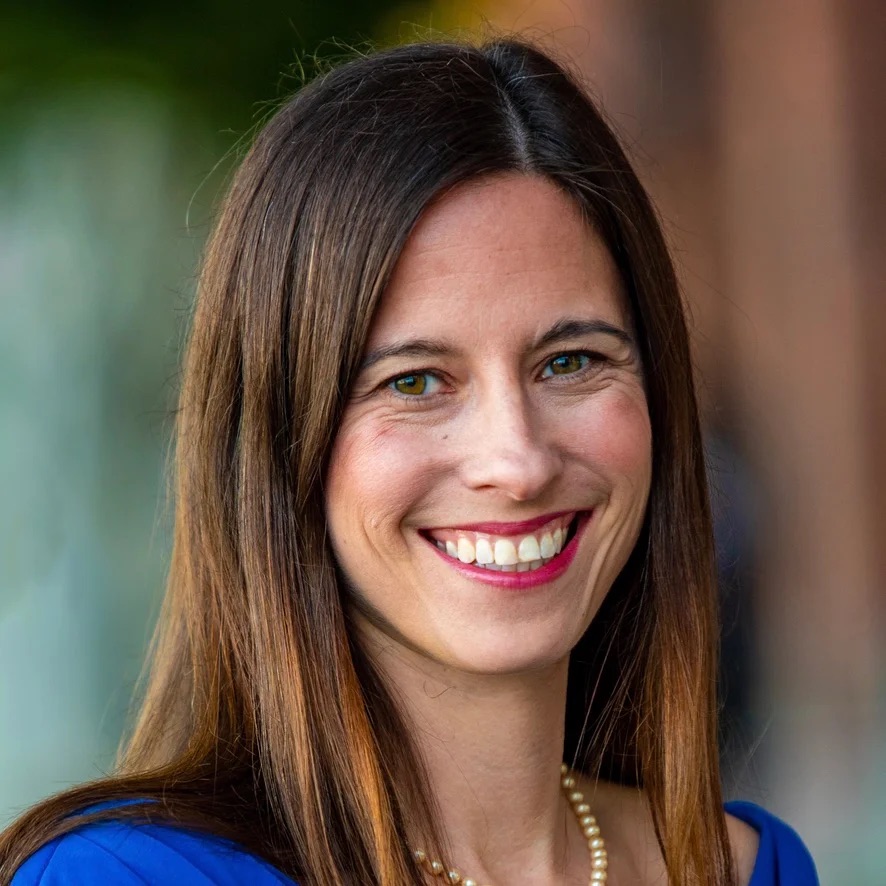
Director
Betsy Cooper is the Founding Director of the Aspen Policy Academy. Previously, she was the founding Executive Director of the UC Berkeley Center for Long-Term Cybersecurity and was a policy and legal counselor at the Department of Homeland Security. Betsy has a D.Phil from the University of Oxford and graduated from Yale Law School. In her spare time, she likes to run experiments to see if her digital devices are listening to her.