How Two 19-Year-Olds Are Fixing Reading & Writing with AI ft. Almar & Max | My EdTech Life 358
What happens when two 19-year-olds look at education and say… this isn’t working? In this episode, I sit down with Almar Tishenko and Max Litvinenka, two young founders building Reading Rooms, a platform designed to rethink how students read, write, and receive feedback in the age of AI. This isn’t about replacing teachers. This is about giving them time back, strengthening critical thinking, and using AI the right way.


They’re Only 19… And Already Rethinking Education
What happens when two 19-year-olds look at education and say… this isn’t working?
In this episode, I sit down with Almar Tishenko and Max Litvinenka, two young founders building Reading Rooms, a platform designed to rethink how students read, write, and receive feedback in the age of AI.
This isn’t about replacing teachers.
This is about giving them time back, strengthening critical thinking, and using AI the right way.
🚀 What You’ll Learn
•Why delayed feedback is hurting student learning
•How Reading Rooms is changing reading & writing workflows
•Why banning AI isn’t the answer
•How to use AI without killing critical thinking
•What teachers actually want from EdTech
•The future skills students NEED right now
Chapters
00:00 Introduction and Background of Guests
02:07 Celebrating 6 Years of My EdTech Life
04:56 Meet Almar and Max: Young EdTech Innovators
08:51 Problems in Education: Grading and Critical Thinking
11:46 Impact of AI on Education and Teachers' Concerns
16:49 Connecting with Educators and Understanding Needs
32:29 Introducing Reading Rooms Platform
36:27 Features of Reading Rooms: Homework Builder and Tools
48:07 Skills for the AI-Driven Future
01:01:57 Advice for Educators and District Leaders
01:04:33 Final Thoughts and Contact Information
Connect with Dr. Fonz:
🎙️ Website: https://www.myedtech.life/
📲 Follow on LinkedIn, TikTok, Instagram, Facebook & YouTube
Thank you to our sponsors:
📚 Book Creator Use Code MYEDTECHLIFE for Premium Access!
🤖Eduaide
🎓 Peel Back Education
☕Comeback Coffee
Peel Back Education exists to uncover, share, and amplify powerful, authentic stories from inside classrooms and beyond, helping educators, learners, and the wider community connect meaningfully with the people and ideas shaping education today.
Authentic engagement, inclusion, and learning across the curriculum for ALL your students. Teachers love Book Creator.
Thank you for watching or listening to our show!
Until Next Time, Stay Techie!
-Fonz
🎙️ Love our content? Sponsor MyEdTechLife Podcast and connect with our passionate edtech audience! Reach out to me at myedtechlife@gmail.com. ✨
00:00 - Welcome And Sponsor Shoutouts
01:49 - Meet Almar And Max
04:50 - The Classroom Problems They Could Not Ignore
12:44 - What Teachers Say They Need Most
20:37 - The Real Fears About Generative AI
30:15 - What Reading Rooms Actually Does
36:18 - AI Inside The Text Plus Gamified Debate
42:23 - AI Literacy And Critical Thinking Skills
49:10 - Advice For Leaders Choosing AI Tools
56:35 - How To Reach The Founders
58:27 - Kryptonite Billboards And Role Models
01:04:21 - Closing Thanks And Stay Techie
Dr. Alfonso Mendoza
Hello, everybody. Welcome to another great episode of My Ed Tech Life. Thank you so much for joining us on this wonderful day. And wherever it is that you're joining us from around the world, as always, thank you so much for engaging with our content. We appreciate all the likes, the shares, the follows, and all of your support. And talking about support, I definitely want to give a big shout out to our sponsors, Book Creator, Edu8, and Peelback Education, for believing in our mission to bring you some amazing conversations that will continue to help us grow within our education space and help us grow also professionally and personally. And I'm really excited to welcome these two wonderful young men that are here today, Almar and Max, who are joining us. And we're going to be talking about a great project that both of them are working on. So I am going to go ahead and welcome you first, Max. Max, how are you doing this evening? I'm doing great. Thank you so much. Almar, how are you doing?
Almar Tishenko
I'm doing great as well. Really excited to be on this podcast and yeah, looking forward to our talk.
Meet Almar And Max
Dr. Alfonso Mendoza
Perfect. Well, I'm excited to get this conversation going because I can imagine that all my audience members right now that are catching this on video are saying, whoa, wait a minute. This is uh a little different from a lot of the guests that we normally see as far as age is concerned. But like I said, when I hear about something great and I hear about some wonderful projects and just things that are happening within the ed tech space, I'm just thankful that I get the opportunity to kind of jump on that and I want to amplify your work and your voices. So, Almar, go ahead and give all our audience members a little brief introduction and what your context is within the education or ed tech space, I should say.
Almar Tishenko
Yeah, hello uh everyone. Uh my name is Almar. Um, I graduated from a classical school where I actually taught violin students. So I was a violin teacher. I had 60 current students. So I have a little bit of background as teaching in high school. Then I moved to UATX, where I started learning in college. I'm a sophomore now, 19 years old. But I'm also part of this school called Alpha, where they use technology to teach students two hours a day. And I'm working on a lot of projects there, which is where I am right now.
Dr. Alfonso Mendoza
Excellent. Well, thank you so much, Almar. And Max, how about you? Give us a little brief introduction and what your context is within the education space.
Max Litvinenka
Yeah, of course. Uh so I moved to US four years ago from Belarus. There's a like relatively small country in Europe. And uh even there, I've noticed a really um interesting shift in education because when I was in ninth grade, I've completed the math course for a full year in only three months. It was math and physics. So and uh my teachers there in my school, they were they didn't really accept it as a fact, and they were really like critical about it. So even even when I was a kid, I was noticing this uh that something is wrong in the education, and actually the uh curriculum that kids um is doing for one year can be completed much faster. So and when I moved here, as as Almer said, I I'm also a part of this alpha school, and uh their way actually really inspired me and showed me the other side of how the education can can can look like if you use AI, because it wasn't a lot like it wasn't any AI back then. Uh so that was my um my passion to actually to show students and teachers that it is much simpler, and there are other ways to um learn things.
The Classroom Problems They Could Not Ignore
Dr. Alfonso Mendoza
Excellent. No, and you know that that is a wonderful conversation to start off with, and especially when you reached out and getting to know a little bit about the project that you're working on, but just to hear you right now, and especially within your age demographic for myself, you know, you're uh I know Almar, you mentioned you're a sophomore, you know, right now. And then of course you're uh an alpha fellow also as well, and you're a founder. I mean, at 19 years old, or as a sophomore, you know, many students are still trying to figure out what their major is or what their minor is or just kind of what road it is that they're going to be taking in life. So most students your age are not doing what you and Max are doing right now. So, Almar, I'll start off with you. What is it that you saw within your education experience that you simply could not ignore and said, you know what, there has to be a different way, a different thought process, a different way of bringing education to students. So uh we're all genuinely curious to hear to hear that from you.
Almar Tishenko
Yeah. Well, one of my first experiences, I'll start out in high school, was that uh teachers would always give my essay back three weeks later. And sometimes uh I might have a test and I don't get any feedback from teachers back before the test. So I'll make the same errors on tests. And this was an annoying problem during school. But I realized that I don't really think it's the teacher's fault. It's the fact that teachers have so much homework that they have to work on that I realized uh there must be a way to do this better. Because as a student, I suffered and teachers as well. Um, which also bring me brings me to the AI point as well, where uh sometimes uh not the teacher's fault, but sometimes I also noticed that students have tended to use AI. You know, I mean it's it's an obvious fact that many teachers are worried about students using AI. Because now a teacher can tell a student to do an assignment, um, say write a thousand-word essay, and they just tell ChatGPT, write a thousand-word essay. And 20 seconds later, they have this and copy and paste, for example. And many educators have this issue. Um, so they banned AI from schools. And a lot of a lot of schools want to just ban the AI and they just completely ignore them. But me as a person who's in Austin, I see the technological advancements such as you know, CLOD, OpenCLA. Um, some of you may not heard of it. It is a an agent that works actually in your computer. Students need to start learning this. And I realize there must be a way to help students learn and adapt to technology, as well as still being able to know how to write well. And how do you meld the two?
Dr. Alfonso Mendoza
Excellent. I love it. Now, Max, for you two as well. I mean, genuinely curious about your experience. I mean, coming in also, you know, from Belarus and your experience, and then coming here to the United States, you know, four years ago, you know, and and uh I want to ask you before you answer the question, because I I I forgot to ask an important question is number one is uh Max and Elmar, how did both of you connect in meals? So well, I'll ask uh Max, what was that experience like?
Max Litvinenka
We go to the same school.
Dr. Alfonso Mendoza
Okay.
Max Litvinenka
Uh it's called the uh UETX University of Austin. It's a new school in uh here in Austin, Texas. So we are the part of the um sophomore class now, but we used to be the only the first freshman class ever at this school. So and um they had only uh 90 students at that time, so it was pretty like everyone knew each other. So we just met and we uh we became friends and then we like started our um our journey in this. So that was the way, yeah.
Dr. Alfonso Mendoza
Excellent. Okay, good to know of the way that y'all connected. But Max, I want to ask you though, like you know, from your experience too as well, coming in from Belarus and coming into the US, you know, and obviously, you know, in 2022 when Chat GPT came out and of course started uh, you know, teachers started to panic. And even still in 2026, we still see a lot of teachers panic, very much like Elmar was describing, the, you know, the what they used to be able to assign to students, as far as write me, you know, a five, five-page uh research paper or write me a three-page essay, things of that sort that could easily be put into a large language model, you know, and then Elmar talked a little bit about you know, feedback coming in a lot later, um, you know, maybe not as uh just in time when you may have needed that feedback to prepare for tests and so on. So just kind of like you and Elmar making that connection, you know, I I'm just curious to see what what is it here within the United States education system that you saw also as well and said, hey, you know what? Let's see what we can do and let's see how we might change this for the best.
Max Litvinenka
Uh so I came here, it was my sophomore school in high school, uh, sophomore year in high school. And um I did not really catch the hype around AI when I when I was in high school here. So I remember when ChatGPT came out, teachers did not really know about it, so they were like, okay, it's just another tool for uh doing whatever. So they didn't pay a lot of attention to it. Uh but in my senior year in high school and my freshman year at college, um there were tendencies that um students will just um like so they they don't they struggle to write a sentence basically. And uh there is uh an interesting study they they came out recently that our generation scored lower on the IQ test uh for the first time since 18 uh hundred. So which is um so basically and the the paper itself blames ed tech, which is really interesting and kind of ironic because um the paper says that um ed tech is making um it's simplifying stuff too much, and um using AI it's just making the situation much worse. Um so in my opinion, um US as a first country uh in the world that if if we wanna keep like keep up with uh producing a really smart generation, we must do something because it will not be uh better. It will be just any m like much, much worse than it was. And um but they the key here is using AI is to it is impossible to um detect because students are not just copy-based stuff now, so they use AI detectors, they change sentences, so it is literally impossible to uh detect AI if a student is smart enough, I would say, to hide it. Um so why don't we just use it? Because we have schools like Alpha who does that, and they they show amazing um just amazing results because their students score um a wonderful SAT and AP exams, and their students go to Stanford and Harvard and and and other Ivy League schools. And um so I'll first show the world that this approach works. So in my opinion, and my goal is just to spread this approach to other um other private high school um other like private high schools first and then to public high schools, but this will take time, obviously, because they have a lot of like bureaucracy.
What Teachers Say They Need Most
Dr. Alfonso Mendoza
Yeah, most definitely. Now, I'm I'm curious here, Almar too, as well. I mean, let's talk about reading rooms a little bit, and I know that in doing so, you know, you you both, you know, our as a team went out and you spoke with teachers, which is something that is great that at for you all at such a young age in finding this problem like Max was describing. And now that we have these tools in our hands, now I feel like, for example, your generation, um, and you know, even us that I'm kind of like in that middle, but you know, as the tech started taking off, but now we have tools that are so powerful that can help us find solutions to those problems that maybe took years to solve, or maybe people moved on and just said, nah, we just kind of like leave it that way. But you are are leveraging that power of generative AI and talking to educators, you know, before you build anything. So I want to ask you, you know, what is it that teachers are telling you? Now, I know here in the podcast we interview a lot of founders, we interview a lot of educators and so on, but I'm curious, again, because of your age and what you're trying to do, what is it that you're hearing from teachers as far as their needs?
Almar Tishenko
Yeah, I mean, it's a great question. Uh, in the past month, we've interviewed about 30, 35 teachers already. And yeah, we spent, you know, I've spent Thomas Hours talking to teachers and hearing uh what what are their worries. And another point you said that I completely agree with is that there has been a lot of technological advancements, but one thing that we've noticed is the way a classroom works. There hasn't been much invention or you know, it hasn't moved forward that much. And now we're at a flux in the world where things like generative AI are coming to the picture. Where I mean, I believe that they're they're so powerful, they must be used rightly. And if used rightly, they can benefit education and build, you know, really great a next really good generation. Um if that makes sense. But yeah, but talking to these teachers, um, one of the things I noticed is that um each teacher that definitely teaches differently. Um no one app, I guess, can fit every single teacher's needs. Um may want a dictionary, for example, and because reading rooms is around reading and writing, some may want a dictionaries, others may want um just a you know, just a global chat feature. And and there's a lot of things, but what I did notice is that all of the teachers I've talked to really find a pin point with grading. I think every single one of them told me that this is really annoying. And I'm sure I'm not the first one to find this out. I'm sure that many other founders have, but to bring an example, I was talking to a teacher, I think, two weeks ago, and she was telling me she works 60 hours a week grading. And when I was talking to her, I was thinking that's literally the job of a CEO, and she doesn't get paid overtime for that. And um, and especially when it comes to writing essays, this can be a lot difficult. Um one thing teachers have asked though is an easy way to help them would be to get rid of on the basic grading tasks, such as um helping them quickly check grammar, for example, or sentence flow, or uh format, or things that that you know teachers would like to get rid of, but things that well rid of is not the right word, say to efficiently reduce the time on, maybe is a better way to put that. Uh, but one thing they still value is being able to read every student's papers. Um, even if AI can definitely help them, let's say, see um problems that are maybe more difficult for them, being able to have that personal touch with students is still very important. Um if that makes sense. Yes, there's more I can spit about it, but it's amino racing.
The Real Fears About Generative AI
Dr. Alfonso Mendoza
Yeah, no, no, no. I I wanted to add a little bit to what you were saying, and you know, and and I think there, you know, with the way the news is and um so much that we hear about schools, it just seems like many times um I think we feel like teachers may not want to do their jobs or do them correctly, or they're trying to find easy ways to do those menial tasks and so on. And yes, in a way, it's like being resourceful, but trying to do it in a way like you describe every teacher that I've ever spoken with, it is important for them to still have that human feedback, that human approach, that humanness to uh teaching. And it's not that we want to just use all of these platforms to just run everything through it and then we just kind of sit back and automate everything. You know, there is a point that excuse me, there is a time and a place also for that, you know, teacher-led instruction, but it's about also allowing students to be able to have that discourse, to be able to have those discussions, to be able to put those tools in front of them where they can create and engage in that learning and create a product, you know, very similar to what you all are doing right now, where you all had a vision, you had a discussion, you found a problem, and now both you and Max are trying to find a solution to some of these problems that you're hearing from teachers. And I think that one of the things that you mentioned, too, that I want to highlight is you're absolutely right. As far as the classrooms are concerned, there hasn't been much of a change or innovation in the in how the instruction is delivered. Uh there hasn't been much change or innovation in the way that class is delivered. And, you know, even if you were to go into a um, for example, just uh into a large language model or something to produce a picture and you type in a classroom in 2050 or a classroom in 2080 or a classroom in the year 3000, I'm willing to bet that the majority of those pictures that it comes up with, you're still gonna see rows. You know, you're still gonna see that traditional setting and the way that we see education today. Everything is in a row. You've got the teacher in the front delivering instruction, and there hasn't been much change. So I know that for a lot of teachers, sometimes it's that fear of change and that newness of the tech that they may feel a little overwhelmed, and that's why they kind of hold back a little on that. So I want to ask you, and maybe between you and Max can share, you know, or an answer on this, is because I'm I want to hear your observations. What are some of the biggest things that the teachers that you have spoken to are still very hesitant about when it comes to implementing generative AI in the classroom?
Almar Tishenko
Yeah, I'll share a little bit and then I'll I'll let Max also say what he say what he thinks. Um I think from speaking to them, uh one of their first worries, of course, is can I trust AI? I think I think most teachers still think AI can hallucinate. And I mean I I agree with them, and that's why there should be certain cardrails and should be careful. Um I wouldn't believe fully in AI's answers all the time. I'd always question it. And that's something that I mean I would like to get into more is that fact of, I mean, where is AI good at and where do we harness skills such as critical thinking and uh connecting the dots between them. Um if we use things such as, you know, if we harness AI rightly by putting in the right rubrics or knowledge maps, um, implementing specific things to target, um, it may help teachers, you know, knock out things specifically that they would want. And it can even help them in that sense. Not saying it's always right, but most of the time it can actually empower teachers. Um if that's if that makes sense.
Dr. Alfonso Mendoza
Yeah, good point. Max, how about yourself? What are some of the things that have stuck out to you as you have been listening in on these conversations?
Max Litvinenka
Um, I actually wanted to say the same thing. So uh a lot of the main problem for teachers with the AI, it's just they are not sure about how relevant it is with its answers. Um, and this is completely true. I mean, I I face A lot of hallucinations myself with um AI models, so it's been pretty uh consistent in um in the way that they are like releasing and new models and they are actually better uh over the years, so but it will be a problem always. So, in my opinion, yes, we're reading rooms um as a platform, it doesn't replace grading for teachers, if that makes sense, because as Almer said, we uh also do not trust the I, and we sh and we definitely don't recommend teachers to trust AI in grading. So um but it can help make it even more personalized. So it it may sound really ironic, but AI is so so something artificial can bring a lot of a lot of um humanity in grading. Because if uh teacher will see so um if they have a track how students write, and he will find some patterns, which uh which is is really good at this. So it I don't think it's even a question if hey I can make a mistake in this type of tasks. So um if there's a trend in student writing, it can also detect any deviations, like how like what are his strengths or weaknesses, and it can suggest uh teacher how to like how to help a student, and then it's just the teacher's work, we believe. So we're we're not getting into that because here uh the humanity of teaching comes basically. So and it depends on the teacher of how he or she will uh approach this these uh suggestions, but these suggestions might one save time and two make it much more um productive for students to learn so he so he can learn much faster. And um I I also believe that um students sorry uh excuse me, teachers are not open to changes just because of the reason that you mentioned, actually, because the uh setting of the classroom did did not change um at all, and it will stay the same probably. And um these tools like Google Classroom and Canvas, they bring um they don't really change things because they are just automating stuff uh which teachers are open to. So they're not really close to just automate stuff, they're close to changing the setting of the classroom and um letting students use tools that um that deviate from the um common way of learning and writing and reading. Yeah.
What Reading Rooms Actually Does
Dr. Alfonso Mendoza
Um so yeah, this is no, I I and I wanted to add to that, and I'm sorry that I interjected, but I think I wanted to hit on some great points, which is very interesting, and especially with you both, you know, being very young and coming up with this wonderful idea. But what I'm hearing is something that is very interesting, that many times I think many adults in the rooms in these ed tech spaces feel like, you know, we've got the answers, we know what it is that's gonna happen and so on. But to hear what you are sharing, both of you, is so refreshing that with what you are building, you're you're still considering that human in the loop. That it's not you're trying to replace teachers, but you're helping them and reallocating their time to possibly be able to go in deeper with lessons. So you've got a great tool where it's gonna help kind of with that feedback, but still, you know, the teacher at the end is still gonna give that personal touch to it. But like you mentioned, maybe there's there's let's say I come in and my teacher knows my writing, I've been doing very consistently, you know, for the whole semester, but then all of a sudden, you know, I either have a bad day, a bad assignment, or maybe I just didn't do very well. But to be able to uh, like you mentioned, find a pattern and say, hey, you know what, today funds, like, you know, there's a little uh, you know, kind of a little alert or just something like, hey, maybe check in and see what's happening. So to be able to kind of give that feedback, it's it's something that is great and it's very useful because I believe uh Almar and I think both of you actually hit it on your comments is to be able to give that just in time support. And I think that's very important. And this is one of the things that I'm very appreciative of this conversation and what you're sharing is you're really focusing in on helping teachers reallocate. I I don't want to say save time because there's always gonna be something that's gonna take up that time, but at least they can reallocate it to something else where, like I mentioned, they can go in deeper to a test, they can fix any misconceptions that may be shown and either do a small group or a little reteach and so on, but are able to continue with the flow and be able to share that learning, which I think is something that is fantastic. And, you know, and and also, like I said, just hearing that you really care about the human the human aspect and the humanity of teaching that you're not trying to replace it, which I think is something refreshing, honestly, to hear from two young men like yourselves, because oftentimes is we see on the news 4,000 layoffs, you know, 5,000 layoffs, because everybody's automating things. And I think that's one of my big concerns too, is just that automation. Like Max, I wanted to share a little bit of like kind of insight with you is that when my previous school district star started automating Google Classrooms, in other words, they were rostering everything ahead of time, and then all of a sudden, book companies show up and they tie everything to Google Classroom. Well, teachers just start assigning everything through Google Classroom, everything gets graded, and then it's like, well, I'm done because it did all the grading for me. But what I started noticing is that teachers weren't going back to review grades and see, hey, what's going on here? Do I see a pattern? Do I see something that might be happening? Do I need to do a reteach? So that's kind of that fear of automation. But Max, you hit it on the head that it's not about the automation. It's really still just kind of that additional support for teacher assistance in continuing to do the work and helping them, really just alerting them to any changes or any concerns that might be happening in the classroom. So I just really wanted to add to that because I'm I'm getting blown away here. Now, Almar, I want to ask you now, because I want to go in a little deeper and give you opportunities to share what it is that you're working on. Tell us exactly what Reading Rooms is so that way all our listeners and audience members can hear out what it is that you're working on and what the goal is. I know we've heard little bits and pieces here, but I want to know like what is the platform like? How do teachers interact with it? Students interact with it, and what is that end goal and vision for reading rooms?
Almar Tishenko
Yeah, I would be glad to share it. And please feel free to stop me as I go if you have specific questions anywhere. Um, but a quick rundown is that reading rooms has two parts. There is a homework builder and a bunch of cool tools for teachers to utilize after that. So a homework builder specifically focusing on reading and writing. Uh, we have a place where teachers can upload any PDF they want. Um for example, I will choose Hamlet and say a teacher teaching English literature in Hamlet, and they can upload Act One of Hamlet, for example. And our system can take this context and use it to build out any custom homework that the teacher would like. So, for example, if they want reading comprehension questions, our system can uh build out these questions, and they can be based on something that the teacher implemented or use our personalized learning system, which will map uh skills based on SAT, official SAT rubrics, AP rubrics, uh NAEP rubrics, anything basically the teacher wants, and it will target specific areas where students will have you know struggles in and will help them grow there. And what separates us, for example, from something like Google Classroom is that most questions in Google Classroom will be automated to multiple choice. However, we I personally, even though I had an okay score on the SAT, don't really believe in personal uh multiple choice questions just because there's this factor of elimination where I got really good at saying, okay, well, this is obviously not that answer. Oh, this is two, so I have two two points. I'll guess this one. And often I'll be much more right. Whereas here we focus more on a CER, claim evidence reasoning um answer where students must show their logic and critical thinking, which is so important this day. And for example, most employees will name critical thinking as like one of the most important factors in you know choosing who's gonna work for them. So we really want to build that out in our platform. Um, I forgot to mention we also have uh an AI that will kind of guide students as they read if they have any questions. Um help them explain passages, you know, things like that. Um, and then we have a portion where students can write essays and also get uh using specific rubrics, we'll get feedback from AI before they submit it. It doesn't mean that they have to follow the AI. They could argue and say this AI is wrong. Teacher, please take a look at this. Um, and then they review each other's papers. So that's like a quick rundown of kind of the homework system. And please feel free to ask questions because I'm sure there's a lot to it that I didn't explain. Uh, and then for teachers, because we have all this data, we can create a bunch of cool tools such as a lesson planner. Uh, we can focus on areas where entire classes struggled in and utilize learning science techniques such as active retrieval, uh, you know, you know, all those learning techniques and suggest teachers, hey, you should do this tomorrow's lessons because your students struggled here in the homework, for example. Um, and then of course, we have an AI which a teacher can ask questions about to just understand that just the classroom environment and where their students are at, as well as a place where teachers, of course, will assign grades to the homework and send it to their LMS, such as Canvas or Google. So, yeah, that's a quick rundown, but let me know if that makes sense.
AI Inside The Text Plus Gamified Debate
Dr. Alfonso Mendoza
Yeah, no, no, no, this is great, you know, and I really it's very interesting to say this, but still, and and please forgive me, but just because of of your age, but how you have shown your that you have done your due diligence and your research, you know, especially mentioning CER, uh, mentioning other pedagogies and things of that sort, I find that fascinating. That it's not something like I I you're not giving off tech bros, you know, because that's one thing that happens. That's that's and honestly, within my circle on LinkedIn, and you know, because we have seen what has happened, you know, from everything from NFTs to cryptocurrencies, and we saw all of that hype and trying to get all of that into education, blockchain, and all of that, seeing so much hype, and then of course we see a lot of hype with generative AI, and then everybody's wanting to start something. But I must commend you for what it is that you are doing, because it really shows that you have done your due diligence and on trying to really understand what teachers are going through on the day-to-day, and also because of that fear of the offloading, maybe offloading the writing, offloading certain content, uh, critical thinking and those skills. But what you're sharing is that this is not what it's meant to be or do, it's really to help teachers and help students in the end. So, Max, I want to ask you is there anything that you'd like to add also as well?
Max Litvinenka
Um, yeah, I would like to add two things. So the first thing is uh during the uh our um journey and um our development, we used to have this like a a literal um chatbot for students. So and we were expecting students to just ask it questions, and um and we were expecting this to like drive uh student learning because AI is usually better at asking specific questions about um a reading. But we realized that um it sounds good and it works on paper, but in reality it's um it does it will not work for um like 90% of students. Uh just because in order for a kid to formulate a question, um he must first do the reading, second, kind of analyze it, sit with it, maybe reread some parts, and then ask a question. And in this case, yes, AI can generate a really great answer that will uh actually help student understand reading more um more uh precisely. Um but we realize that this is a lot of uh work for modern kids, so kids will just not do it, and um so also a lot of kids they see reading as really boring. So what we've done is AI is actually implemented inside the reading, inside the PDF itself, so students can just literally just highlight a section in their reading and um ask questions, and they're they're not type anything, so they are pre uh like pre-generated uh explanations of how like how can I explain it. Um AI can explain the same sentence in modern language, it can provide the opposite point or maybe the uh data or any um or any evidence of a claim. And uh this just makes things really quick, and uh our kids just really tend to like it because this generation is just really um they really like when everything is quick, as you can say. And um, this is this is something that we personally believe is how reading is gonna look like um in ideal world for students to actually make it interesting and uh understandable. The other thing is the game is the gamification. So during the uh debate or essay parts, students are given uh arguments and they have to argue for or against a statement. And um so what a platform does is it takes the text and then it creates like a story, basically a setting based on the story, and it assigns a role to every student. So a student will have to argue for or against a statement from from a perspective of a character inside the reading, or there is no character uh inside the reading. For let's say, for example, it's like an economics class, and uh usually economics typers they don't really have characters, so and so the AI will just create a setting and uh create like random people and uh assign their uh like their beliefs. So this also helps kids understand other people, which is a really a really uh amazing life skill to just to um get into other person's shoes and just to understand how how he thinks. And um, yeah, like one of the examples can be uh, for example, in uh the economics class, let's say they're reading the manifesto by Karl Marx, let's say, and uh there is a setting like um you are a uh middle class, or or let's say like a lower class working. Um so you work in a factory, you have like three kids, and um you work from salary to salary. How would you see uh Marxist views? Or if you are a bourgeoisie, you probably will not really like it. And uh so this this kind of tension, um, which we personally observe, like students really like it. So when we tested the app, students were really excited when they were signed the roles, and they were like, okay, like I I um I have to argue from Machiavelli's point of view, which is uh interesting and not like not a lot of people agree with his views, but they have to argue from his perspective, anyways.
AI Literacy And Critical Thinking Skills
Dr. Alfonso Mendoza
Yeah, no, this is fantastic, you know, as far as especially that engagement. One of the things that I I just want to share also with you is that I think one of the things that I have seen and observed is that there is no longer as much discourse or discussion within classrooms where students are given a time to be able to speak and share working groups, or you know, just really be able to get their ideas out and learn from one another. So the fact that you have something that is built in where students are able to interact, like you mentioned, having uh kind of like that mock debate, and you're going back and forth. I think that is a great way and a great skill, not only for the classroom, but a great skill in communication for some of those skills uh to prepare the students for the workforce. So this kind of leads me to my next question. And I wanted to ask you, you know, based on your experience, you know, you guys are are very, very young, you know, you're you're really in deep with generative AI. So I want to ask you, and I'll start with uh Almar first, and then we'll we'll go with you, Max. Is Almar, I want to ask you, what would you say right now would be the most important skills that matter for students to learn now in the or to prepare them, or really like they're living through this AI world that we see right now, in your experience?
Almar Tishenko
Yeah, that's a great question. And uh yeah, there's a lot of thinking to go into that. Uh I would say uh me being at a university in Austin, Texas, it's not Silicon Valley, but it's a large hub where there's a lot of tech bros, like you said, entrepreneurs. Um, I spend, you know, 20 hours a week just trying to stay up with AI. Uh, and I still feel behind. So, and one of my concerns, I'll I'll go through my personal life, is that I grew up in a classical academy, and it was really beneficial to read those books, debate philosophy, you know, round myself in these historical knowledge and help me learn these specific skills. One thing that was missing was technology. And so when I came to UATX, which was less than two years ago, I did not know what the word startup meant. And me coming into this was a massive wave, a massive learning curve, which I mean, I'm still learning. I I still see a lot that I do catch up on. But um I fear for other students who are still in tenth, ninth grade, where their schools don't allow um as much technological, I guess, advancement or being able to play with technology, uh, where they will join the workforce. And we already have robots work walking around. And they will hit such a large learning curve compared to mine that I fear that they may be stuck. They just it's just it's very hard for them to grow. And I so I believe that being able to be immersed in technology at a younger age, not saying not saying elementary. I mean when you get into high school, you start actually learning about how to use it rightly, how to use AI, for example, rightly. What are the benefits? Um being able to learn how to click well on the computer. I think this is necessary, especially when the workforce is hiring AI literate people at a 30% wage premium. I mean, it it it raises it raises the bar. I would say it's the number one skill. The second would be critical thinking. Uh what makes a human different than an AI? An AI is just like uh I was talking to a headmaster today. Uh, he told me that AI is like a library. And I would I would agree with that because AI is a very good place to find knowledge. Um, it can help you, can I mean it can also help you do things like you know, do calculations. Um I mean it's very beneficial, but what will separate you is your logic and your reasoning. And that's you know, that's what makes a human different than AI. Can you connect the dots? Whereas AI will average things and generalize, where will you find the thing that makes the difference in the world? Um, and I think those two skills, critical thinking and AI literacy, together will make a very strong person, whatever field they go into. So that would be my take on it.
Dr. Alfonso Mendoza
Wow, great answer, Almar. How about you, Max? What are your observations and what are your thoughts as far as those important skills that students should be or should have in this you know tech advanced world that changes from day to day?
Advice For Leaders Choosing AI Tools
Max Litvinenka
Uh actually, uh my worldview it really aligns with Almarts here. So I would just add that um in terms of critical thinking, it actually goes to our conversation uh um earlier because humanity will also be really um a really valuable skill uh is to just speak with people, connect with people, talk to people, and um you probably will not be an interesting person if you will not read uh from your childhood. So it's just goes like like a snowball basically. Um students read much less, they will probably be not really good at communication skills, and uh they will lose this humanity as uh in critical thinking, as Amart described. So, and this can lead to really bad consequences in the future. Um also, I mean this is like a little bit out of topic, but obviously manual work will be really valuable because we will always need like technicians and uh these type of jobs. I don't think AI will replace it in like the next 20 years, I think, or 15 years. Uh but I know people uh putt differently about that, but this is just my opinion. And um yeah, uh I I agree with Omar on a lot of these things here.
Dr. Alfonso Mendoza
All right. Well, before we wrap up, uh I want to ask you both one last question. And so since 2022, now 2026, you know, going on four years, you know, schools have been still trying to figure it out. There have been maybe some schools that have been have had some success as far as implementation of certain platforms or especially training of teachers and so on and usage for students, but of course, there's still a lot of pushback, a lot of districts that are very uh closed because of that fear of the technology, that fear of change. So I want to ask you, and I'll start with Max first, and just maybe take a little bit of time to think about this is uh what would be the best advice that you can share with a district leader, a decision maker, as to why they should really move forward with some sort of uh obviously AI implementation, digital learning skills, and things of that sort. What would your best advice be to them?
Max Litvinenka
Be to be open to new technologies, but also have a critical thinking abilities on his own to not uh let just really trashy attack to enter their classroom because there are a lot of platforms that are just Chat GPT rappers uh or like uh the Chrome extensions type of things. And we believe that this is just disrupts uh the classroom and uh teachers like and teachers' approach to to uh educate students. So be open, but also be really um sensitive to um kind of because AI, it's um it is really dangerous but really useful tool. And uh as a district leader or like a school director, I think you must take a sort of uh like a responsibility for students to not just um let them use the eye completely and to also not fully um fully ban it because as Almar described earlier, this is not this is not a great solution.
Dr. Alfonso Mendoza
All right, good advice. Almar, how about yourself? What would be some advice that you would share with district leaders who maybe are still very hesitant to move forward with AI implementation?
Almar Tishenko
Um I would I want to add to Max's point about being open, um, as well as add in the second point is make sure the tool you're buying adds value. I think it's redundance, but uh I did notice I was talking to a couple teachers and they were telling me that yeah, I have AI tools, but they don't really help, or they're very useless, so I don't know how to use them. So I mean it could be also the ed tech company's fault, is if they just they never taught teachers how to use it. But yeah, make sure it adds value, I guess. Um, don't just choose AI for the hype. I guess would be a good way to put that. Um the other one to add to Max's point is um I know that a lot when the dot-com boom happened, and we had a lot of ed tech apps also fly into the sphere, uh, many schools also jumped on those. Um, and the ed tech sphere, you know, boom like crazy. Uh and then years down the road, we dropped billions of dollars and we're below the 1800s IQ score. You know, this is a big question, like how what happened? Um, and I would say that many, like I completely understand why many headmasters just completely don't trust AI or don't trust ed head because looking at the data, it's like none of it has helped. Uh, but I would bring to you, for example, uh Alpha School. Um, not sure how many people, uh, how much of the audience have heard of it, but a quick rundown of the school is that they are very bullish on AI. Um, they use it in tutoring, they use it in AP courses, they use it their core classes. It's very they're very run with the system. Uh, and if you look at their scores, uh, they are in the 0.01% of schools in the nation. And so students there have built multimillion dollar companies younger than I am, which is insane to think about. You know, they've made massive followers, they have eighth, you know, AP SAT scores. So looking at their data, it proves that yes, you can use AI if it's done rightly. Just make sure that the way you do it adds value. And that's our hope through reading rooms is that we'll hopefully you'd be able to do the same thing in ELA.
How To Reach The Founders
Dr. Alfonso Mendoza
Excellent. Wow. Well, Almar Max, this has been a fantastic conversation, and I've definitely enjoyed every bit of it. Just uh to hear two young men, you know, being in this space. And to me, just that hope now that hopefully all our audience members are able to see those that question, you know, should we ban AI? Should we not? What if, you know, critical thinking is gone and what I mean, with what you've shared with me and the work that you've done and finding a problem and now working on a solution, because now you have tools that are readily available to you that are very useful, that are able to guide you through the space and what you're trying to build. I mean, to me, that's just like, wow, that that really shares some hope. And and just the fact, too, that you also continually stated that it's not about replacing the teacher. It's not about replacing that human touch. It's just an add-on, a compliment to what teachers are already doing great in their classrooms. I I mean, you are very mature, you know, uh you as and very wise beyond your years. So I really want to thank you for sharing your journey, sharing your vision, sharing your thoughts and your ideas on on this show, because I think for our audience members, they're definitely gonna be they're gonna they're gonna be able to take away a lot from what you shared. So thank you. And before we wrap up, Almar, we'll we'll start off with you. If any guests, uh excuse me, I'm sorry, if any audience members or anybody that might be interested in just getting in contact with you, with with Max, or you know, what would be the best way that they might be able to contact you?
Kryptonite Billboards And Role Models
Almar Tishenko
I think uh thanks also for bringing that up. I think the two best ways would be either through my email or LinkedIn. I think I send to my LinkedIn, you can just message me. I'm pretty pretty I respond very well there. And my email would be this almartoshenko at gmail.com. So just my name. Yeah.
Dr. Alfonso Mendoza
Perfect. We'll make sure we link that in the show notes too as well. And Max, how about yourself? Is there a way that uh audience members might be able to connect with you?
Max Litvinenka
Yeah, actually the the same thing. Yeah, just just LinkedIn and my and my email will work, yes.
Dr. Alfonso Mendoza
Perfect. Well, we'll make sure we link that in the show notes. That way, all our audience members that are listening to this episode that would love to connect with you or just even just hear more about you, your work, or maybe contribute to what it is that you're trying to do, uh, they can go ahead and connect with you. But thank you so much for your time. I really appreciate it. But before we wrap up, and I'll I'll kind of make a little cut here. I don't know. Did were you guys, did you guys were you able to see those questions that I always ask my guests? Um, I put it in there in the show notes. So I don't know if you had some time to think about those a little bit.
Almar Tishenko
I don't think I didn't tell Max if can you run if you could give him a question?
Dr. Alfonso Mendoza
So yeah, so that it's okay, don't even worry about it. So here we'll just make a little cut here and I'll come back to this. So, Max, what I always do is I always end the show with not necessarily rapid fire questions, but three questions. So the first question is Um every superhero has a pain point or a weakness. So we know for a superhero for let's say superman, kryptonite was his weakness. And so I want to ask you what in the current state of education would be your kryptonite? Like what makes you weak? Would like in other words, like you seeing this practice or something, you're like us, like it just really it hurts you, it hurts your heart and your being in that sense. Question number two is if you could have a billboard with anything on it, maybe we'll put it there on I-35 in Austin. If you can have some big billboard right there, uh, what would your billboard have on it and why? So it could be a quote, it could be whatever it is that's on your mind that would be that you're just like, hey, this is what my billboard would say. And the last question, Max, would be is if you could trade places with one person for a day, who would that be and why? So I'll give you a little bit of yeah, trade. You who who would you trade places with for a day? So maybe you may think, okay. So I'll give you a little bit of time on that. So what I'm gonna do is I'm gonna go through the routine and I'll start with Almar first, and then we'll go with you, okay, Max? Okay, all right, perfect. Here we go. All right, well, we'll definitely make sure that we link your contact info in the show notes so all our audience members can go ahead and connect with you with the work that you're doing and maybe contribute to the great things that you're doing. But before we end the show, I always love to ask these last three questions to all of my guests. So, Almar, I'll go ahead and start with you. As we know, every superhero has a pain point or a weakness. So for Superman, kryptonite is what weakened him. So I want to ask you, Almar, in the current state of education, what would you say is your current edu kryptonite?
Almar Tishenko
I would say something that makes me weak or hard, hard to bear, it would be when students are not able to get their feedback on time. I think that's something that I um I I personalize with or I personally feel uh pain when students don't have the right materials to continue class.
Dr. Alfonso Mendoza
Alright. Good answer. Good answer, good answer. All right. Uh Max, how about yourself? What would you say is your current edu kryptonite?
Max Litvinenka
I would say a reading that doesn't really make sense to me. A uh something that is really difficult, or like a real difficult topic, or really different, like really difficult, maybe or um maybe can I start again?
Dr. Alfonso Mendoza
Yes, yes, of course.
Max Litvinenka
So uh for me, I think it would be the text that it's real difficult or just doesn't make sense to me. So, for example, if the wording is really old or really complex, that would just piss me off, actually. Yeah, so I don't really like that.
Dr. Alfonso Mendoza
All right, good answer. Hey, being honest, and and there you go. Hey, this is what I love, you know, just genuine, authentic moments. So if you notice, teachers, if you listen, I know we we do have to read some of those texts, but at least we gotta make sure that we have a great understanding of that. So I love that. All right, so Elmar, coming back to you. If you could have a billboard with anything on it, what would it be and why?
Almar Tishenko
I would say make sure you know how to write well. Um, because you can't write without thinking, and thinking is critical thinking is what will keep you well in today's economy.
Dr. Alfonso Mendoza
Oh good answer. I love it. So see, bringing in that critical thinking, it's not gonna go anywhere. All right, here we go. Max, how about yourself? What would your billboard have and why?
Max Litvinenka
I think it would be don't be afraid of change, because change has been a critical factor of human evolution throughout thousands of years, and it will be.
Closing Thanks And Stay Techie
Dr. Alfonso Mendoza
That is a great answer. Don't be afraid of change. I think that's a message that could resonate with so many of us, and especially during these times in education and ed tech, you know, with technology moving. So, you know, that's a great, great billboard. All right, Elmar, last question for you is if you could trade places with one person for a single day, who would that be and why?
Almar Tishenko
I would like to trade places with Marcus Aurelius. Uh, it's kind of out of the blues, but he wrote one of my favorite books, um, Meditations. And I just want to see his lifestyle, the people he's around, um, and just glean from all of that knowledge that he put in the book. Um yeah, just really interests me.
Dr. Alfonso Mendoza
So all right, good answer, Almar. All right, how about you, Max?
Max Litvinenka
I would change uh places with Lev Tolstoy. He's my favorite author. Um, ever. It's he's no longer alive, uh, obviously, but yeah, that'll be my drink.
Dr. Alfonso Mendoza
All right, excellent. That's wonderful. Well, gentlemen, again, it's been an honor to have you here. I have really enjoyed this episode. I have really enjoyed your insights, your vision, you know, your thoughts, you know, the the what how you're processing all of this and seeing it in this perspective, in the perspective of somebody obviously a lot younger than me who is really in it, you know, and not only as a student, you know, but also now as you know, creators and founders of reading rooms. And so uh this is to me an honor, and you know, this is what it's all about just amplifying a creator, founder voices like yourselves. And I wish you the best in the rest of in anything that you do from here moving forward with reading rooms. And you as a guest of my tech life, you always have an open invite. So next time you may have an update or something big is coming up or anything, you can always feel free to reach out and we'll more than like more gladly have you back here so you can be a guest and share all the great news with all the world. So thank you so much for your time. And for our audience members, thank you very much for all of your support. We appreciate, like we mentioned from the bottom of my heart, all the likes, the shares, the follows. Please make sure that you visit our website at myattech.life where you can check out this amazing episode and the other 356 wonderful episodes that we have. And I promise you, in every episode, you will find some knowledge nuggets that you can sprinkle on to what you are already doing great. And again, a big shout out to our sponsors, Book Creator, Eduade, and Yellow Dig, and also Peelback Education. Thank you so much for your support. We appreciate you. And until next time, my friends, don't forget, stay techie.
CEO of Reading Rooms
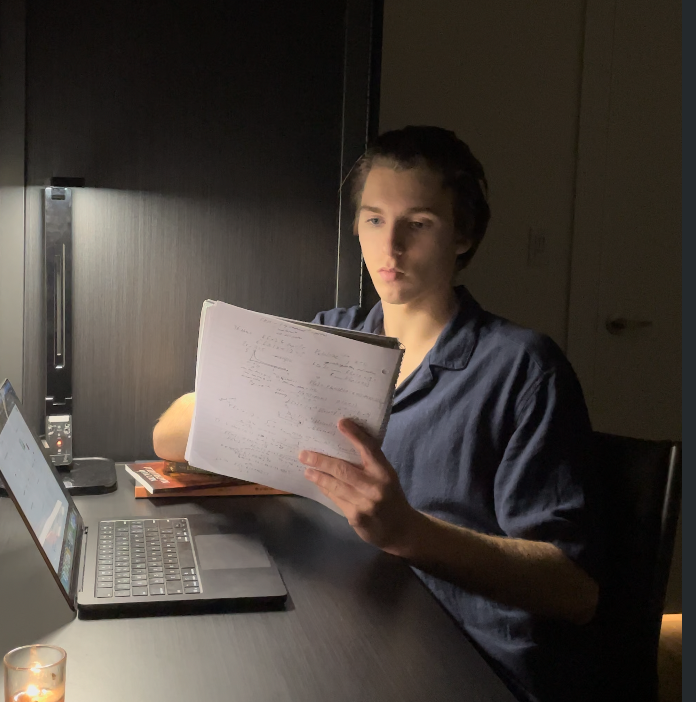
Hi, I’m Almar, a sophomore at UATX and an Alpha Fellow.
My journey began in music while learning at a Classical School up in WA. I mastered violin, oboe, and bass guitar while immersing myself in philosophy, logic, and rhetoric, disciplines that sharpened my analytical thinking, strengthened my problem-solving abilities, and instilled a deep sense of discipline and work ethic.
During high school, I also served as a violin instructor at the school’s conservatory, teaching six students at a time. That experience introduced me to the fundamentals of teaching, how to communicate clearly, adapt to different learning styles, and cultivate both skill and confidence in students while making it fun.
At UATX, I joined the professional world and began building real-world projects. I initially entered real estate, but my path eventually led me to EdTech. Through research and conversations with multiple educators, I identified two consistent challenges: teachers are often expected to operate like CEOs, managing operations, curriculum, and outcomes, without much support or compensation (60 hr work weeks sometimes), and an increasing amount of reading and writing instruction is being offloaded to AI. Seeing how I myself could easily delegate most of my cognitive work to AI, I found concern about the growing student reliance on these tools and the long-term consequences for critical thinking, and humanity itself.
That concern led me to found Reading Rooms with my friend Max.
Sponsored as an Alpha Fellow, I am currently developing a web-app desi…Read More