No CS Background. Below Poverty Line. Now Learning Quantum ft. A.M. Bhatt | My EdTech Life 359
What happens when you take public high school students with zero computer science background — 87% of whom are below the federal poverty line — and put them in one of only two quantum computing programs for high schoolers in the entire nation?








What happens when you take public high school students with zero computer science background — 87% of whom are below the federal poverty line — and put them in one of only two quantum computing programs for high schoolers in the entire nation?
That's exactly what A.M. Bhatt and his nonprofit DAE are doing in Connecticut, and the results are challenging everything we think we know about education reform, student potential, and what it really means to prepare young people for the future.
In this episode of My EdTech Life, host Dr. Alfonso Mendoza sits down with A.M. Bhatt to unpack why traditional education is stuck in an industrial-era mindset, why the push for "job readiness" might actually be more dangerous than the problem it's trying to solve, and why real education reform starts with identity formation — not content coverage.
Bhatt shares how his students complete 24 college credits worth of computer science in just 10 months, why he left a successful career advising Fortune 500 executives to work with underserved youth, and what a simple bowl of soup has to do with building a real learning community.
Chapters
00:00 Introduction to the Podcast and Guest
01:37 A.M. Bhatt's Journey in Education
09:36 The State of Education: Challenges and Opportunities
15:37 Identity Formation in Education
22:01 Preparing Students for the Future: Players vs. Audience
26:31 The Importance of Non-Technical Skills
28:09 Real-World Hiring Insights
32:13 Remedial Humaning in Education
34:32 Infrastructure vs. Human Development
39:10 Dropping Seeds of Knowledge
43:46 Kryptonite in Education
45:50 Messages for the Future
Connect with Dr. Fonz:
🎙️ Website: https://www.myedtech.life/
📲 Follow on LinkedIn, TikTok, Instagram, Facebook & YouTube
Thank you to our sponsors:
📚 Book Creator: Use Code MYEDTECHLIFE for Premium Access!
🤖Eduaide.AI
🎓 Peel Back Education
☕Comeback Coffee
Peel Back Education exists to uncover, share, and amplify powerful, authentic stories from inside classrooms and beyond, helping educators, learners, and the wider community connect meaningfully with the people and ideas shaping education today.
Authentic engagement, inclusion, and learning across the curriculum for ALL your students. Teachers love Book Creator.
Thank you for watching or listening to our show!
Until Next Time, Stay Techie!
-Fonz
🎙️ Love our content? Sponsor MyEdTechLife Podcast and connect with our passionate edtech audience! Reach out to me at myedtechlife@gmail.com. ✨
00:12 - Welcome And Sponsor Shoutouts
01:30 - Building DAE For Underserved Students
03:55 - Why He Left Corporate Innovation Work
08:09 - Job Readiness Trap In The AI Era
16:08 - Identity Formation Is About How
22:06 - From Spectators To Players In Tech
27:26 - Soft Skills Need Real Collaboration
34:10 - On Behalf Of What And Whom
40:03 - Dropping Seeds In Hard Systems
45:23 - Edu Kryptonite Billboards And Grandfathers
49:52 - Links Substack And Final Goodbye
Dr. Alfonso Mendoza
Hello, everybody, and welcome to another great episode of My EdTech Life. Thank you so much for joining us on this wonderful day. Thank you, as always, for engaging with all the likes, the shares, the follows. Thank you so much for just really sharing the content and being part of our community. I thank you from the bottom of my heart. And most importantly, also I want to thank my sponsors, Eduaid, Book Creator, and Peelback Education, for the wonderful work that you're doing and sponsoring our podcast. So we may bring you some amazing conversations and we can continue to grow personally and professionally as well. And I'm very excited to welcome today an amazing guest. I mean, just reading about the work that he has been doing is just really, I think you guys are in for a treat. And I'm really excited to welcome Mr. A.M. Bot to the show. How are you doing this evening? I'm great. Thank you for the invitation to be here. Excellent. Well, I'm really excited to dive in, Mr. Bot, but before we get into that, into the heart of the conversation, for our audience members that are tuning in and listening and may not be familiar with your work just yet or haven't connected with you. Can you give us a little brief introduction and what your context is within the education space?
A.M. Bhatt
Sure. So I have spent my life building Trojan horse organizations. The first three were for-profit and on the corporate side, but around uh human development. And then this one's a nonprofit. Um on the face of it, what we do is um computer science, software engineering for uh public high school kids, uh uh school districts with traditionally underserved communities. Um very deep dive. In 10 months, they cover 24 college credits worth of computer science courses. Yeah, it's uh, and we take we actively see kids who are disengaged and who have zero computer science background. Um, but really what we're doing when uh we're with when they're with us is is my my my actual work uh and the folks who work for me that have been developed on is um core human development, uh helping an individual connect with their sense of agency, helping them connect with their sense of voice, uh their vision for themselves and their communities, uh, and then the capacities that are innate but but are dormant to really be able to sort of stand in the world for what it is that you actually care about, and then from that basis, developing really deep technology skills to be able to be taken seriously by the world, uh get into colleges, scholarships, all of that, uh, and generate uh, you know, we wouldn't call a becoming existence, you know, on the financial and career side.
Why He Left Corporate Innovation Work
Dr. Alfonso Mendoza
Wow, that is amazing. So, I mean, a lot of to a lot to unpack there, and a lot of things that you've said really resonate, and especially, you know, being in education for uh, you know, 20 years now and just seeing so many things and so many changes. But before we unpack a little bit about that, one of the things that I do want to say is uh, you know, looking into your backstory, into your bio, you know, you came into this country at a very young age, and you like you mentioned, the career that you built, you know, working with powerful executives, essentially, advising and so on. And you, I don't want to say you necessarily walked away from that, but you know, you kind of took a different path. For the most part, a lot of people want to move into what you were doing. But I want to ask you, what happened or what did you observe or see that made you kind of reallocate your time and your passion to help students and you know, and the work that you're currently doing right now, because that really gets me excited. Yeah.
A.M. Bhatt
Uh I walked away from it is actually the right phrase. Uh uh as I've done several times in my life. Uh, I abandoned something, abandoned responsibly abandoned, but left something that folks around me said, What the heck are you doing that for? And and and now the answer to your question. I mean, listen, my my self-conception and my conception of human beings is, and and I don't mean this as a throwaway, though it's tough not to have it be a bit of a throwaway uh in in short conversations, but my self-conception is I'm an artist, and that what we do is we develop artists. Um I have uh uh had a handful of real core principles for myself that I set uh at a very young age. And one of them was that I was never going to put my hands on anything that did not have my full and complete commitment and it wasn't self-expression, and that I was going to be mindful about taking my hands off of things that stopped being full commitment and expression. Uh, and so on that side, I just had the great blind fortune to really do a lot of interesting work, uh, a lot of work in Europe, a lot of work, obviously in North America, tech and pharmaceuticals, and all around human development, long-term uh human development in the context of innovation mainly. So we worked in pharma, technology, uh, some financial services, um, and it was all folks who were trying to do things that were sort of industry-scale innovation, right? And so you work with somebody for two, three, five years on a really significant, you know, square wave change, we used to call it. Um, but my work was always on the human side. What does it take? Right. And so at a certain point, it was okay, for the most part, all that's left to do is to repeat things. All right. It's great work. And and Chuck D, one of my heroes, said, you know, never make the same album twice. That they're gonna love your album and then they're gonna say, make it again, then never make the same album twice. And I realized at a certain point, about eight, nine years ago, maybe I start to repeat albums, as it were. Um, at the same time as um I had a certain desire to be back home. You know, where I grew up. Uh, I was an immigrant, landed in New Haven, that city raised me. We were, you know, the old cliche thing. We weren't poor, we were Poe. We were trying to save up money for that R so we could move up to poor, you know. Like, I mean, we were like hardcore um back in India and here uh for those first, you know, uh the first decade or so. And the city raised me. And so the idea was to go back home and do something for the kids in the neighborhoods that I grew up in, very kind again, cliche story. So it was a convergence of the I was done. I didn't want to, I felt I was starting to re-remake albums. Um, but then also uh there was there had been in the back of my mind uh this idea. And then the last thing, connecting back to education. So for about uh half a dozen years, I was a guest lecturer at Chicago Theological Seminary that came out of some pro bono consulting work I did for the national leadership of United Church of Christ. The president of that seminary was uh in that group, and she invited me to come teach uh at the seminary on uh systems level change for seminary students. And that sort of had a certain click happen for me. I got I got religion on something, no pun intended, or maybe pun intended, was that the work I had been doing for you know two and a half decades with corporate executives translated really easily to folks looking to do social impact work. And I thought, okay. And so these forces sort of converged and and and then I did sort of responsibly walk away, you know, disintermediated things, handed off clients, wand on clients, um, etc.
Job Readiness Trap In The AI Era
Dr. Alfonso Mendoza
Wow, you know, that that's such an interesting story and such an interesting take, you know, being able to do what you did at that scale, at that level. And like you mentioned, you know, feeling like that artist, you know, freedom of expression and being able to, you know, amplify your work, your passion, and so on. But I love also the fact that what you took from that in realizing later on how easy those skills are transferable to the young men, women that you were teaching. And now, you know, we're gonna be talking a little bit about the work that you're doing with your students that you mentioned briefly, too, that, you know, uh doing a lot of work through preparing them for this future, the now, you know, and what we're gonna see education move into and preparing them with those skills. So this is really exciting because as we know, you know, the last four years, the conversation has been centered all around AI. And I never get tired of asking this question because I love to hear different perspectives. But as we know, you know, 2022, we're now in 2026, and we know that that AI has shifted things, generative AI in the classrooms, in the workforce, really in a lot of things that we're doing. But most schools are still running in that traditional model of like rows, teacher in the front, you know, and it's just lecture, lecture, lecture. Students are becoming just really consumers, and I might say oftentimes bloated with so much of the learning that they've done, but they've they don't have that creative output or a way to really demonstrate their learning in a different way. So now what you're doing, uh which I want you to get into, but I want to ask you your view of education, honestly, right now, what is it that you see that might still be working? But what is it that you see also that is broken? And what are some of the things that might keep you up at night with the way that education is moving right now?
A.M. Bhatt
Yeah, what keeps you up uh at night is it's less about what's broken uh than than about what they're doing to fix it. Um, and so so let me let me answer your question and then and then and then say what I mean by that second part. Um I think our traditional education, so we have great relationships with the school districts in the cities we work in. Um I've met I have yet to meet somebody who doesn't fit them uh the following description. Deeply dedicated, deeply committed, genuinely uh uh compassionate and supportive of the kids uh and in the cities, in the context of highly impossible situations, um, you know, relative to what needs to get done. Because the blockage isn't the administrator, the blockage isn't the um educator, the teacher, the blockage isn't the funding, though funding is a problem. More teachers is a problem. The blockage is the mindset around what the purpose of that institution is. Um that institution was designed, and this is, you know, I'm not saying anything here now that that that that's you know groundbreaking, right? We've we've been talking about this for 20 odd years. Sigita Sugatha Mitra is uh somebody to, you know, if your audience isn't familiar with, highly recommend his whole in the wall video TED Talk, um, sort of tells the whole story. But it the mindset it's grounded in is um to generate repeatability. It's an industrial model. It is grounded in can the person after me repeat the things that I know? And can they do it within a certain level of variance? It's a machine model of how to develop human beings that is perfectly acceptable in the context of an industrial society where jobs are stable, repeatable, um, machine-like in their compartmentalization, et cetera, et cetera, et cetera. That is not the world, and that has not been the world for the last 20 years, and it's accelerating rapidly away from that, right? And everything that can be made repeatable, compartmentalized, processed is rapidly getting taken over by technology as it always does, even before digital technology. Technology has the impact of taking over the things that are repeatable, right? Consistently. Transportation to the, you know, the you name it, right? Um education, institutional education's response and and and the corporate push uh uh to traditional education and the governmental push to traditional education is well, we need to do job readiness. And so that's the part that concerns me about what they're doing to fix what's broken. So we need to do job readiness. So what does that do now? Great. So now we're going to take people and give them very specific, narrow skills for this job, and then what doesn't get said is the last part of that sentence that will likely get fundamentally transformed three years into that person getting the job, and they will have no capacity to learn how to learn to pivot when that thing changes. And so we are actually solving a problem of an outdated mindset with a mindset that is so much more dangerous, actually, than what's there now. We're making the education narrower and more focused and more targeted to specific jobs, and there are no jobs that will stay stagnant for the next 50 years, and you know, that's how that's hyperbolic. We can look out the next 10 to 20 years and be more confident. Now you train them for a narrow job in some technical field, uh, I don't care what it is, three to five years into their job, almost everything they know is going to be outdated. And if they haven't learned how to learn, which is what broader education is about, they're gonna be in trouble again.
Dr. Alfonso Mendoza
Yeah. No, and that's definitely.
A.M. Bhatt
That's very long-winded. I apologize.
Identity Formation Is About How
Dr. Alfonso Mendoza
No, not at all. Actually, there's a lot of truth in what you're saying, and just with you speaking and sharing that, it just really kind of reminds me of just my thoughts. You know, being in education for 20 years, not going to school formally to be a teacher. Actually, I come in from a marketing and sales background, transition into education. I never wanted to be a teacher. I fell into education and absolutely fell in love with everything, with the process, those skills in marketing and sales, easily transferable into the classroom. And, you know, spent 11 years in the classroom, digital learning coordinator, assessment coordinator, you name it. Like I've seen it. But there was, there's always like just in me that things need to change, and then they don't. It's we're always stuck in what they call this is the way we've always done it routine. And it just seems that from year to year we see that the things that we're currently doing may not be working, but then we still continue with that same process because I think many people may feel very comfortable with the way things are and don't like to step out into the comfort zone. And going back to really empowering our learners, like you said, that they become those consumers. And I always see like they just become bloated with that knowledge with no output. And because they don't may not practice that output in uh in a creative way, in a way where they're collaborating, they're communicating with discourse, you know, as they move on, you know, it gets difficult for them to transition into something where now they have to become a decision maker or immediately improvise, adapt, and overcome where that learning comes from, you know, and just that continuation of learning. So I think you you spoke very well as to what I had been feeling for a very long time. And I thank you so much for that answer. And so I kind of going into that too, though, one of the other things as far as education that I read that really stuck is that you said that um what education should really be doing is identity formation and not just content coverage. So I kind of mentioned that a little bit where it just seems like we just do the content, students receive it, they become consumers. But can you unpack that statement a little bit more? Because I know teachers probably do identify and do agree with what you're saying there. But as we know, as soon as that door closes or the bell rings at the end of the day, it's back to the pacing guides, and then they just continue moving from there. So give us a little bit of insight of what actually identity formation looks like in a learning environment.
A.M. Bhatt
Yeah, absolutely. Uh, just one last thought on the previous thing, just to kind of summarize um because I I think I made it a little more complex than it needs to be. Here's the sort of analogy that captures that last thought. We have uh school systems and governments uh uh um sort of designing curriculum and education, looking through the windshield at at what's out there, what's next. And what they're failing to realize is that they're not they're no longer traveling in a car traveling 10 miles an hour, they're traveling in a car traveling 500 miles an hour. And by the time they look up there and they look down to create the thing, it's in the it's in the rearview mirror. That that's the problem we have right now with the education reforms that are happening. It's it's it's an unwittingly rear view mirror uh curriculum design. Okay, uh, on to the second question you asked. Um so there's a paradox in this, right? So you asked sort of, you know, what I'm paraphrasing, I don't remember exactly how you framed it, but you know, what what is it we do around identity identity formation? It isn't in the curriculum, it isn't about what, it's about how. It's about the nature of engagement. So I'll give you uh uh uh an example. Um, we have this ritual. I've spent a lot of time in in um uh um uh Buddhist monasteries, then monasteries I used to have a monthly practice, uh yearly practice, uh December's I'd I'd leave um to go hang out up there. And um I stole this practice from there, uh, which is the simple thing of of a of a communal meal, and it's soup. And so in our campuses, um the night before, the end of the night rather, somebody is uh somebody in the admin team is tossing you know a few cups of uh dried organic beans of some sort into a proc pot, putting hot water in. They're soaking overnight in the morning, they're coming in and dumping much other ingredients in, and it's uh uh cooking slowly throughout the day as it's been done traditionally in every culture on the planet. At five o'clock, everything stops. Faculty, administrators, I don't care who you are, me, uh students, everybody we stop and we just hang out and have a very simple meal of soup together that was cooked for them for that day. The most human thing we've ever had for 200,000 years, that the most significant thing you can say to a stranger to let them know they're safe and wanted in the long is come eat at my table. Right? And so it's not about introducing something new, lunch breaks and and breaks happen. You don't have to do anything different. How are you approaching it? Is it human? Is it communal? Is it the thing that we've lost over the last century, right? Human formation happened historically around a campfire or in a church or in all of these institutions where the formation of a human happened, this this kind of sense of who am I? Why am I here? Not transactionally, what job am I supposed to get, but why am I here on the planet? Um, where's my place in the community? What are the bases of meaning? Like these are the things that form a human being. They are gone. They are gone. It is all from early age transaction. What can you produce? What's it worth? How do you get better at it? That is how you build machines, not how you develop human beings, right? And so the formation piece is not about any magical tricks or or curricular or whatever. It is what is your relationship to who is in the space? Is this a learning community, small c community, not hashtag community? In most small c community, are you breaking bread together and you actually breaking bad bread or are you eating? Right? It's things like this that that that when I talk about formation, it is not about what we're doing, it's about the environment in which we're doing it and the nature of the attention of everybody that I'll that I'll allow to be with the students. So we have amazing people that we don't that I don't hire based on skill set, technical skill set. We have amazing technical people, like really big bread people on the software side. That's not why they got hired.
From Spectators To Players In Tech
Dr. Alfonso Mendoza
Yeah, no, and you know, that is so impactful what you're saying there, because what what I love is that pretty much the theme that we were talking about here is just really just a lot of it is that human connection, the relationships, the really getting to know one another, getting to collaborate, getting to, you know, just in this place where you're talking about just everybody stops, you're you you're present, you're having a communal meal, everybody's there. And I think that's something that is so important, and especially with how fast education is moving and how much how fast technology's moving. Like you mentioned, you know, right now it just seems like everybody is in that car, like you described, that is going, you know, 500 miles an hour. And by the time you see what's coming up and you're getting ready to do something, like you mentioned, I really love the way that you put that. It's already in the rearview mirror. But guess what? The person right next to you is there right along with you. You know, you're not in it, you're not here by yourself. You've got that support system and the way that you collaborate, the way that you make those connections in that human-centric approach. I uh, you know, that's fantastic. Um, going back, you know, because you had such wonderful takes. Um, so big shout out to Kelly who sent these wonderful articles, and the articles and and the information will be linked uh in the show notes too, as well. But one of the things that really caught my eye when we're talking, well, or you know, as I was reading, when we were talking about young people, uh, you said something that was uh just a wonderful analogy, too, that in the future you will have, you know, young people will meet the future as players or as the audience. So, you know, through the work that you're doing through DA uh DAE and you know, working with students, how are you preparing those students to become those players in the future? And what can we do and look at or some lessons to learn so that our students do not become that audience that is just standing there on the sidelines watching everything go just past them? Yeah.
A.M. Bhatt
I mean so there's a there's a sort of more transactional technical answer to that, and then there's a there's a more you know kind of cultural and and human uh on the transactional sort of side of it, but but critical transactional side is um so we we do software engineering. We were doing um um AI prompt engineering and then APIs with high school students when universities were still like, I don't know, what should we do about this AI thing? We that article that you're referencing, I I I recognize the the passage, is uh from an article I wrote about quantum. Uh, we currently have the nation's there are two quantum computing programs for high school students in the nation right now. One is in Northern California, the other one's a DAE in Connecticut. Uh and the kids that are going through that aren't the kids of the, you know, the wealthy in the suburbs, which nothing against those kids, but these are public high school kids, 87% of whom are below the federal poverty line, uh disengaged, etc. They're getting front row seats to being participants in this rapidly emerging uh uh discipline, right? So part of it is access, right? The transactional side of having our kids not be audience is access, because these kids otherwise aren't even going to know that quantum computing is a high growth field in the next 10 years, i.e., when they're really launching their careers, right? So just access and exposure is a big deal in terms of having them be participants versus audience. But then um on the on the thoughtful side, on the I'm sorry, on the human side, um, you know, it is for all of us, man. It's just it's so easy to internalize narrative. And and I don't even mean like big ugly narrative about what you're not and all that, but just real subtle narrative that get that gets, you know, kind of that seeps in. Like I said, we actively seek out kids who who don't who haven't had exposure to computer science, who like that's not for me. I'm not a math science person. I'm not right. And um being in the driver's seat is not about necessarily having a certain set of skills or having a certain those things can be important. Um you go into quantum computing, my god, there's a lot of skills, right? But um, but it's it's understanding two things. A that I belong in the seat. And B, that I already actually, the things that I actually need, I already have. There's nothing the first thing kids hear from me in programs, literally day one, 10-month program, uh, or three-week program, we do a kind of introductory, three-week program. It doesn't matter. For day one, I make sure I'm there for for for every cohort at all our campuses. The very first thing they hear from me is, you're already okay. You're gonna do things in general, you're gonna do 24 college credits in 10 months. What you're able to build 10 months from now, you would not believe me if I told you right now. And you're not gonna be one inch more okay for us. You are already fundamentally okay. And don't believe me when I tell you that. Judge how you're treated in here. And if you don't every single moment in here feel like I'm okay, and I'm okay today, like I'm grumpy and I'm okay. That's how they're treating me. I'm okay. It's yeah, and so that agency piece is the other half of not being spectator. Because if I don't think I belong in the seat, if I don't think I have what I need to drive in the seat, then my background assumption, my internalization is gonna be yeah, I'm a passenger, or I'm on the sidelines watching the car, the fast cars go by. Right? So it's it's it's about the skills. Yes, get get get public high school kids exposure to quantum, you know, instead of just uh the the affluent neighborhoods. But the bigger piece is this agency piece, this thing of you're okay, and whatever you want to put your hands to, you're entitled to put your hands to. And then immediately following that, once you believe that is, and you better be accountable. And we're gonna help you learn how to be infinitely accountable for your own time on the planet, right? That that's that's the piece around not being audience to the world, but being participant of the world. I love that.
Soft Skills Need Real Collaboration
Dr. Alfonso Mendoza
You know, there's so much to to kind of unpack here in that sense, too. But I think this next question, because that's a nice segue to the next question that I have, because as you know, you know, right now you described a little bit about what you're doing with at DAE, one of two quantum computing programs in the nation, and you have high school students that are completing 24 credits within your program, which is something that is amazing. And, you know, giving that access to students to get that knowledge, but also right now, the way that you were talking as well. And and again, coming back to that human piece, that energy on how to take feedback, how to collaborate, how to manage your time when no one's looking, uh, you know, how to deal with maybe somebody, your colleague, your collaborator might be having a bad day. How do I deal with them? And we hear from, you know, on LinkedIn, I'm on LinkedIn a lot, you know, uh, people that are, you know, offering jobs and and what are the skills that we need for the future? And everybody talks about the technical skills, you know, the coding, the AI literacy, the data science, all of that good stuff. But, you know, I think the non-technical side, which is like we talk about the energy that you spend on how to take that feedback, how to collaborate, how to work with those uh, you know, difficult situations, how do you overcome? How do you overadapt? I think it's something that is very important. But they seem to be, those are nice to have instead of just focusing, and they focus more, excuse me, I should say, more on that technical skill. So from what I hear from you though, I feel like you feel like the other way around. And you even described it with some of your colleagues that you work with. It's like, hey, you know, many of the people that I hire, yes, they have that technical skill, but it's not necessarily that technical skill that I'm I'm hiring them for. I'm hiring them for the way that they are, uh, the you know, the non-technical things. So tell us a little bit about that and and what are your thoughts? Uh, I feel that, you know, maybe there should be a more of a focus on those non-technical skills than there are that technical side.
A.M. Bhatt
Yeah, so a quick anecdote. So, you know, we we have an adult campus as well. So we have we have high school campuses and we have an adult campus, um, 18 and up, uh most of them wind up being 18 to 34, though, though we've had students in there as old as 60 and and lost their job that they've had for 30 years and want to retrain and and uh stay in the workforce uh out of desire or need. Um but on the adult side, um we we were able to secure early on a hiring partner at a I I won't name them just just to not name them, but a a very, very large tech firm that that you would likely know on the West Coast. And um early in the conversation said, listen, we we just have had bad luck uh hiring out of out of programs like this because we get folks who have really great tech skills and we hire them for that. And somewhere around 80, 85 percent, we wind up having to let go within six months because they don't understand how to operate inside of an organization. Uh they can't communicate, they don't, they don't handle uh the kind of tension well, they don't they don't have any of these, you know. And so the paradox here is that organizations actually get this, yeah. Um and and and and then where it breaks down, so this is the second part, where it breaks down is they start talking about soft skills, and it gets translated and it becomes technical skills. Like communication becomes a technical skill. Here's the competency model, here are the 14 attributes, and now it's a technical skill. That's not communication, that's learning how to, you know, kind of kind of manage a conversation. And it doesn't help you when things go sideways. Communication is a human phenomena. You don't learn it through lockstep curriculum, you learn it through interaction. Collaboration, you don't learn through learn a model of collaboration and go through this exercise. You learn it by actually collaborating with people over time, having friction, having people in the space to facilitate that friction uh and give you feedback, et cetera, et cetera, right? So um organizations get that these that these you know non-technical skills are absolutely critical. And increasingly the more sophisticated organizations, the larger organizations, uh actively you know, sort of vet for this because they understand that that's what makes the organization actually function properly. But they ask for it in ways that have then universities and and and you know tech schools and all that, collapse it back into a technical skill where they can check a box and say, Yep, we did that curriculum, uh they've got an XYZ, and then you get human beings that still don't know how to it listen, I'll tell you how the truth of this is you know, for for 28 years on the corporate side, uh developing executive, you know, 60-year-olds in in in very senior positions, and and when I had had enough comfort with them, I I would joke, and it wasn't a joke, that listen, all you realize all we are doing here is remedial humaning. Like, you know, I and and it's the truth, it's the absolute truth. All we are doing at DAE is we're just back to core being human with each other, but in a very rigorous way, right? With the work we take seriously, we invite the the students to take the work seriously. It's not just throwaway projects. This is you know, you you show up, you show up committed, but that's part of being human, you know, and we're hunter-gatherers. Like you couldn't take the hunt casually, it was then we weren't eating if you didn't, right? But the inner nature of the interaction was a human interaction. We're in this together, we're actually in this together. We share a certain genetic code. Back then it was a biological genetic code, but with our kids and our it's it's a psychological and a cultural genetic code and an emotional genetic code. Uh, we invite kids to stay in touch with us. They they they go off and go to college, and they will come to us instead of their college counselors when they're looking for advice on on courses to take or career paths to pursue, right? And so when we talk about these other skills, they're not the danger to watch out for is collapsing these other things, collaboration, communication, teamwork, all these collapsing those back into the mindsets of technical skills and thereby losing what they actually are and failing to develop it.
On Behalf Of What And Whom
Dr. Alfonso Mendoza
Oh man, that is fantastic! Wow. I mean, I'm just blown away. Like, this is just amazing. And you know, you've hit on so many great things there, and and especially on that human side. And I love that, you know, the the remediation there that you're talking about, you know, rehuman remediating. I mean, that's something that is uh like for me that that's gonna be definitely one of those gems that is clipped and shared because that was just very profound for me. And so now I want to go back, especially, you know, talking about education a little bit, and you know, with the work that you're doing at DAE. And obviously what I love that you're doing is you had a different vision, even though you know you ended up walking away from you know big accounts, you found your passion through DAE. You've got, you know, like you mentioned, you've got that adult center, you've got the the center for um, you know, high school students that are learning quantum and learning so many other things aside from that, but you know, in through your perspective, because I love that you you seem to be a very outside the box thinker, and and I love that. So I want to pick your brain here because I want to ask you as far as um there was something that you wrote in an op-ed also, you know, talking uh to district leaders, and this is what you said, and and obviously this goes along with the the transition from 2022 till now with generative AI classrooms and so on. But you mentioned here it says without um you infrastructure without people is inert, and infrastructure without early exposure is exclusive. So right now we're seeing that there are districts that are making decisions for thousands upon thousands of dollars on devices, on platforms, on AI tools right now. And what we're actually missing is when we invest in this technology, we're skipping that human development side. So I want to ask you, can you unpack that statement a little bit? Because I think you you sort of have been doing that along the way, but I think that that was just something very profound for those decision makers, district leaders right now, thinking of like, oh my gosh, like we got to pour our money into this and we got to do it now because we're gonna fall behind. Yeah.
A.M. Bhatt
Um, I was I was interviewed uh a few weeks ago about the quantum program, and and um the reporter asked the you know, one of the questions they asked is a long two-hour thing, but one of the questions they asked was, um, you know, the state, Connecticut, is making a huge investment in quantum. The state has declared that we will be, you know, one of the global quantum hubs, and and it seems to be happening great. Um but she asked, you know, there's a lot of investment, a lot of time, a lot of energy. Um if you could insert yourself into the kind of highest levels of that conversation, what's the what's the what's the one thing you would add, or what's the one question you you you would have? And I'd say it's the same question I used to ask all my clients uh on on what they're you know, kind of wanted to call us in on, um is on behalf of what and on behalf of whom. And so usually districts you know are kind of buying technology and and making these infrastructure investments, and the question I would ask is on behalf of what and on behalf of whom? And really, really rigorously look at that question. And likely it's on behalf of well, that's what we have to do, that's where the world is going. Terrible answer. Not that you shouldn't be doing it, but until you're clear on behalf of what, what does this further that matters to you and your constituents and your students and the industry in your state and in your school district? Why does this actually again back to remedial humaning, right? Remedial humaning. If we were in a community together and we wanted to do some big thing, we want to extend the village out to another, you know, uh half an acre. It'd be like, okay, on behalf of what? That's a lot of work and a lot of effort and a lot of resource deployment. And some of us are going to get hurt in the process. On behalf of what? Well, because the fields over here have been less reliable the last three seasons. Ah, okay. So it's on behalf of our sustained survival for food. Great. It sounds so dumb saying it out loud, but that level of clarity doesn't happen. It becomes the on behalf of what is assumptive. And in the background, it's well, because that's what we have to do, because that's where the world's going to. Those are not human answers, those are machine answers, and they will leave you in a place of having things. It's the same parallel in your personal life, you know. You want the second car, cool. I gotta buy buy nine cars, but be clear on behalf of what? If it's on behalf of nine cars, you will not get what you it is you think you're looking for, you're gonna get with that car. It'll never, as a Buddhist teaching, one can never have enough of what it is that one does not need. And so chasing because this technology is next, because this uh modality in training is next, because it's not good enough. On behalf of what? On behalf of whom, at a real level, in the context of your state, your district, your population, your industry too, you know, them as well. Really holding our feet to the fire and holding your constituent your your elected officials and your school boards really holding them to the fire, not grilling them, but really kind of getting to a community. On behalf of what, do we want to start teaching AI? All right, if it's just to keep up, there's nothing human in that. You'll lose passion for it, your kids will lose passion for it. You should pursue AI, but first get clear, on behalf of what? That is a human answer.
Dr. Alfonso Mendoza
Wonderful. So impactful there. And man, uh, Mr. Bot, this has been amazing, you know, such a wonderful conversation.
A.M. Bhatt
I'm impressed with how much work you put in, man. I I I appreciate you doing that kind of that kind of research. That's the fact you are. I'm I'm honored.
Dropping Seeds In Hard Systems
Dr. Alfonso Mendoza
Hey, well, this is what I do, this is what I love to do, and especially, you know, having a guest and uh, you know, the guests that I have, I just really love to pull those different perspectives. And so I want to kind of ask you as we wrap up, this uh the you know, we'll still have our our last three questions that we always end the show with, but just a message for educators, you know, before we close, can you speak directly to those teachers, those district leaders who may be listening to this episode right now or catching it, you know, on YouTube or what wherever it is that they may be, but maybe they're inspired by a little bit of what you said or a whole lot of what you said, like I'm leaving inspired right now, but they're also sitting in a place in a system that feels impossible for them to move in, almost kind of likening it to quicksand or something, but they care about the kids, but they're just tired. What advice might you have for this person?
A.M. Bhatt
Yeah, yeah. Uh another borrowed, this is from you know, the the two Zen monasteries I used to go to, and one of them was uh uh Tik Nat Hans. He's got uh I don't know how many he has, but there's one here on the East Coast, uh Blue Cliff Monastery, and one of one of Thay's teachings um was to acknowledge that every step, every word, every action, uh every interaction, you are dropping seeds. And you don't know if the seeds will germinate, and you don't know when the seeds will germinate. Uh they most of them will germinate weeks and months and years after you drop them. And so it invites two things. One is be very cautious of the seeds you drop as you move through the world, and two, let yourself off the hook of having everything germinate. And so for the teachers uh who may be listening, A, thank you. Uh you're doing you know, some of the most um self-involved, I guess because I'm doing it as well, but that's okay. Yeah, yeah. So you're doing one of the most noble things that there is on the planet, you already know that. Um, but thank you. And B, however shitty it is, I don't know if I'm allowed to swear here, but I said, however unfair it is, however they don't get it, however all of that remember, and you know this as well, remember it's just about dropping good seeds. And job isn't to fix the world, the job is to drop seeds uh with the kids that are in front of us right now.
Edu Kryptonite Billboards And Grandfathers
Dr. Alfonso Mendoza
I love that. That is some sound advice, and it it just really brings to mind uh a lesson that I learned probably I learned it probably my freshman year in high school, which I never knew that that lesson would become so valuable to me once I transitioned into education. But I had a wonderful substitute teacher that would always come into our biology class. And why we loved him was because number one, we never did the work that the teacher left. He was a retired biology teacher, and he would just, you know, take us on a lesson. One day I remember he wrote down on the board, C Hopkins Cafe. And he said, these are the seven elements the human body needs to survive. And we just went over that and it, you know, it never left my mind up until this day. And it was all the because of the way that he made us feel and those seeds that he dropped. That many years later, when I became a teacher and I saw him at um, I think it was at a doctor's office that I saw him, and you know, he's a lot older. He went up to go to the water fountain to go get some water, and I kind of just, you know, walked up and you know, said hi, and he couldn't remember me. He's just like, he's like, my memory's not there. And I just said, you know, Mr. Rodriguez, I just want to tell you that I never thought I would be a teacher, but I want to say thank you for what you did because that's helped me shape the way that I have become a teacher and in working on how I make my students feel and just the look on his eyes that he teared up. And so one of the lessons that I learned is that as a teacher, I'm never gonna see that fruit just yet. You drop that seed, but then later on getting messages from former uh students. Hey, Mr. Mendoza, I just want to tell you I just graduated from Georgia Tech, and now I'm gonna be working at Spotify. Hey, Mr. Mendoza, I just graduated, and these are sixth graders that I had back in 2000, 15 or so or something like that, or maybe uh later or earlier than that. But you're absolutely right. I I love that, and and it really takes a lot of that pressure off where it's I'm just planting those seeds. It's not always gonna be perfect. I it's okay for me to not know everything, but as long as I'm planting that seed, it's gonna give fruit one day. And whether I get to see it, but or somebody else does, that's some good fruit that's gonna be uh reaped in the you know in the future. So I love that. I love that, and and I love that human aspect of it and that connection. So thank you so much for sharing that. But but before we end the episode, we always love to end the episode with these last three questions.
A.M. Bhatt
So hopefully you are surprised questions, right? These are the ones I told you not to tell me in advance, but I could be complicated. I'm these are the surprise ones. I actually like this sort of thing, just kind of being forced to improvise is great.
Dr. Alfonso Mendoza
All right, so here we go. As we know, every superhero has a pain point or weakness, and for Superman, cryptic. Was his weakness. So I want to ask you in the current state of education, what would you say is your current edu kryptonite?
A.M. Bhatt
What popped in my head is what I'll say. It doesn't, I don't know if it really has anything to do with the with the state of education per se, but it has to do with the state of DAE. We're getting a lot of attention. I've lived my life kind of avoiding attention. The advisory work is great. You get to stay behind the curtain. And my kryptonite right now is actually being a kind of the superhero thing. We have done a disservice in the world with the with the sort of great man, great human mythology. I get to be in front of the camera, but this is God's arms truth. There are a collection of a few dozen people in the collective here that we do this. We do this, right? And there's this this predisposition on the planet to uh identifying who's the person, who's the who's the Steve Jobs that nonsense, right? And so right now we're at this one DAU where I'm doing a lot of these kind of things. Uh you were amazing, and and I hate doing these things. Nothing to do with you, and because again, it it puts the emphasis in the wrong place. Um and I think, and maybe maybe I'll try to connect that to answer your question. I think then that that that's a that's a a part of the more broader educational kryptonite is that the incentives, you know, because we're funded, we're nonprofit, we're funded by a variety of sources, and um by its nature, the incentive structures, the metric structures, they emphasize superstars, how many went to college, how many, you know, a lot went to college. That's not the point. A lot, you know, we get kids who kind of spun off products that wound up on the Apple store, and like it's great, but that's not the point. Uh, and so this this um relic of of how we measure human development, um, that is not going to go away. And so it is kryptonite, in that I just gotta keep figuring out how to deal with it and and shield my people from it so we don't collapse into a training factory.
Dr. Alfonso Mendoza
Excellent. Wonderful answer. Lots of lots to unpack there. All right, question number two if you could have a billboard with anything on it, what would it be and why?
A.M. Bhatt
Cheating. Um, I it's it's if you subscribe to my Substacks, it's the sign off on it. I said it to you earlier, I say it to students, and and the billboard would say, You're already okay. Stop running, you're already okay.
Dr. Alfonso Mendoza
There you go. Very simple, but very profound. A little great message for anybody driving by it, and that's perfect. All right, and my last question to you would be is if you could trade places with anyone, and I mean anyone, oftentimes they'll ask me, Well, what can it be? Somebody that was deceased. I was like, Yes. If you want to trade places with a single with one person for a day, just to kind of see the way that they lived, who would that be and why?
Links Substack And Final Goodbye
A.M. Bhatt
Yeah. Um, uh a little tag on that previous song because I realized my my sign-off isn't just you're okay, and it's important for folks who because that can imply, like, okay, cool. So I'm just gonna sit back and watch Netflix. The actual sign-off is you're okay, you're you're already okay. Dash, now get to work. All right, get to work on what matters to you. Don't have it be about becoming okay, you're already okay. All right, so but but get to work. These are two anyway, okay. Like an artist, like an artist. I'm already okay. I'm gonna bring my vision up, but I'm gonna get to work. Okay, uh, back to your other question. I would trade places with my grandfather because uh my my maternal grandfather who um uh uh who it it wouldn't be unfair to say that that that my entire life has been um an acknowledgement of his presence and his influence and kind of who he was in the world, uh, particularly for me at an early age where there was a lot of um lack of safety and and stability. Uh he was he was an absolute sanctum human being back in India, um, and a real moral pillar in his community. And um I I would enjoy being in his skin just to be able to see his life before I showed up and kind of how he evolved to be this this amazing human being that I got to know for a relatively few short years. Perfect.
Dr. Alfonso Mendoza
Great answer. Well, thank you so much for sharing. Um, this has been an amazing conversation. Thank you so much for the wonderful insights, and we'll definitely make sure that we link uh, you know, the I'm gonna definitely link those articles uh there on the show notes as well so that way our audience members can go ahead and check those out. Definitely put in the website for DAE so people can learn more about that work. And is there anywhere else that uh people might be able to connect with you, uh, Mr. Bot?
A.M. Bhatt
There's a Substack if you really are looking for even more stuff. It's uh daylight D A E L I G H T dot substack.com. You can find a bunch of articles in there, some some some odd ones. Some I occasionally write um old school fairy tales uh that that that convey some of our philosophy, and so some of that's in there. And uh, but other than that, I think I think you've covered everything. Again, I I just want to say how how I've been doing a lot of this type of stuff the last couple of years. Um Ed you you've been great. I I'm genuinely impressed with how much uh homework you did prior to this. It's it's it's again, it's very humbling. And I thank you for for how polished this was and and how an amazingly prepared you were. It's great.
Dr. Alfonso Mendoza
Thank you. I really appreciate you. And again, thank you so much for just your wonderful insight and your passion. And you know, it's just very refreshing, you know, and and I think for me, this was a a very timely conversation in the sense of, hey, you're okay, but now get to work, get that artist out, get that project out. Don't just sit and wait, but just say, okay, everything's good. Let's move on and let's start, you know, painting some brush strokes out there and and getting out there. So thank you so much because it definitely was something that was uh a rewarding conversation for me. Like I said, my bucket has been filled today. And uh just with the insights that you dropped, I know that our audience members will definitely those will resonate with them, and I know that they'll definitely take those with them too as well. So thank you so much for being an amazing guest. And for our audience members, please make sure that you visit our website at myedtech.life where you can check out this amazing episode and the other 357 episodes, where I promise you you will find some amazing gems like the ones you heard today that you can sprinkle onto what you are already doing great. And a big shout out again to our sponsors, Eduate, Book Creator, Peel Back Education. Thank you so much for believing in our mission to bring you some amazing conversations to continue to grow us in our education space. And my friends, until next time, don't forget, stay techy.
Founder & CEO, dae
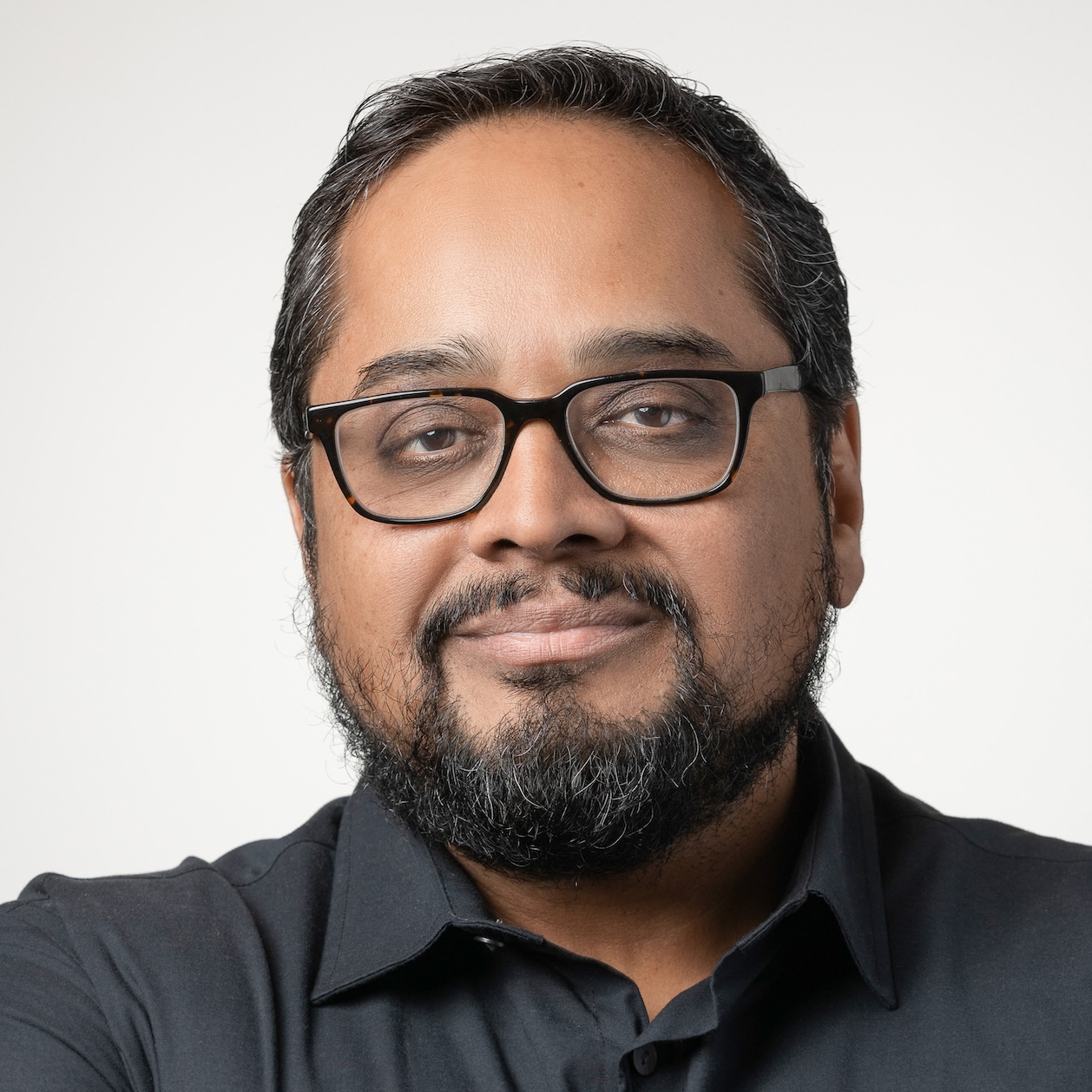
A.M. Bhatt is the founder and CEO of dae, a Connecticut-based nonprofit redefining tech education through human connection and hands-on, real-world learning. Over the past five years, dae has served nearly 1,500 students, with every graduating senior matriculating to college and 85 percent majoring in STEM fields.
Most recently, dae completed the inaugural cohort of daeZERO, Connecticut's first quantum computing program designed specifically for high school students. One of only a few such programs nationwide, the tuition-free, immersive initiative introduces public school juniors and seniors to the core concepts, tools, and applications shaping the quantum era.
In addition to leading dae, Bhatt teaches in the Graduate Psychology Department at the University of New Haven.