The Danger of 'Job Readiness': Preparing Students for an Unpredictable Future
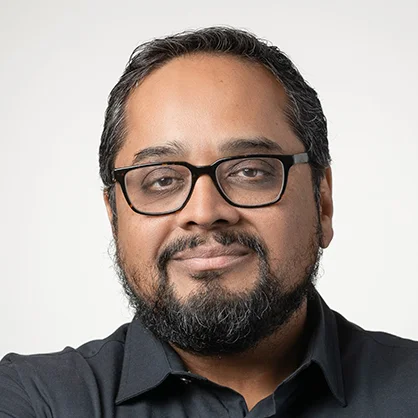
Welcome back to the podcast blog! In our latest episode, "No CS Background. Below Poverty Line. Now Learning Quantum ft. A.M. Bhatt | My EdTech Life 359," we had a truly eye-opening conversation with A.M. Bhatt about the fundamental flaws in our current educational paradigms. This blog post dives deeper into the ideas we explored, particularly the pervasive and potentially harmful obsession with 'job readiness' and why a more holistic approach is desperately needed to equip our students for a future that is anything but predictable. We're not just talking about getting a job; we're talking about building fulfilling lives and contributing meaningfully to a rapidly changing world.
The Illusion of 'Job Readiness'
The phrase 'job readiness' has become a ubiquitous buzzword in education. It’s the mantra echoed by policymakers, administrators, and even some educators, promising that by focusing on specific vocational skills and immediate employability, we are setting our students up for success. On the surface, it sounds laudable. Who wouldn't want their children to be prepared for the workforce? However, this singular focus creates a dangerous illusion. It suggests that the future of work is static, predictable, and can be neatly packaged into a set of teachable skills. The reality, as we discussed in the episode, is far more complex and dynamic. By narrowly defining success as immediate job placement, we risk shortchanging our students, failing to equip them with the foundational tools they need to navigate a landscape of constant change and innovation. We are, in essence, preparing them for a world that is already fading into the past, rather than one that is yet to be born.
Why the Current Model Falls Short: An Industrial Age Relic
The current educational system, with its emphasis on standardized testing, rote memorization, and a curriculum often divorced from real-world application, is largely a product of the Industrial Revolution. Factories needed workers who could follow instructions, perform repetitive tasks, and adhere to strict schedules. Our schools, designed to train a compliant and efficient workforce, have, in many ways, mirrored this industrial model. We divide subjects into neat silos, emphasize conformity over creativity, and often measure success through standardized metrics that fail to capture the full spectrum of a student's potential. This industrial-era mindset is fundamentally ill-equipped for the demands of the 21st century. The jobs that are emerging today, and the jobs that will define tomorrow, require adaptability, critical thinking, problem-solving, and a capacity for lifelong learning – skills that are often sidelined in a system geared towards mass production of knowledge workers. As A.M. Bhatt powerfully articulated, we're often training students to be an audience for a play that has already ended, rather than active participants in a drama that is still unfolding.
The Unpredictability of the Future: Jobs That Don't Exist Yet
This is perhaps the most compelling argument against the strict adherence to 'job readiness.' Consider the jobs that exist today but were unimaginable just two decades ago: social media manager, drone pilot, data scientist, AI ethicist, quantum computing programmer. These roles emerged not because educational institutions foresaw them and tailored their curricula accordingly, but because of rapid technological advancements, shifting societal needs, and human ingenuity. If we cannot even predict the jobs of the future, how can we possibly train students for them with a narrow focus on current vocational demands? The world of work is evolving at an unprecedented pace. Automation, artificial intelligence, and emerging technologies are not only transforming existing roles but are also creating entirely new fields. To prepare students for this uncertainty, we must shift our focus from specific skill acquisition to developing a robust foundation of transferable skills and a mindset of continuous learning. We need to equip them with the ability to adapt, to pivot, and to create their own opportunities in a landscape that is perpetually in flux.
A.M. Bhatt's Vision: Identity Formation as the Foundation
A cornerstone of our conversation with A.M. Bhatt, and a concept I believe is critical to reimagining education, is the emphasis on identity formation. Bhatt argues that true preparation for the future begins not with vocational training, but with helping students understand who they are, what their strengths are, and what their potential is. When students are encouraged to explore their passions, develop a strong sense of self-efficacy, and understand their own learning processes, they are far better equipped to face future challenges. This goes beyond simply teaching them 'how to do something.' It's about cultivating a deep-seated belief in their own capabilities and fostering a curiosity that drives them to seek out knowledge and skills as they need them. When a young person feels confident in their identity and their ability to learn, they are empowered to step into any role, even one they haven't encountered before. This is the true essence of preparing them not just for a job, but for a meaningful life.
Beyond Content: The Crucial Role of Non-Technical Skills
While technical skills are undoubtedly important, the focus on 'job readiness' often leads to an overemphasis on vocational training at the expense of developing essential non-technical skills, often referred to as "soft skills." These are the skills that truly differentiate individuals in the workplace and enable them to thrive in any environment. Critical thinking, problem-solving, communication, collaboration, creativity, emotional intelligence, resilience, and adaptability are not merely 'nice-to-haves'; they are fundamental to success in a complex and interconnected world. These are the skills that allow individuals to learn new technical skills quickly, to navigate interpersonal dynamics, to innovate, and to lead. As A.M. Bhatt highlighted, employers consistently report a shortage of candidates with these crucial non-technical competencies. Our educational system needs a radical reorientation to prioritize and actively cultivate these essential human attributes alongside, or even in place of, a narrow focus on specific job skills.
Lessons from the Frontlines: Real-World Hiring Insights
The insights shared by A.M. Bhatt in the episode from his extensive experience, both in the corporate world and in his groundbreaking work with underserved youth, offer invaluable lessons for educators. He's seen firsthand what employers are truly looking for. It's not always about a specific certification or a list of completed vocational courses. Often, it's about a candidate's ability to think critically, to communicate effectively, to demonstrate a willingness to learn, and to show genuine enthusiasm and grit. The students he works with, who might lack traditional academic backgrounds, often possess an incredible drive and a remarkable capacity for learning when given the right environment and support. This serves as a powerful testament to the fact that potential is not always reflected in a standardized test score or a predetermined career path. The focus on 'job readiness' can sometimes blind us to the inherent potential within students, leading us to overlook the very qualities that make them valuable contributors in any field.
Remedial Humaning: Re-evaluating What Education Truly Means
The term 'remedial humaning,' introduced in our discussion, is a provocative yet insightful way to reframe our understanding of education's purpose. It suggests that perhaps our current system, in its quest for efficiency and measurable outcomes, has inadvertently neglected the cultivation of fundamental human capabilities. Are we teaching students to be effective communicators, empathetic listeners, critical thinkers, and responsible citizens? Or are we simply imparting a body of knowledge and a set of skills that have a direct, immediate, but perhaps limited, application? Education should not be solely about preparing for a job; it should be about fostering well-rounded individuals who can contribute positively to society, navigate complex ethical dilemmas, and lead fulfilling lives. This requires a deeper engagement with the humanities, the arts, and critical discourse, alongside scientific and technical training. It means nurturing curiosity, fostering a love of learning, and developing the capacity for lifelong personal and intellectual growth.
Infrastructure vs. Human Development: Where Should We Invest?
A critical question that arises from this discussion is where our educational investment should truly lie. We often hear calls for more technological infrastructure, updated facilities, and the latest educational software. While these are important, A.M. Bhatt's perspective underscores the need to prioritize human development. Investing in highly skilled and passionate educators, fostering supportive learning communities, and creating environments that nurture curiosity and creativity are paramount. It's about investing in the intangible, yet infinitely valuable, aspects of learning. Think about the students in Bhatt's program – they are learning quantum computing, a field that requires significant intellectual rigor and advanced concepts. The success of this program isn't solely due to state-of-the-art equipment; it's rooted in the dedicated mentorship, the emphasis on identity, and the creation of a strong learning community. We need to shift our focus from simply providing the 'bricks and mortar' of education to cultivating the 'garden' where young minds can truly flourish.
Planting Seeds of Knowledge: The Power of Foundational Learning
Instead of trying to predict and teach every specific skill a student might need, our focus should be on planting seeds of knowledge and cultivating the ability to learn and adapt. This means building a strong foundation in core principles, critical thinking methodologies, and learning strategies. When students understand how to learn, how to approach problems systematically, and how to critically evaluate information, they are empowered to acquire any new skill or knowledge set they encounter throughout their lives. This is the essence of lifelong learning. A.M. Bhatt's approach with his students exemplifies this: by immersing them in complex topics and fostering a supportive environment, they develop the confidence and the skills to master challenging material. This approach ensures that they are not just ready for their first job, but for a lifetime of learning, innovation, and contribution. We are not just preparing them for a singular career path, but for a future where they can continuously reinvent themselves and their contributions.
Conclusion: Cultivating Adaptability for an Evolving World
In closing, the conversation with A.M. Bhatt in "No CS Background. Below Poverty Line. Now Learning Quantum ft. A.M. Bhatt | My EdTech Life 359" serves as a powerful wake-up call. The relentless pursuit of 'job readiness' is a misguided endeavor in a world characterized by rapid and unpredictable change. We must move beyond the industrial-age mindset that prioritizes vocational training for jobs that may soon be obsolete. Instead, our educational systems must pivot towards fostering adaptability, critical thinking, creativity, and, most importantly, a strong sense of identity and self-efficacy. By investing in human development, cultivating essential non-technical skills, and planting the seeds of foundational knowledge, we can truly prepare our students not just for the jobs of tomorrow, but for the challenges and opportunities of a future that we can only begin to imagine. It’s about empowering them to be architects of their own futures and contributors to a world that demands resilience, innovation, and continuous learning.

I am an Instructional Technologist & Google Innovator from South Texas, U.S.A. with 15 years of experience in education. I am a K-12 Instructional Technologist. I also have a Masters in Educational Technology along with a graduate certificate in E-Learning and a graduate certificate in Technology Leadership in Education. I am a servant leader and am always looking for ways to help my learning community use the power of technology.

La Nueva Mision Del Educador: Emociones, Pensamiento Critico y Experiencias Reales





